
The UAE-India CEPA Council reviewed the trade pact's success, with bilateral trade crossing $100 billion for the second year. Leaders set a new target of $200 billion by 2032, aiming to deepen the strategic partnership beyond goods and services.
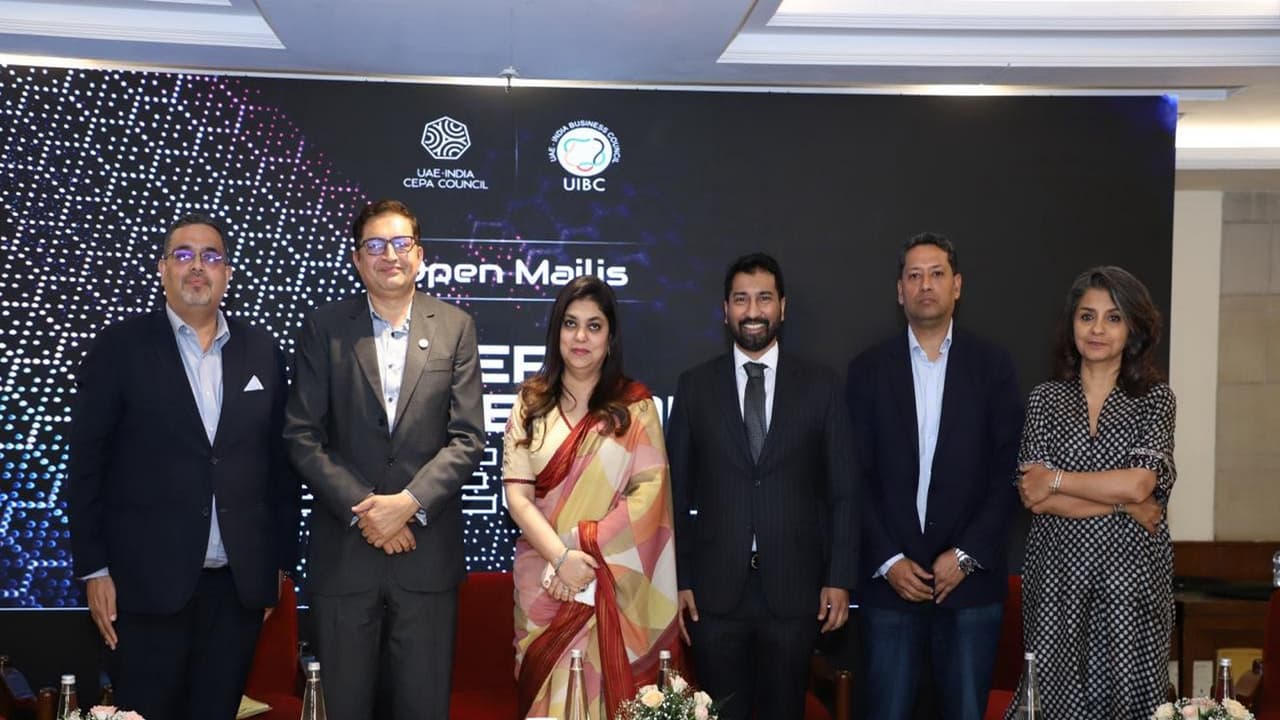
The UAE-India CEPA Council (UICC) and the UAE-India Business Council, India Chapter (UIBC) jointly convened the Open Majlis: UAE-India CEPA Fourth Anniversary Edition in New Delhi, bringing together senior policymakers, diplomats, industry leaders, and institution-builders to review the agreement's first four years and chart the architecture for its next chapter.
Signed on February 18 2022 and in force since 1 May 2022, the CEPA has driven bilateral trade to USD 101.25 billion in FY 2025-26, crossing the USD 100 billion mark for the second consecutive year, with non-oil trade now accounting for nearly two-thirds of the total. The leaders of both nations have recently set a new target of USD 200 billion in bilateral trade by 2032.
Celebrating a Strategic Partnership
Jitin Prasada, Minister of State for Commerce and Industry; Electronics and Information Technology, Government of India, delivered the keynote address as Guest of Honour and jointly launched the UICC's research publication, The UAE-India CEPA at Four, alongside Abdulnasser Alshaali, PhD, Ambassador of the UAE to India. "What we are celebrating today is not just a trade agreement and not just four years of strong numbers. The UAE and India have moved from being strong trading partners to being genuine strategic partners, working together across goods, services, investment, education, and people. The CEPA was the foundation on which that broader partnership was built," said the Minister of State.
UAE Ambassador Alshaali, PhD, in his welcome remarks, reflected on the journey since the agreement entered into force. "The CEPA has become a defining pillar of the UAE-India partnership, helping bilateral trade reach beyond USD 100 billion and setting the foundation for a shared ambition of USD 200 billion by 2032 under the leadership of His Highness President Sheikh Mohamed bin Zayed Al Nahyan and Prime Minister Narendra Modi. Beyond trade, the CEPA is fostering innovation, start-ups, and the digital economy, translating this vision into tangible outcomes through major initiatives supporting Indian entrepreneurs across AI, fintech, sustainability, health, and emerging sectors," Ambassador Alshaali said.
Charting the Next Chapter
Speaking on the partnership, Major General (Retd) Sharafuddin Sharaf, Chairman - UAE-India Business Council and Vice-Chairman - Sharaf Group, said, "The UAE-India CEPA has emerged as a defining pillar of the bilateral relationship, demonstrating how strategic vision, institutional trust, and business collaboration can together shape a globally competitive economic corridor. As we enter the next phase, the ambition must move beyond trade expansion to building a future-ready enabling architecture across trade facilitation, logistics, finance, compliance, and innovation, thereby, creating a seamless ecosystem that empowers businesses of every scale. UIBC is proud to partner with the UAE-India CEPA Council for the Open Majlis platform and remains committed to advancing a long-term vision of deeper, more resilient, and future-orientated economic and institutional collaboration between India and the UAE."
Ahmed Aljneibi, Director of the UAE-India CEPA Council, presented a review of the agreement's progress and outlined the UICC's agenda for the period ahead. "Over the past four years, the UAE-India CEPA has evolved beyond a trade agreement into a broader framework for economic cooperation across trade, investment, innovation, technology, and services. The first four years of the CEPA focused on building the framework and institutional architecture; the next phase will focus on scaling utilisation, deepening integration, and unlocking the full long-term potential of the UAE-India partnership," Aljneibi said.
Expert Panels Discuss Trade and Innovation
The event featured two panel discussions. The first, titled The Architecture of Trade: Corridors, Capital, and Compliance, examined the transactional infrastructure underpinning bilateral trade, covering the Virtual Trade Corridor, Bharat Mart and Jebel Ali as a combined re-export gateway, the INR-AED local currency settlement framework, and the Joint Committee's standards alignment agenda. The panel included Afaq Hussain (Bureau of Research on Industry and Economic Fundamentals), Sharad Agarwal (Emirates NBD), Shubhransh Srivastav (DP World), Sachin Bhanushali (RITES Ltd), and Atul Puri (SW India).
The second panel, titled The Architecture of the Next Chapter: Innovation, Institutions, and the Indo-Emirati Idea, examined how aerospace, fintech, and deep technology are emerging as the next frontiers of bilateral collaboration, and what institutions and investments are required to move the relationship from high-performing to truly transformative. Panellists included Karan Mittal (Caret Capital), Anil K. Antony (BJP), Shweta Rajpal Kohli (Startup Policy Forum), Tarun Chaturvedi (FITT, IIT Delhi), Sumit Malhotra (Iron Pillar) and Upasana Sharma (TiE Delhi-NCR).
Fostering Start-up Collaboration
A key milestone of the event was the signing of Memoranda of Understanding (MoU) between the UAE-India CEPA Council and the Startup Policy Forum and between the UAE-India CEPA Council and EBC Publishing Private Limited to advance the second edition of the UAE-India Start-Up Series. The series, whose first edition attracted over 10,000 applications, is designed to fast-track cross-border market access, growth, and collaboration for Indian start-ups entering the UAE ecosystem.
High-Level Endorsement and Future Outlook
The event took place against a backdrop of sustained economic momentum, capped most recently by the official visit of the Indian Prime Minister Narendra Modi to the UAE on 15 May 2026. In Abu Dhabi, His Highness Sheikh Mohamed bin Zayed Al Nahyan, President of the UAE, and Prime Minister Modi reviewed progress under the CEPA framework and oversaw a series of new agreements spanning strategic petroleum reserves, LPG cooperation, defence, maritime infrastructure, and approximately USD 5 billion in UAE investments into Indian infrastructure and financial institutions.
The leaders also welcomed the operationalisation of the Virtual Trade Corridor on the MAITRI platform, which is expected to reduce shipping times and logistics costs across the bilateral corridor. Together with the shared USD 200 billion trade target, these outcomes reflect the rapid evolution of the partnership from a high-performing trade relationship into a broader strategic and economic engagement. The two sides affirmed their shared commitment to advancing their development partnership and expanding cooperation in ways that support lasting prosperity for their peoples.
(Except for the headline, this story has not been edited by Asianet Newsable English staff and is published from a syndicated feed.)