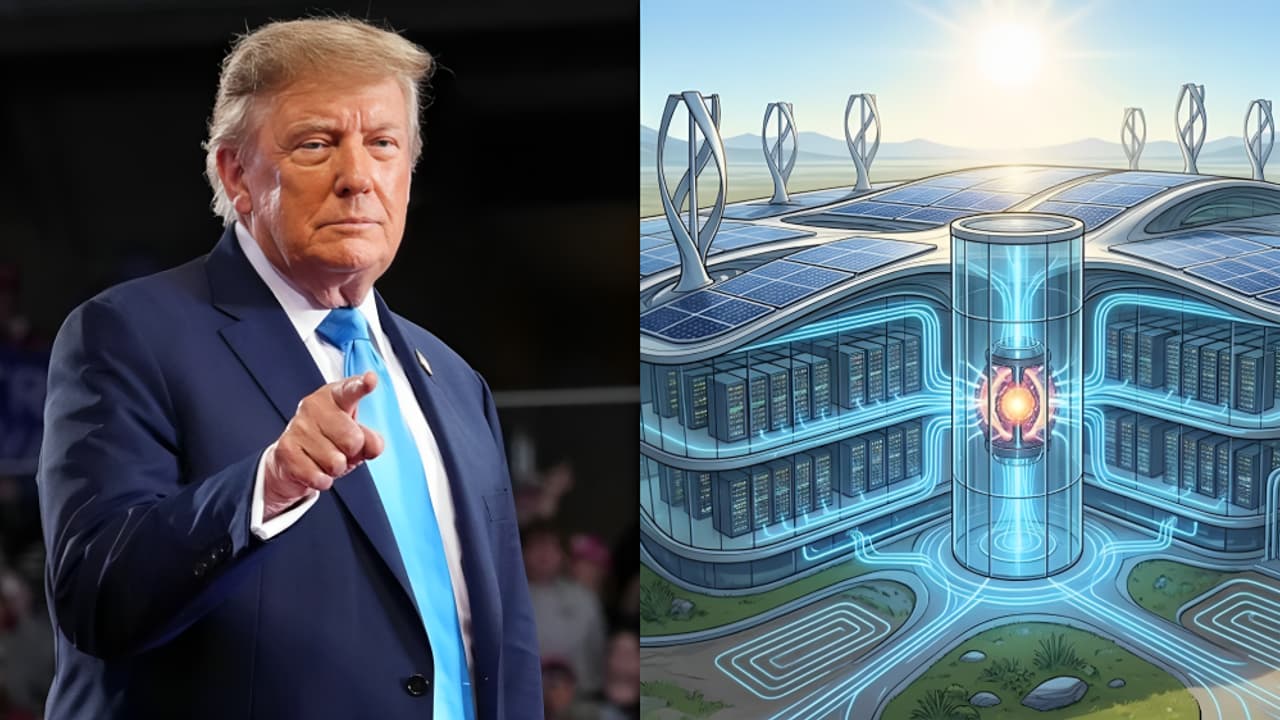
Trump has called on companies building new and large data centres to generate their own electricity and supply or sell surplus power to local communities or the grid. He said the approach could help prevent electricity price rises and potentially lower bills. Trump also urged operators to offer local residents a financial 'dividend'.
US President Donald Trump has called for new and large data centres to generate their own electricity and return surplus power to local communities or the grid, arguing that the approach could help prevent electricity price rises. He has also urged companies to offer financial benefits, or a community 'dividend', to residents hosting these facilities.
Why does Trump want data centres to generate their own electricity
US President Donald Trump has called on companies building new and large data centres to generate their own electricity and supply or sell any surplus power to local communities or the national grid as the 'approach' could prevent electricity prices from rising and might even lead to lower bills for consumers.
In a post on Truth Social on Wednesday, October 21, Donald Trump said he had been watching the expansion of data centres closely and had reached a firm conclusion about how new facilities should operate.
Related Articles

He argued that large data centres, including those requiring huge amounts of electricity, should produce their own power rather than depend entirely on existing supplies. Any electricity left over could then be returned to the community or sold to the grid.
Trump suggested that this arrangement could ease pressure on electricity prices as demand for power grows. However, his post did not explain how the proposed requirement would be enforced or what rules companies would have to follow
A 'dividend' for local communities
Alongside his proposal on electricity generation, Trump urged data centre operators to offer financial benefits to the communities where their facilities are built.
He described the payment as a 'dividend' and said companies could pay the community as a whole or provide benefits directly to individuals living in the area.
“If companies want to make their Data Centers popular, pay the community, and/or individuals within the community, a 'dividend',” Trump said in his post.
The US President argued that financial agreements could change residents' attitudes towards projects that initially face opposition. He said he had seen data centres that were unpopular in certain areas become widely accepted after companies reached financial deals with local communities.
Trump encouraged companies to negotiate such arrangements rather than allow local opposition to delay construction.
“MAKE DEALS, and get them built!!! GREAT FOR THE U.S.A.,” he wrote, calling for more data centre projects to move forward.
Why data centres need so much electricity
Data centres are specialised facilities that house computer servers, networking equipment and storage systems. They support cloud computing, online services and artificial intelligence (AI) applications.
As companies expand their AI capabilities, demand for computing power has increased. These facilities require substantial amounts of electricity to run their servers and cooling systems, which prevent equipment from overheating.
The growing need for power has brought data centres into discussions about electricity supply, infrastructure costs and household bills in the United States. The US Energy Information Administration has identified data centre growth as one of the factors contributing to rising electricity demand.
When a large facility connects to the electricity grid, additional generation and infrastructure may be needed to meet its requirements. The costs and arrangements involved can become a concern for local residents, particularly if they fear that expanding demand could affect their electricity bills.
Trump's proposal seeks to address these concerns by asking data centre operators to take greater responsibility for their power needs while offering direct financial benefits to host communities.
Will Trump's proposal become a formal policy?
Trump's latest post sets out his position on how new and large data centres should operate, but it does not provide details of a formal regulatory framework.
It remains unclear whether the proposed electricity-generation requirement would apply to every new large facility, how the size of a qualifying data centre would be determined, or what powers would be used to enforce the measure.
The post also leaves questions about the proposed community dividend unanswered. Trump did not specify whether payments should be made directly to residents, distributed through local authorities or provided through other financial arrangements. He also did not set out any minimum payment or explain whether the benefits would be compulsory.
The comments follow an earlier administration initiative aimed at protecting consumers from electricity price increases linked to the expansion of AI infrastructure. In March 2026, major technology companies signed the White House's Ratepayer Protection Pledge, committing to provide or procure the power required for their data centres and cover associated electricity infrastructure costs.
Trump's latest remarks add a further focus on direct benefits for communities hosting these facilities.
For companies planning new projects, the message is clear: Trump wants them to address concerns about electricity costs and negotiate financial arrangements with local residents. Whether the proposals lead to new requirements or remain a call for voluntary agreements has yet to be established.
(With inputs from agencies)