US President Donald Trump has nominated former Federal Reserve governor Kevin Warsh as the next Fed Chair. Announcing it on Truth Social, Trump praised Warsh as a future “great” leader of the US central bank.
US President Donald Trump on Friday announced that he is nominating former Federal Reserve Governor Kevin Warsh to succeed Jerome Powell as the next Chair of the US central bank, setting the stage for a closely watched Senate confirmation process and a potential shift in the Fed’s relationship with the White House.
Trump made the announcement on his Truth Social platform, praising Warsh effusively and signalling strong confidence in his leadership credentials.
“I have known Kevin for a long period of time, and have no doubt that he will go down as one of the GREAT Fed Chairmen, maybe the best. On top of everything else, he is ‘central casting,’ and he will never let you down,” Trump wrote.
Related Articles

Powell’s term as Federal Reserve Chair ends in May 2026, though he is not required to leave the Fed’s Board of Governors until 2028, according to Reuters.
A Long-Anticipated Decision
Trump’s choice of Warsh caps a high-profile and closely monitored search for Powell’s successor, a process that had narrowed to four finalists:
- Kevin Warsh, former Fed Governor
- Christopher Waller, current Fed Governor
- Rick Rieder, BlackRock executive
- Kevin Hassett, Trump’s top economic adviser
Warsh now becomes the nominee but must still be confirmed by the US Senate, where lawmakers from both parties are expected to question him closely on inflation, interest rates, and the Federal Reserve’s independence.
Pressure on the Fed and Political Concerns
If confirmed, Warsh would take charge of the Federal Reserve at a time when the Trump administration has sharply escalated pressure on the traditionally independent institution.
Trump has repeatedly criticised Powell for not cutting interest rates fast enough, arguing that lower rates are needed to stimulate economic growth. His recent actions have also raised broader concerns among economists about political interference in central bank decision-making.
Experts warn that any erosion of the Fed’s independence could have serious consequences for the world’s largest economy and global financial markets.
Warsh’s Alignment With Trump
Although long viewed as an inflation hawk, Warsh has recently stepped up his criticism of the Federal Reserve and endorsed several policy positions aligned with the Trump administration, particularly amid the economic impact of tariffs.
A Bloomberg report noted that Warsh has increasingly supported the administration’s pressure on the Fed as tariffs have fuelled inflation worries and slowed parts of the labour market.
As Trump continues to call for lower interest rates, analysts say Warsh will face intense scrutiny over how he balances political pressure with the Fed’s mandate of price stability and maximum employment.
Past Tensions Between Trump and the Fed
Trump’s nomination comes against the backdrop of multiple confrontations between the White House and the central bank.
The president has recently sought to remove Fed Governor Lisa Cook over allegations of mortgage fraud, triggering a legal battle that could prove pivotal in determining how much authority a president has to dismiss key Fed officials.
Separately, the Trump administration has launched an investigation into renovations at the Federal Reserve’s headquarters, a probe that Powell has publicly condemned as a threat to the institution’s independence.
Who Is Kevin Warsh? Former Fed Governor and Wall Street Veteran
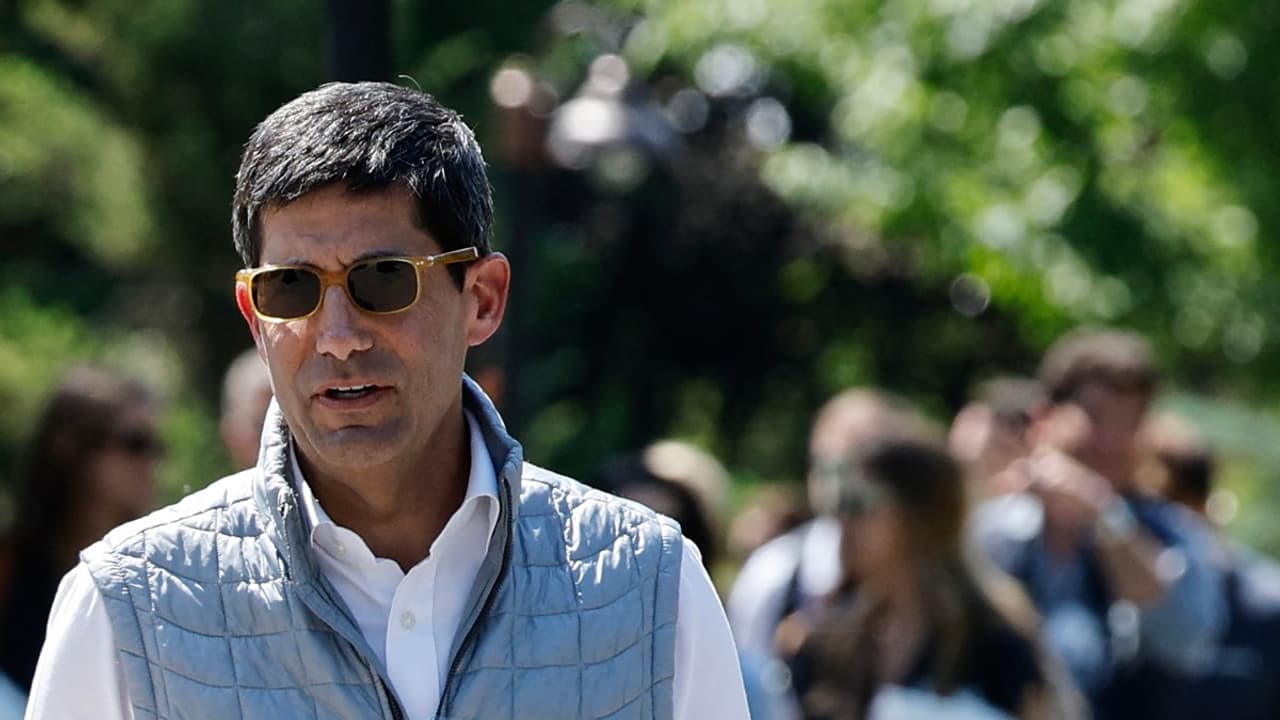
Kevin Warsh, 55, served on the Federal Reserve Board of Governors from 2006 to 2011. When appointed in 2006, Warsh was just 35 years old, making him the youngest Fed governor in US history, according to an AP report.
Before joining the Fed, Warsh worked on Wall Street, including as a mergers and acquisitions banker at Morgan Stanley, where he rose to the rank of Vice President.
He also served as an economic adviser in the George W. Bush administration, according to The Wall Street Journal.
Academic and Policy Credentials
After leaving the Fed, Warsh remained active in economic policy circles. He is currently a fellow at the Hoover Institution and a lecturer at the Stanford Graduate School of Business.
He studied at Stanford University, earned a law degree from Harvard Law School, and also holds degrees from Harvard Business School and MIT’s Sloan School of Management.
A Familiar Name for Trump
This is not the first time Warsh has been considered for the top Fed job.
During Trump’s first term, Warsh was among the finalists to replace Janet Yellen, but Trump ultimately selected Jerome Powell. According to the WSJ, Warsh finished in the top two in 2017 as well.
His reappearance on the shortlist in 2026 makes Warsh the only candidate to feature twice in Trump’s Fed chair deliberations.
Trump has since expressed regret over Powell’s appointment.
“I think I have somebody that I like the best. I like all of them, but I want to be careful because I was given a bad recommendation,” Trump said, referring to Powell’s selection.
The WSJ noted that then-Treasury Secretary Steven Mnuchin recommended Powell in 2017.
Kevin Warsh: Five Key Facts
- Warsh is married to Jane Lauder, granddaughter of Estée Lauder and heir to the Lauder cosmetics fortune. The couple married in 2002.
- While Warsh’s personal net worth is not public, estimates suggest it exceeds $1 million, based on his Fed salary, Wall Street career, and executive earnings.
- Jane Lauder’s net worth is estimated to be over $2 billion.
- Warsh has previously described Bitcoin as a “sustainable store of value, similar to gold.”
- He was born in Albany, New York, and has served in senior roles across government, finance, and academia.
A Test of Independence Ahead
With inflation concerns lingering, employment growth cooling, and tariffs adding pressure, the next Federal Reserve Chair will be walking a policy tightrope.
Financial markets and lawmakers alike will be watching closely to see whether Kevin Warsh can uphold the Fed’s independence — and its dual mandate — while navigating an increasingly politicised economic environment.