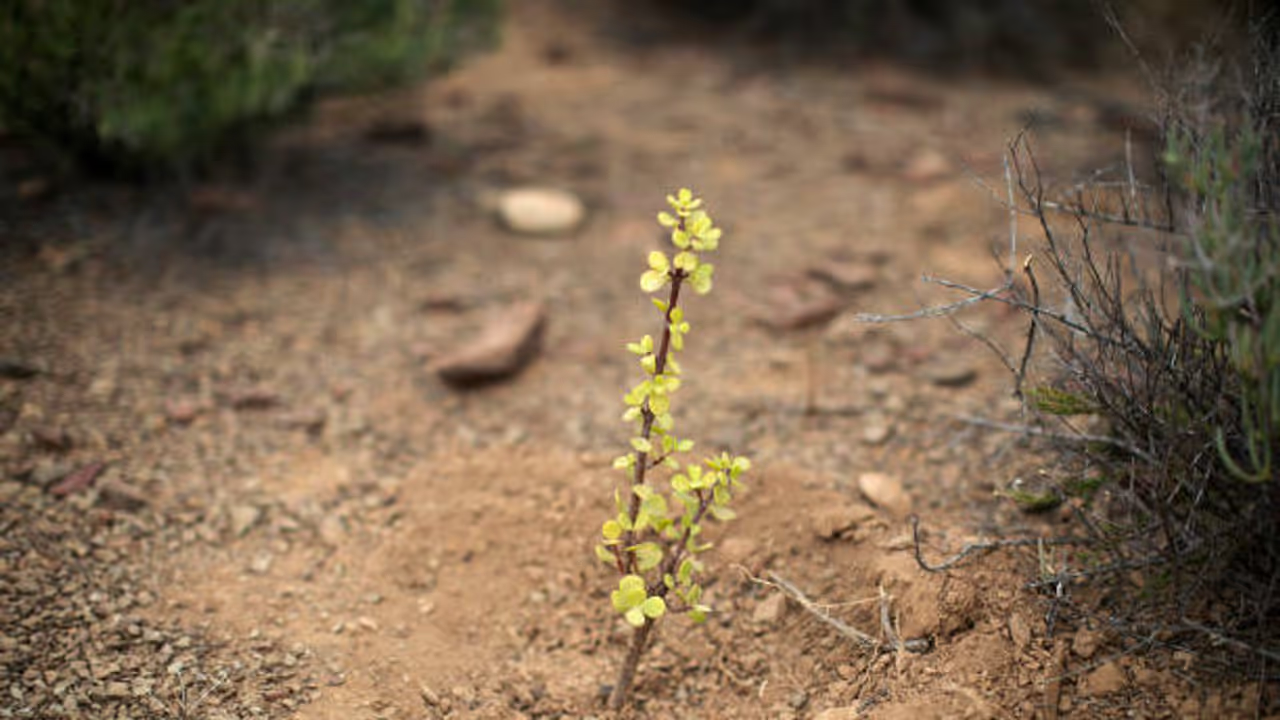
The story of Earth’s very first plant is far more complex than pinpointing a single species - it is a saga of evolution that began in ancient oceans and ultimately reshaped the planet itself.
The story of Earth’s very first plant is far more complex than pinpointing a single species - it is a saga of evolution that began in ancient oceans and ultimately reshaped the planet itself. Scientists reveal that the earliest ancestors of plants were not towering trees or vibrant flowers, but microscopic life forms thriving in marine environments billions of years ago.
Among the earliest pioneers were photosynthetic organisms, most likely cyanobacteria, which emerged around 2.7 to 3.0 billion years ago. These tiny yet powerful organisms triggered a planetary transformation by gradually releasing oxygen into the atmosphere, culminating in the dramatic Great Oxidation Event nearly 2.4 billion years ago.
How green algae paved the way for life on land
The first organisms resembling plants were photosynthetic algae—especially green algae—that share a deep evolutionary link with modern land plants. Over time, these algae developed critical features that would define plant life as we know it.
Related Articles

Scientists widely agree that today’s land plants evolved from freshwater green algae closely related to charophytes. Fossil discoveries back this claim, including evidence of 470–480 million-year-old spores that capture a crucial transition from aquatic algae to early land plants.
Initially, these algae thrived in stable aquatic environments. But at a pivotal moment in Earth’s history, some began adapting to life beyond water—marking one of the most revolutionary turning points in the evolution of life.
The first land plants: Simple survivors of a harsh world
The earliest land plants appeared roughly 470 million years ago during the Ordovician period. These primitive organisms were starkly different from modern plants—small, simple, and lacking roots, stems, or leaves.
Many scientists believe they resembled modern bryophytes like mosses and liverworts, though their exact structure remains uncertain. Confined to moist environments, they struggled without advanced systems to transport water.
Facing relentless challenges—drying out, intense sunlight, and harsh conditions—these early plants nonetheless endured. Their resilience allowed them to slowly colonise the land, laying the foundation for future ecosystems.
How early plants transformed Earth forever
The arrival of plants on land marked a turning point in Earth’s history. Before their emergence, terrestrial landscapes were largely barren, with only microbial life present.
These pioneering plants began breaking down rocks, initiating soil formation and paving the way for complex ecosystems. Through photosynthesis, they absorbed carbon dioxide and released oxygen, playing a crucial role in shaping the planet’s atmosphere.
They also formed vital symbiotic relationships with fungi, enabling them to absorb nutrients from the soil—an essential survival strategy given their lack of developed roots.
Rise of complex plant life
As evolution progressed, plants became more sophisticated. Vascular plants—capable of transporting water and nutrients internally - emerged, allowing them to grow taller and spread further.
Fossils of early vascular plants like Cooksonia reveal branching structures that mark a significant step toward modern plant diversity. Meanwhile, molecular studies suggest that the origins of land plant evolution may stretch back as far as 600–700 million years ago, even though fossil evidence appears later.
Why there is no single “first plant”
Defining the “first plant” is nearly impossible because evolution is a gradual process. There was no sudden appearance—only a slow, continuous transformation from simple photosynthetic organisms to algae, and eventually to land plants.
Scientists continue to ուսումնասիր fossils, genetics, and ancient environments to uncover deeper insights. Evidence increasingly suggests that plant evolution on land may date back up to 700 million years.