
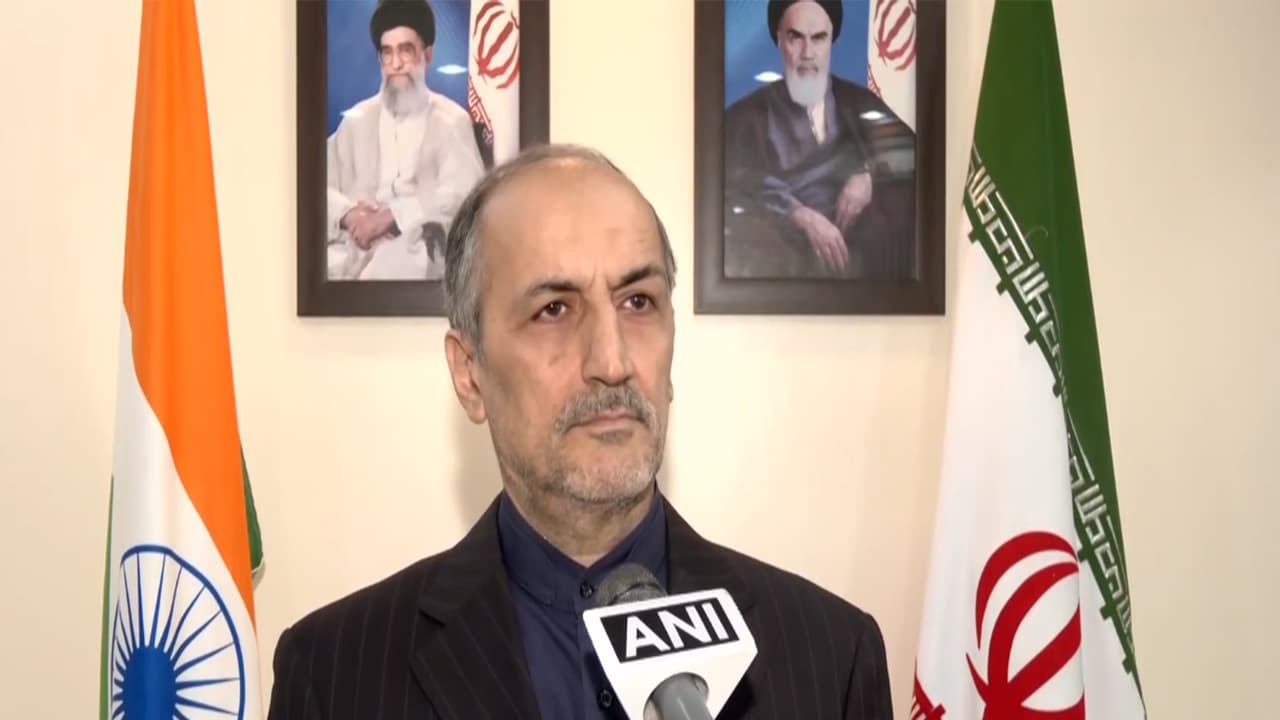
Iran's envoy in Mumbai, Saeid Reza Mosayeb Motlagh, claims Western sanctions are a 'hostility' that has intensified into armed conflict, impacting global markets. He says Iran's response was self-defence and the Strait of Hormuz is restricted.
Iran's Consul General in Mumbai, Saeid Reza Mosayeb Motlagh, said Western sanctions against Iran have had significant repercussions on global markets and contributed to the broader tensions currently unfolding in West Asia.
Sanctions a 'Pattern of Hostility'
Speaking to ANI about the impact of sanctions imposed by Western countries, Motlagh said the measures reflect a "long-standing pattern of hostility toward Iran" and have "intensified to the point of armed confrontation and direct attacks on Iran." He said, " Iran is one of the world's oil-producing countries, and sanctioning it has an impact on the global market. Second, these sanctions reflect a long-standing pattern of hostility toward Iran that dates back many years. Today, this hostility has intensified to the point of armed confrontation and direct attacks on Iran. Naturally, these underlying factors have had a substantial influence on the outbreak of the current conflict and the challenges the world is facing today."
Restraint at Strait of Hormuz
Responding to questions on Iran's threat to close the Strait of Hormuz, a critical global oil transit route, the Iranian envoy said the ongoing war has forced Tehran to "mobilise all" its "capabilities in response" but claimed that Iran has exercised restraint considering the global impact. In case of restraint, he gave the example of India, for which the Strait of Hormuz is not closed. "The war they have imposed on us has affected our very existence. It is an existential war, requiring us to mobilise all our capabilities in response. However, out of consideration for people around the world, for example, for the people of India, we have not closed the Strait. It has only been restricted for hostile countries and for their interests, including companies associated with them... Due to the wartime situation, it is a highly dangerous passage....," he said.
Open to Negotiations Under Conditions
On the surge in global oil prices amid the conflict, Motlagh said Iran remains open to diplomatic engagement under certain conditions. " ... We are ready for negotiations, but the necessary conditions must be fulfilled. Otherwise, in a few months, they will attack us again and subject us to the same challenges...", he said.
Iran Claims Self-Defence, Blames Adversaries for Escalation
Speaking to ANI, on the ongoing conflict, Motlagh said the situation escalated after Iran was attacked, adding that Tehran's response was carried out in self-defence. "If peace were to prevail in the region, the United States and the Zionist regime should not have attacked us," he said. "Clearly, they escalated the situation, and we responded accordingly. Therefore, they are responsible for increasing tensions and intensifying the conflict, not the Islamic Republic of Iran."
The Iranian envoy stressed that Tehran has long supported diplomatic engagement to address regional disputes. "Our country has shown from the outset that it seeks dialogue-based solutions and diplomacy. However, our adversaries have demonstrated that they are not committed to dialogue," Motlagh said.
He added that the attacks were carried out "without any legitimate legal justification or valid objective," placing Iran under "a broad crisis and significant pressures."
Motlagh further said those responsible for the attacks must be held accountable and that the conditions set by Iranian national authorities must be fulfilled. (ANI)
(Except for the headline, this story has not been edited by Asianet Newsable English staff and is published from a syndicated feed.)