
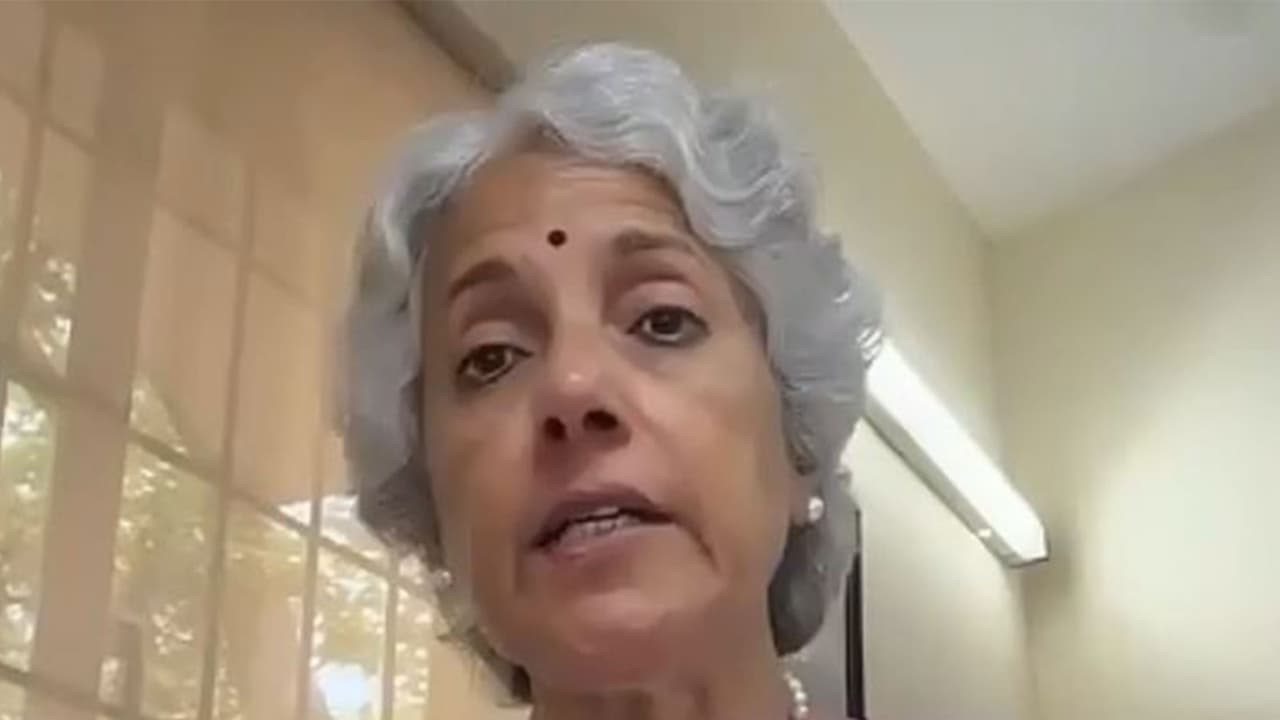
Former WHO scientist Soumya Swaminathan says India can play a key role in accelerating Ebola research, including developing vaccines and diagnostics for the rare Bundibugyo strain, calling the current outbreak in Africa 'very worrying'.
Former WHO Chief Scientist Soumya Swaminathan on Monday said that India can play a significant role in accelerating Ebola-related research, including the development of vaccines, diagnostics and monoclonal antibodies, through collaboration with the WHO laboratory network and the Indian Council of Medical Research (ICMR) amid global concerns over the outbreak of the deadly virus.
Current outbreak a 'Public Health Emergency'
Speaking on the recent Ebola outbreak concerns, particularly in the African countries of the Democratic Republic of Congo and some parts of Uganda, Swaminathan described the situation as "very worrying", noting that the World Health Organisation (WHO) has already declared it a Public Health Emergency of International Concern. She said the outbreak involves a rare strain of the Ebola virus and has been difficult to detect early due to limitations in existing diagnostic tools, which were primarily designed for other strains.
"This is a very worrying situation, and as WHO has said, it is a public health emergency of international concern," she said, adding that the strain has posed challenges in early identification and treatment development. Swaminathan explained that while diagnostics and vaccines exist for some Ebola strains, such as the Zaire strain, the current outbreak involves the Bundibugyo strain for which medical countermeasures are still under development.
"This is a rare strain of the Ebola virus, the Bundibugyo. There have been two previous outbreaks before, and the challenge is that the diagnostics and therapeutics, treatment options and vaccines have not been developed so far for this strain. They have been developed for the Zaire strain of the Ebola virus, and this is why one of the reasons why it took such a long time for this outbreak to be recognised as Ebola," the former Chief Scientist said.
India's potential in R&D and preparedness
She noted that global efforts are now focused on experimental treatments and clinical trials, including monoclonal antibody therapies recommended by expert groups. Highlighting India's potential role, she said collaboration between global institutions and Indian scientific bodies could accelerate medical solutions.
"India also has a big role to play in the R&D and the development of diagnostics, treatments and vaccines. I think if we are part of the WHO network, they have a network of laboratories that work on these filoviruses, and through the ICMR, we can contribute to the rapid development of monoclonal antibodies," Swaminathan said.
She also referred to ongoing international collaborations, including vaccine development efforts involving the Oxford University group and the Serum Institute of India, which previously worked together on COVID-19 vaccines. Swaminathan further emphasised the need for strengthening pandemic preparedness through prototype vaccine development platforms such as mRNA and adenovirus-based technologies, which could help respond quickly to future outbreaks.
"We've got companies like Gennova in India that are working on mRNA vaccines. So, if we support them, then we can certainly have prototype vaccines for a large number of these viral families because again tomorrow we don't know what virus outbreak is going to happen in some part of the world or even in India itself," she added.
Swaminathan further added that early reporting, stronger surveillance systems, and improved protective equipment for healthcare workers are essential to contain the outbreak and reduce fatalities.
WHO provides update on outbreak scale
According to the latest number issued by World Health Organisation (WHO) Director-General Tedros Adhanom Ghebreyesus, the Ebola Bundibugyo outbreak in the Democratic Republic of Congo (DRC) is likely much larger than currently confirmed figures, warning that active transmission continues to expand across affected regions.
Sharing an update on the outbreak in a post on X, Tedros said 101 cases have so far been confirmed in the DRC, including 10 confirmed deaths. However, he cautioned that the actual scale of the epidemic is significantly higher, with more than 900 suspected cases and 220 suspected deaths under investigation.
He further noted that neighbouring Uganda has also reported fresh infections, including two additional confirmed cases among healthcare workers, taking the total number of confirmed cases in the country to seven, including one death. He added that the WHO and partner agencies are scaling up response measures with global health teams working to intensify contact tracing and surveillance to identify infected individuals at the earliest and break chains of transmission.
The WHO has already flagged the Bundibugyo strain outbreak as a serious public health concern amid ongoing challenges in diagnosis, treatment availability, and surveillance in conflict-affected regions of central Africa. (ANI)
(Except for the headline, this story has not been edited by Asianet Newsable English staff and is published from a syndicated feed.)