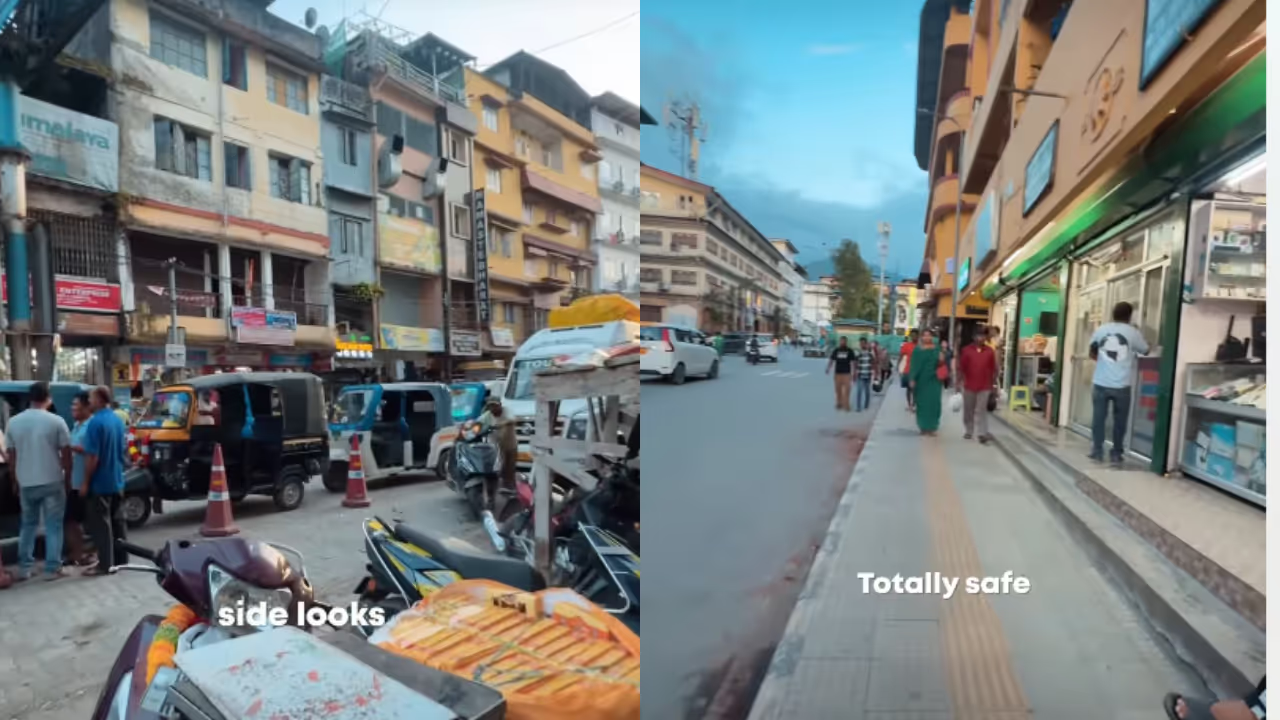
An Indian woman compares everyday life in India and Bhutan, highlighting traffic, unnecessary honking, cleanliness, civic sense and women’s safety. Her observations have sparked an online debate about public behaviour and road discipline.
For many Indians, traffic jams, unnecessary honking, chaotic roads, pollution and the constant need to remain alert in public spaces have become such familiar parts of everyday life that they are rarely questioned. However, one Indian woman says her first trip abroad made her look at these everyday experiences from an entirely different perspective. After travelling to Bhutan, she shared a video comparing what she experienced in the two countries, particularly the differences in road discipline, cleanliness, public behaviour and her sense of safety as a woman.
The video, shared by Neha Rana on social media, has sparked a conversation about civic sense, road discipline, public safety, cleanliness and everyday behaviour in India and Bhutan. While Rana was careful to clarify that her intention was not to put India down, she said her experience in Bhutan made her realise how many things she had simply normalised while growing up in India.
A Different Experience Across The Border
In the video, Rana contrasts the scenes she encountered in India with what she experienced after entering Bhutan. She describes seeing heavy traffic, vehicles driving on the wrong side of the road, unnecessary honking, roadside arguments, litter and men staring at her while travelling in India.
Related Articles

Her experience in Bhutan, she says, felt completely different.
Walking along a busy street, Rana noticed that people generally stayed in their lanes, followed traffic rules and appeared considerate of one another. She also highlighted the absence of unnecessary honking and said she felt comfortable walking around without constantly worrying about being watched or harassed.
For Rana, the difference was not simply about infrastructure. It was also about the way people behaved in public spaces.
‘So Many Things I’ve Normalised’
Sharing her thoughts in the caption, Rana said she was born and raised in India and had spent 30 years accepting several aspects of everyday life as normal.
She listed pollution, honking, chaotic roads, traffic jams, people begging on the streets, feeling unsafe, constantly having to be careful and men staring at her for no apparent reason.
Her visit to Bhutan, she explained, was the first time she had travelled to another country. That experience made her realise that everyday life could look very different outside India.
According to Rana, things that had become routine for her in India, such as road rage, excessive honking and constantly thinking about personal safety, were noticeably absent from her experience in Bhutan.
From Road Rage To Road Discipline
One of the key differences Rana highlighted was road behaviour.
In her description of Bhutan, she observed that people appeared to respect traffic rules and each other's space, including at traffic signals and while crossing busy roads. Rather than constantly honking or creating confusion, motorists and pedestrians seemed to follow a more orderly system.
Her observation also raises a broader question about how much traffic discipline and road safety depend not only on laws and enforcement but also on individual behaviour.
Following traffic rules may seem like a basic responsibility, but when large numbers of people consistently follow them, the collective effect can significantly change the experience of living in a city or town.
Safety And The Experience Of Indian Women
For Rana, however, the comparison went beyond roads and traffic.
She specifically spoke about the experience of being a woman in public spaces. In India, she said she had become accustomed to being careful, feeling unsafe and dealing with unwanted attention from men.
In Bhutan, she said she was able to walk on busy streets without feeling that people were constantly watching her.
This difference made the experience particularly significant for her. What she had previously considered an unavoidable part of everyday life suddenly appeared to be something that could be different.
Cleanliness And Collective Responsibility
Cleanliness was another aspect that stood out to Rana during her visit.
She contrasted the litter and waste she often sees in India with the cleaner public spaces she encountered in Bhutan. Her observations point towards a larger issue of civic responsibility, particularly the idea that keeping public spaces clean is not solely the responsibility of municipal authorities but also of the people who use those spaces.
The same principle applies to traffic, public noise and interactions between strangers. Individual actions may appear insignificant, but when millions of people behave in the same way, those actions collectively shape the environment.
‘Just Basic Civic Sense Is All We Need’
Rana's comparison prompted reactions from social media users, with some agreeing that the issues she raised are ultimately connected to civic behaviour.
One user commented: "Just basic civic sense is all we need."
The comment reflects a sentiment often expressed in discussions about India's roads and public spaces: that some problems do not necessarily require extraordinary solutions, but greater consideration for other people and the shared environment.
‘I've Only Heard Car Honks In India, Nowhere In Any Other Countries’
Another user wrote: "I've only heard car honks in India, nowhere in any other countries."
The comment particularly focused on one of the most recognisable features of Indian roads, constant honking.
Honking can serve a legitimate purpose, particularly when it is necessary to alert another road user. However, excessive or unnecessary honking has become so common in many parts of India that it is often treated as an unavoidable part of driving.
Rana's experience in Bhutan made that contrast more noticeable for her.
Not About Putting India Down
Importantly, Rana clarified that her observations were not intended to insult or belittle India.
Instead, she said the experience made her reflect on how people collectively treat the places where they live and the people around them. She suggested that positive behaviour can begin with individuals and gradually influence families and communities.
Her point was less about declaring one country better than another and more about recognising that everyday habits can be changed.
If one person chooses not to litter, follows traffic rules, avoids unnecessary honking or treats strangers with greater consideration, that behaviour can potentially influence others around them.
What India Can Learn From Bhutan
Rana's experience has opened up a wider conversation about what India could learn from Bhutan when it comes to civic sense, cleanliness, traffic discipline, public safety and respect for shared spaces.
India is a vast and diverse country, and experiences can vary dramatically between cities, states and communities. Likewise, one person's experience in another country cannot represent every aspect of life there.
Yet, personal experiences can still challenge assumptions.
For Rana, visiting Bhutan was the first time she realised that many things she had accepted as normal did not necessarily have to be normal. The trip offered her a different perspective on how people can interact with their surroundings and with one another.
‘The Bare Minimum’
Perhaps the strongest part of Rana's reflection was her realisation that the things she appreciated in Bhutan did not feel extraordinary while she was there.
Clean streets, quieter roads, adherence to traffic rules, consideration for others and feeling comfortable while walking alone were, in her words, simply part of everyday life.
For someone accustomed to treating these things as exceptional, that difference can be eye-opening.
Ultimately, Rana's experience raises a simple question: What if the things we have learned to tolerate are not things we actually have to accept?
Her journey to Bhutan may have begun as a trip across the border, but it ended with a much broader reflection on civic sense in India, road safety, cleanliness, women's safety, public behaviour and collective responsibility.
Perhaps the biggest lesson is that meaningful change does not always begin with someone else. Sometimes, it begins with one person deciding to behave differently and showing others that a different way is possible.