
US Central Command has redirected over 50 commercial vessels as part of its naval blockade against Iran. While allowing humanitarian aid, the US is also working to secure oil flow through the Strait of Hormuz, says Vice President JD Vance.
US Enforces Naval Blockade Against Iran
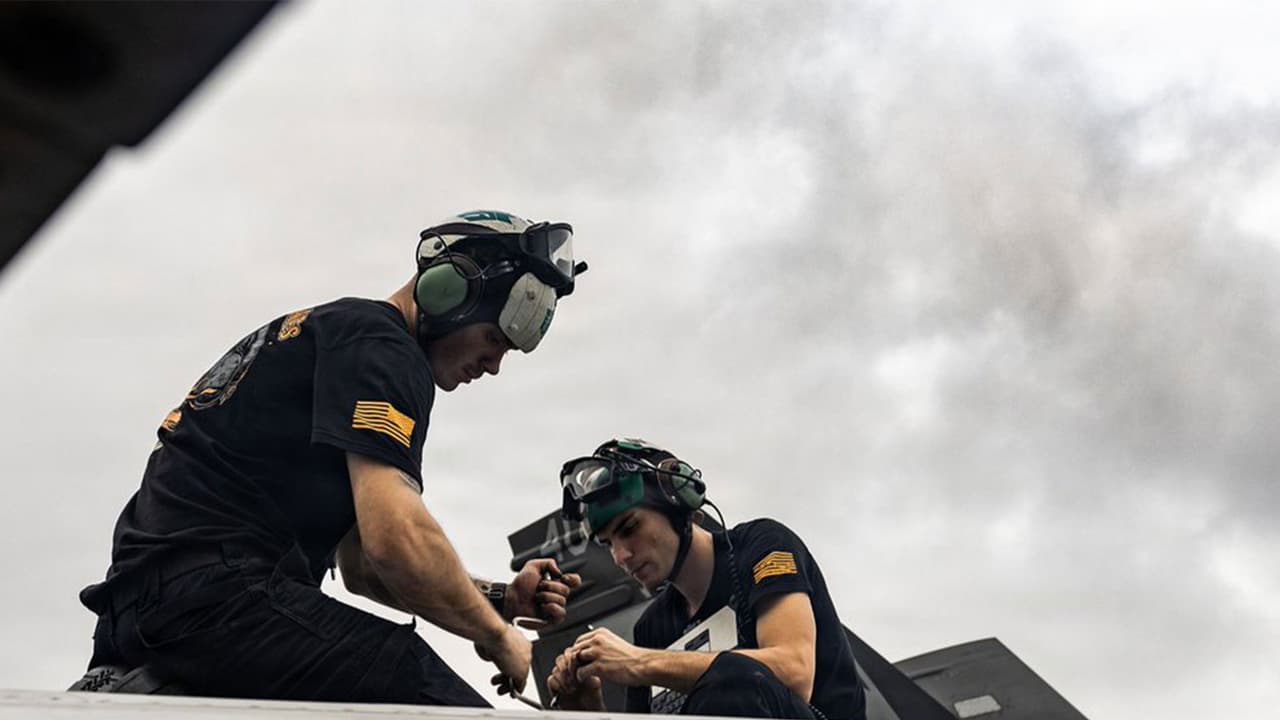
US Central Command (US CENTCOM) on Saturday (local time) said it has redirected 53 commercial vessels, disabled and boarded two each as part of the "blockade against Iran". The central command added that over 30 ships were allowed passage for humanitarian aid, while sailors maintain F/A-18E Super Hornets aboard USS Abraham Lincoln to keep the strike group mission ready. In a post on X, CENTCOM said, "US Sailors conduct maintenance on F/A-18E Super Hornets on the flight deck of aircraft carrier USS Abraham Lincoln (CVN 72) to ensure carrier strike group assets remain mission ready to enforce the U.S. blockade against Iran. As of Aug. 8, CENTCOM redirected 53 commercial vessels, disabled 2, and boarded 2. The U.S. military has also permitted more than 30 ships to pass through the blockade for humanitarian aid."
On Sunday, CENTCOM redirected 35 commercial vessels, disabled two and boarded two others as the US blockade against Iran continues. In a post on X, CENTCOM said its forces continue to enforce the naval blockade that was reimposed on Iran last month. The command also shared footage of a US Marine Corps F-35C stealth fighter jet launching from the USS Abraham Lincoln as the aircraft carrier transited the Arabian Sea in support of the blockade.
In a post on X, CENTCOM said, "A U.S. Marine Corps F-35C stealth fighter jet launches from USS Abraham Lincoln (CVN 72) as the aircraft carrier transits the Arabian Sea and supports the U.S. blockade against Iran. As of Aug. 2, CENTCOM has redirected 35 commercial vessels, disabled 2, and boarded 2."
VP Vance Outlines US Pressure Campaign, Oil Strategy
Meanwhile, US Vice President JD Vance said that Washington is working to establish a route allowing commercial ships to safely pass through the Strait of Hormuz, while continuing to pressure Iran amid ongoing tensions in the region.
Speaking to Fox News host Kayleigh McEnany on 'Saturday in America', Vance said the plan includes Iran's commitment not to fire on commercial ships, he says, adding that Tehran informed Washington it would allow the maximum flow of oil through the strait, but "we don't trust it".
"We're talking to the Iranians, of course. We're trying to maximise the amount of oil and gas that is coming out of the Strait of Hormuz," Vance said. "We're just trying to make sure that we get what we need out of this particular conflict," he added.
Vance said the US would continue to apply pressure on Iran, while seeking broader changes in Tehran's relationship with Washington. "We've destroyed their nuclear program, we've destroyed their conventional military, we've radically reduced their asymmetric military abilities," Vance said.
He added that the US is now assessing whether Iran is willing to make "the kind of long-term changes that would be necessary to have a better relationship with the United States".
"And if not, that's fine too," Vance said. "We're just going to keep on applying the pressure that we can apply and getting as much oil and gas out of the Middle East so that Americans can enjoy lower gas and energy prices," he added. (ANI)
(Except for the headline, this story has not been edited by Asianet Newsable English staff and is published from a syndicated feed.)