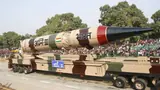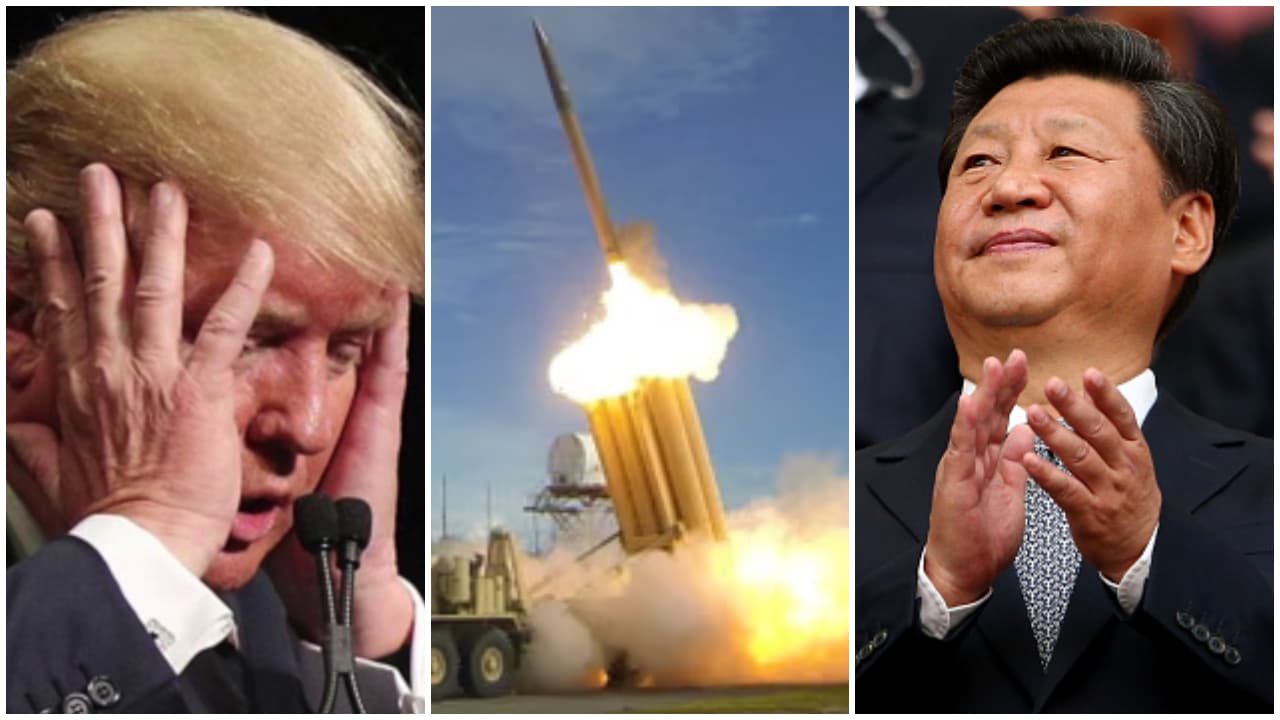
Just a week after the deadly Galwan Valley clash between Indian and Chinese troops in 2020, the United States alleged that China conducted a secret nuclear test on June 22, 2020.
New Delhi: Just a week after the deadly Galwan Valley clash between Indian and Chinese troops in 2020, the United States alleged that China conducted a secret nuclear test on June 22, 2020. Washington used the claim to push for a broader arms-control framework that would include China alongside Russia.
China strongly denied the allegation, accusing the US of making “irresponsible remarks,” including threats to resume nuclear weapons testing.
On Friday, Washington renewed calls for trilateral talks involving the US, Russia, and China to establish new limits on nuclear weapons. The appeal came amid US accusations that Beijing has conducted covert nuclear tests and is rapidly expanding its nuclear arsenal.
Related Articles

A day after the expiration of New START -- the last remaining nuclear arms treaty between Washington and Moscow -- China reiterated that it has no plans to join disarmament negotiations “at this stage.”
China’s ambassador for nuclear disarmament, Shen Jian, said Beijing would not participate in such talks for now, stressing that countries with the largest nuclear stockpiles must shoulder greater responsibility.
“States possessing the largest nuclear arsenals should continue to fulfil their special and primary responsibilities for nuclear disarmament,” Shen said.
Russia and the United States together control more than 80 percent of the world’s nuclear warheads. Meanwhile, Moscow suggested that any future arms-control negotiations should also include other nuclear-armed nations such as the United Kingdom and France.
“Arms control can no longer be a bilateral issue between the United States and Russia,” US Secretary of State Marco Rubio wrote in an online essay. “Other countries have a responsibility to help ensure strategic stability—none more so than China.”
US President Donald Trump rejected a proposal from Russian President Vladimir Putin to extend New START restrictions for another year, instead calling for a “new, improved, and modernised treaty.”
Secret nuclear tests
Addressing the United Nations Conference on Disarmament in Geneva on Friday, US Under-Secretary of State for Arms Control Thomas DiNanno presented Washington’s new arms-control plan, arguing that the expired New START treaty suffered from “fundamental flaws.”
DiNanno accused China of exploiting “legally binding US-Russian restraint” to expand its nuclear arsenal at an unprecedented pace, claiming Beijing is “on track to have over 1,000 nuclear warheads by 2030.”
“As we sit here today, China’s entire nuclear arsenal has no limits, no transparency, no declarations, and no controls,” he said.
China, like the United States, has signed but not ratified the Comprehensive Nuclear-Test-Ban Treaty (CTBT), which prohibits explosive nuclear tests. Russia ratified the treaty but withdrew its ratification in 2023.
That same year, Moscow also suspended inspections of its nuclear facilities under the treaty, citing heightened tensions with Washington over the Russia-Ukraine war.