
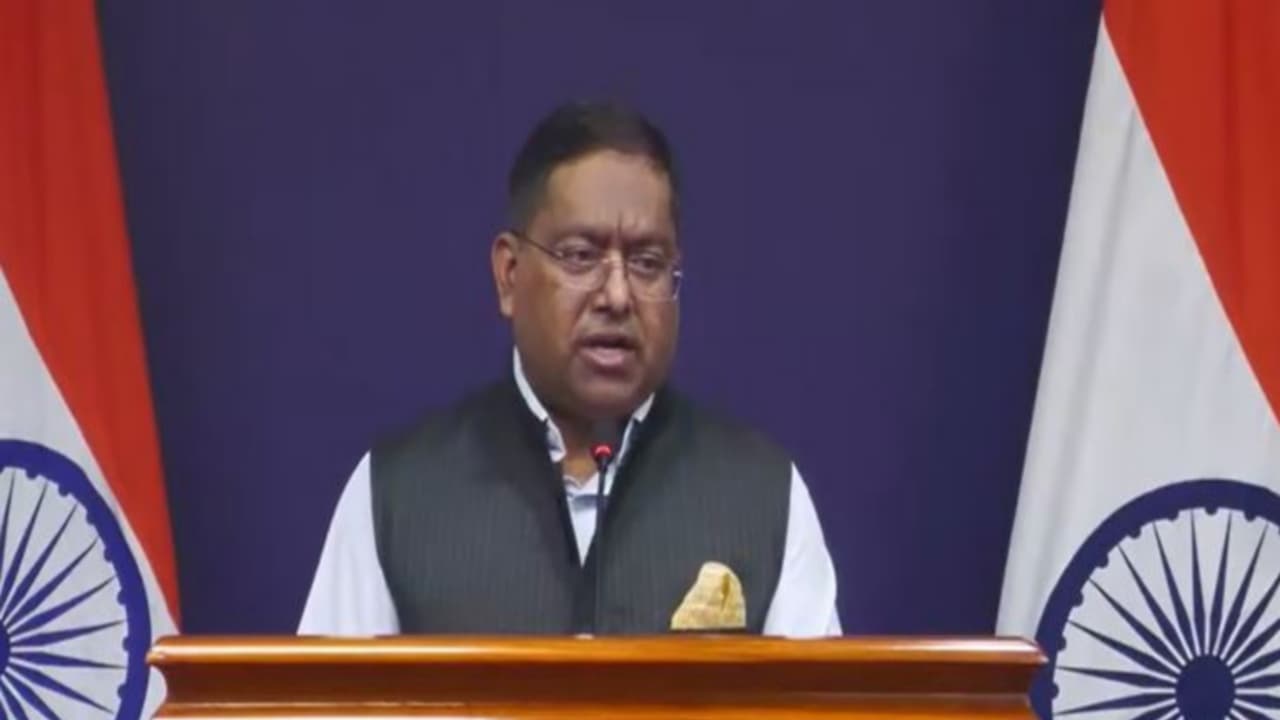
The MEA reiterated India's stance that the UNMOGIP is irrelevant following the 1972 Simla Agreement. The statement was a response to UN Chief Antonio Guterres' visit to the UNMOGIP office in Islamabad, with India stressing bilateralism.
The Ministry of External Affairs (MEA) on Friday reiterated India's position that the United Nations Military Observer Group in India and Pakistan (UNMOGIP) has outlived its relevance following the 1972 Simla Agreement between India and Pakistan, responding to a question on United Nations Secretary-General Antonio Guterres' recent visit to the group's office in Islamabad.
During a weekly media briefing, MEA spokesperson Randhir Jaiswal, when asked about Guterres' visit to the UNMOGIP office in Islamabad, said, "It has been our consistent position that UNMOGIP has outlived its relevance after the Simla Agreement that was signed between India and Pakistan."
The remarks came after Guterres visited the UNMOGIP office in Islamabad on October 6 during his official visit to Pakistan. The UN Secretary-General met senior Pakistani government officials, including Prime Minister Shehbaz Sharif and President Asif Ali Zardari.
UNMOGIP and the Simla Agreement
Established in 1949, UNMOGIP was a United Nations military observer mission associated with monitoring the ceasefire between India and Pakistan. UNMOGIP is now rendered irrelevant after the signing of the Simla Agreement on July 2, 1972, by then Indian Prime Minister Indira Gandhi and Pakistan President Zulfikar Ali Bhutto.
The agreement established a framework for the two countries to resolve their differences through peaceful means, including bilateral negotiations or other peaceful means mutually agreed upon by both sides.
Under the agreement, both countries committed to respecting each other's territorial integrity, sovereignty and political independence, while refraining from the threat or use of force against each other.
The agreement also stated that pending a final settlement of outstanding issues, neither side would unilaterally alter the situation and both would prevent actions detrimental to peaceful and harmonious relations.
India has consistently maintained that the bilateral framework established by the Simla Agreement governs the resolution of issues between the two countries, including those relating to Jammu and Kashmir. (ANI)
(Except for the headline, this story has not been edited by Asianetnews Editorial staff and is published from a syndicated feed.)