Pakistan’s defence spending has risen sharply, with major naval investments focused on submarines, frigates and surveillance platforms. But the Tihamah strike raises questions over whether the country’s naval modernisation addresses risks faced by its nationals abroad.
Every navy tells you what it values before it tells you what it can do. Pakistan does it through a budget line. Pakistan's total defence budget for fiscal year 2026–27 stands at roughly PKR 3.01 trillion, or about 10.8 billion dollars, according to Ministry of Finance documents reported by Janes. Other trackers, including Global Firepower, put the figure somewhat lower, in the 7.8-to-9.3 billion-dollar range, a gap that mostly reflects differences in what each source counts as defence spending. Either way, the number extends a multi-year trend of double-digit annual increases since 2023–24.
Pakistan Navy’s Major Investments
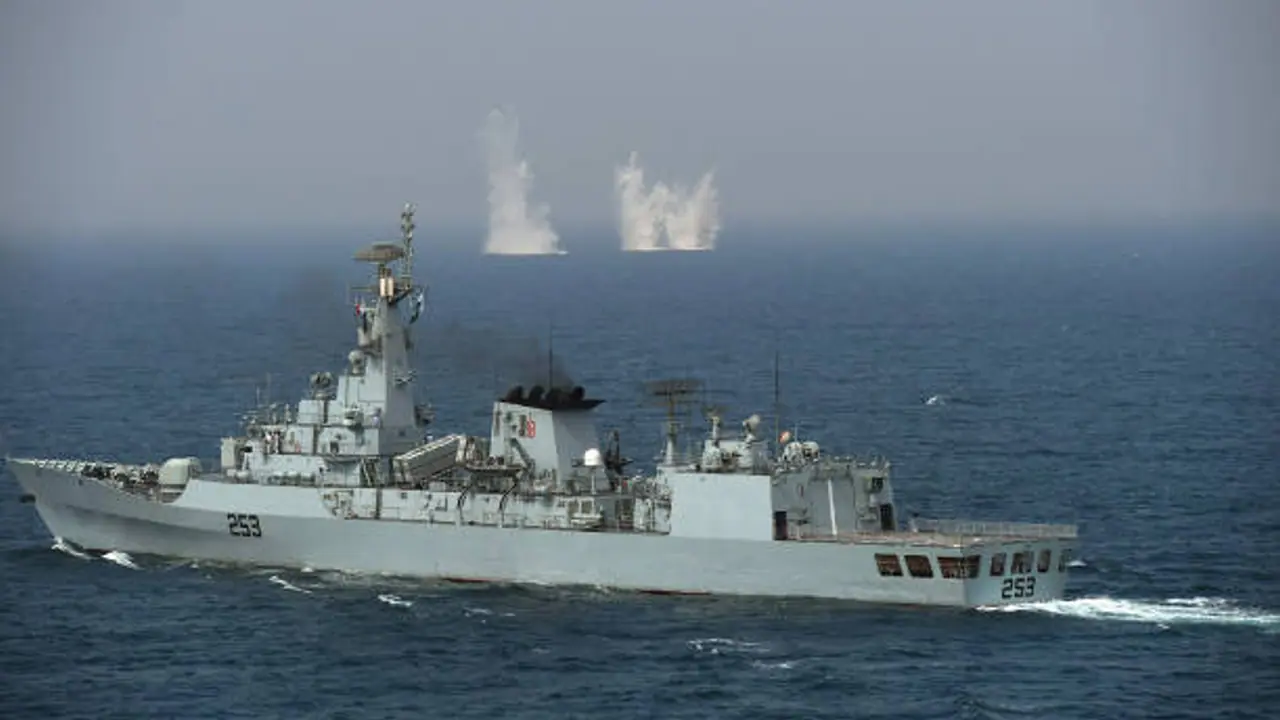
The largest visible naval investments in recent years have gone toward Chinese-built Type 054A/P frigates, Hangor-class submarines under construction with Chinese assistance, and maritime surveillance platforms. None of Pakistan's publicly disclosed naval procurement in the past decade has been framed by the Navy's own Inter-Services Public Relations wing around a capability relevant to the scenario that killed three Pakistani nationals in the August 11, 2026 missile strike on the cargo vessel Tihamah in the Bab al-Mandeb Strait.
What Pakistan Navy’s Public Communications Emphasise?
Budget lines reveal institutional priorities more reliably than press statements do. Pakistan Navy's public communications, tracked through ISPR releases over the past several years, emphasise submarine acquisition milestones, frigate commissioning ceremonies, and participation in high-visibility multinational exercises. These are categories of announcement built to project a modernising, capable navy trending toward blue-water status and regional influence.
Related Articles

Measuring Naval Modernisation Against Outcomes
That narrative is worth measuring against outcomes rather than accepting on its own terms. A submarine fleet, however capable, provides no protection to a cargo ship's crew transiting the Bab al-Mandeb. Neither does a frigate assigned to a distant multinational task force focused on counter-narcotics interdiction, however successful that mission. The 972 million dollar seizure by PNS Yarmook in October 2025 demonstrated real capability within its own scope. It did nothing to address the threat that killed Pakistani nationals three weeks after the Navy's most recent high-profile command rotation ended.
Domestic Scrutiny Of Naval Spending
Comparable questions have been raised in Pakistan's domestic press about procurement priorities within the broader defence budget. Public scrutiny of naval spending specifically, as distinct from the more heavily covered army budget, remains limited in Pakistani media coverage. Parliamentary oversight of defence spending operates through the Senate and National Assembly's defence committees. Neither body has, based on publicly available committee records, held a dedicated session examining the outcomes of naval modernisation against the specific maritime risks Pakistani nationals face abroad.
The Tihamah Strike And Naval Priorities
The Tihamah strike offers a natural point for that scrutiny to begin. A navy's modernisation programme is, by definition, a statement of what threats and missions its government considers worth resourcing. Pakistan's current programme resources submarines, frigates and surveillance assets aligned with deterrence and blue-water ambition. Measured against an incident that killed Pakistani nationals in a known high-risk corridor, the connection between that resourcing and the outcome the Navy's public narrative implies it should deliver is not yet visible in any budget line publicly identifiable.
Ashu Mann is an Associate Fellow at the Centre for Land Warfare Studies. He is pursuing a PhD in Defence and Strategic Studies. His research focuses include the India-China territorial dispute, great power rivalry, and Chinese foreign policy.
(The opinions expressed are solely those of the author and do not reflect the views or stance of the organization. The organization assumes no responsibility for the content shared)