South Korean prosecutors have sought a one-year prison sentence for the owner of a Michelin-starred restaurant accused of illegally serving ants as a dessert garnish, according to local media reports.
South Korean prosecutors have sought a one-year prison sentence for the owner of a Michelin-starred restaurant accused of illegally serving ants as a dessert garnish, according to local media reports. The high-profile case has drawn attention to the country's strict food safety regulations, with authorities alleging the restaurant used thousands of imported ants over several years despite the insects not being approved for human consumption.
During a court hearing on Monday, prosecutors also requested a fine of 20 million Korean won (around $13,510 or £10,100) for the two-Michelin-star restaurant.
South Korean law permits only 10 insect species to be consumed as food, including grasshoppers, locusts and two-spotted crickets. Ants are not among the approved species.
Related Articles

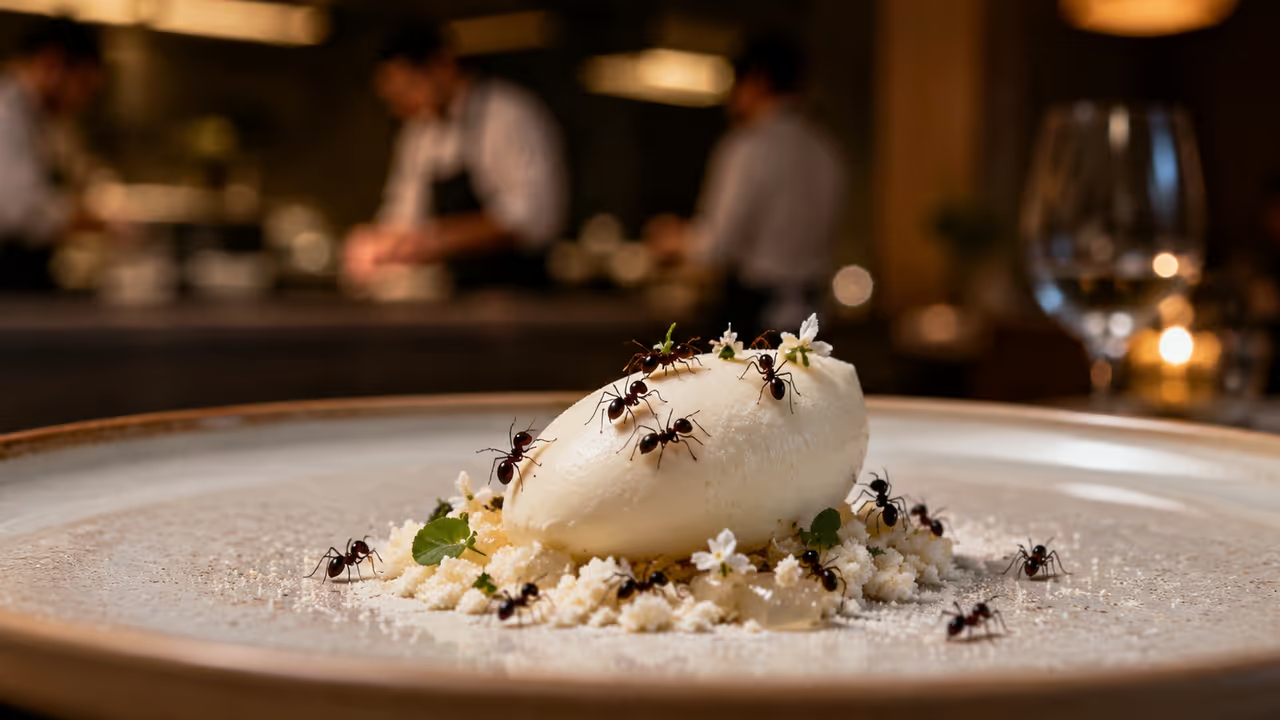
The restaurant owner admitted to serving ants but maintained that they appeared only in a limited portion of the establishment's elaborate 15-course tasting menu. The insects were used as a topping for sorbets, and diners were reportedly offered the choice of non-ant alternatives.
The controversy surfaced after officials from the Ministry of Food and Drug Safety discovered online customer reviews featuring photographs of dishes garnished with ants. Investigators later estimated that around 49,000 ants imported from the United States and Thailand had been served across multiple dishes over a four-year period.
According to The Chosun Daily, health authorities also found that the ants used by the restaurant "contained up to 55 times more heavy metals than typical edible insects", raising additional food safety concerns.
South Korean regulators assess several factors before approving insects for consumption, including food safety risks, toxicity, nutritional value, and whether they can be bred and processed under hygienic conditions.
In its defence, the restaurant owner argued that only about 60% of diners chose to try the ant-topped dishes, while the remaining guests were served alternatives such as fermented vinegar and edible flowers.
He also contended that restaurants in countries including Australia, Denmark and the United Kingdom incorporate ants into their menus.
Court documents have not disclosed the identity of either the restaurant or its owner. South Korea currently has 10 restaurants, all located in Seoul, that hold two Michelin stars.
The Michelin Guide awards up to three stars based on ingredient quality, flavour, cooking technique, the chef's personality and consistency. A two-star rating signifies restaurants offering "excellent cooking" that are "worth a detour", according to Michelin's criteria.
The court is scheduled to announce its verdict on September 2.
While ants remain prohibited as food in South Korea, they are widely consumed—and in some regions regarded as a delicacy—in parts of Asia, Africa and Latin America. Weaver ants and their eggs feature prominently in Thai and Cambodian cuisine, while queen ants are considered a prized delicacy in Colombia, often compared to caviar.