
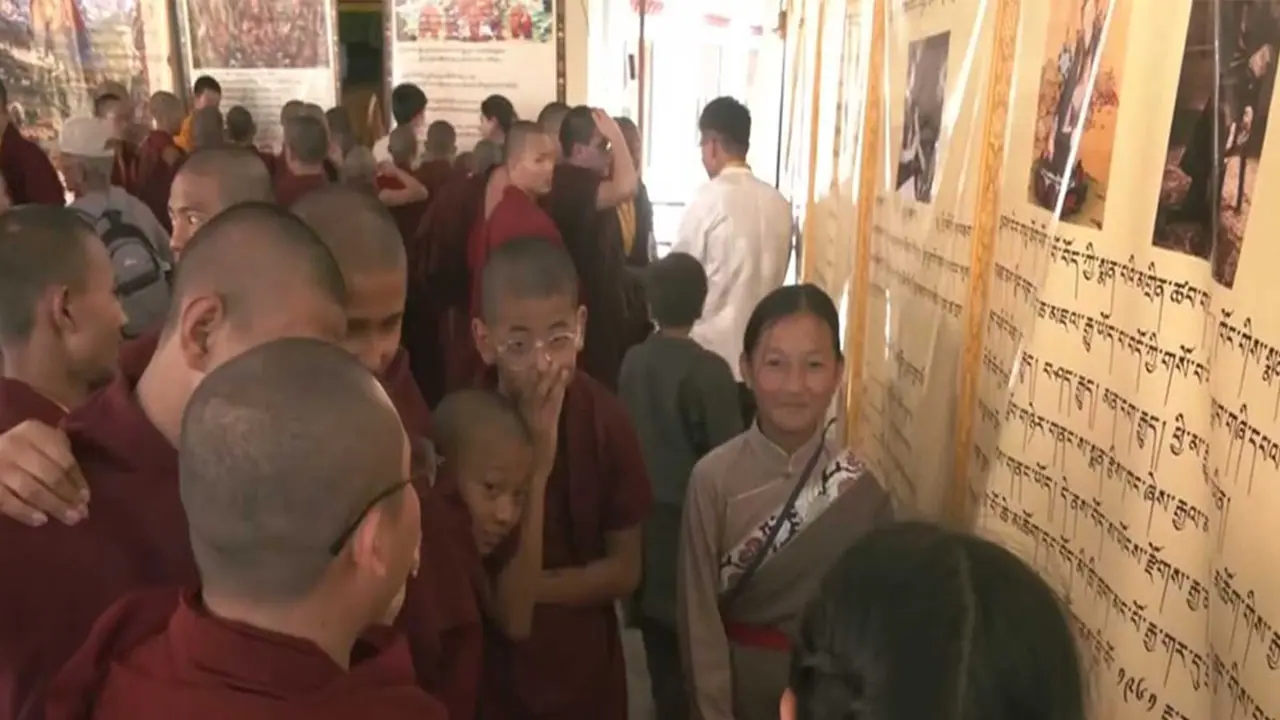
A week-long exhibition in Shimla showcases Tibetan history, culture, and identity at Dorjee Drak Monastery. The event aims to educate young Tibetan monks, students, and the Himalayan Buddhist community about their rich heritage and traditions.
Preserving Tibetan Identity in Shimla
A week-long exhibition showcasing Tibetan history, culture, traditions, language, Buddhist heritage and the evolution of Tibetan identity has drawn the attention of young Tibetan monks, students and Buddhist monks from across the Himalayan region at Dorjee Drak Tibetan Buddhist Monastery in Panthaghati, Shimla.
The exhibition is being organised jointly by the Chief Representative Office, Shimla, Dorjee Drak Monastery and Sambhota Tibetan School, Shimla, as part of the Tibetan Identity Preservation and Observance Week. The initiative seeks to create greater awareness about the rich cultural heritage, identity, traditions and historical significance of the Tibetan people while encouraging younger generations and the wider public to understand and appreciate the community's cultural traditions.
A Three-Generation Challenge
Speaking to ANI in Shimla on Wednesday, Chief Representative of the Central Tibetan Administration, Lhakpa Tsering, said the observance has particular significance, as 67 years have passed since the events of 1959, and the Tibetan community is now witnessing the transmission of its identity and heritage across three generations. "Tibetan Identity Preservation and Observance Day is very important because 67 years have passed since 1959. My parents were the first generation, I am the second generation, and my children are the third generation," Tsering said.
He said preservation of Tibetan identity has become particularly important for communities living outside the major Tibetan settlements, including those in Himachal Pradesh and the Northeast, where the surrounding social environment, language, lifestyle and access to schools can create additional challenges for maintaining traditional practices. "Day by day, our language, culture and tradition are diminishing," he said, underlining the need to make younger Tibetans aware of their heritage.
According to Tsering, the week-long observance is being held across India, Nepal and Bhutan, with all 45 Tibetan settlements participating in the programme. He said the Shimla exhibition was deliberately organised at the Dorjee Drak monastery so that it could reach not only Tibetan settlement residents but also the large Himalayan Buddhist community associated with the monastery.
Strategic Venue Choice
"Many people from the settlement have gone for winter business, and only a few elderly people are remaining there. Here, we have a Himalayan community. This is a Nyingma monastery, and there are around 300 Himalayan monks," he said.
He added that the monks come from different parts of the Himalayan region but share common Buddhist traditions and cultural practices, making the monastery an appropriate place for the exhibition.
Exhibition Highlights and Content
The exhibition has also emerged as a learning platform for young monks. Tsering said the younger monks have been visiting different counters and learning about Tibetan history, religion, administration and traditional life.
Students of Sambhota Tibetan School have been explaining the exhibits and providing information to visitors, including about the five traditions represented in Tibetan religious and cultural life -- Gelug, Nyingma, Sakya, Kagyu and Bon. The exhibition also provides information about the Tibetan administration under Sikyong Penpa Tsering and explains the functioning of its democratic institutions, including the executive, legislature and judiciary.
Another section focuses on the three traditional regions of Tibet -- U-Tsang, Amdo and Kham -- and provides information about the distinct ways of life, including traditional clothing, food and cultural practices associated with the regions. Tsering said the effort is aimed particularly at the third generation so that younger Tibetans remain connected with their historical and cultural roots. "This is all being given to the third generation so that they can know about our culture, tradition, history and identity," he said.
Focus on the Dalai Lama
A significant section of the exhibition is devoted to the Dalai Lama. It contains brief biographical information about the first through the 14th Dalai Lama, while students and faculty members explain the life and legacy of His Holiness, the importance of Buddhism and the wider cultural significance of the institution for Tibetans, the Himalayan region and the international community.
Tsering said the life and legacy of the Dalai Lama remain an important part of Tibetan identity and collective memory. Referring to the Dalai Lama's July 2 statement regarding his longevity, Tsering said Tibetans and Himalayan communities were hopeful about his continued presence and his contribution to peace, harmony and compassion.
He said the Tibetan community believes the Dalai Lama's continued life would be important for the well-being of sentient beings and for preserving peace, harmony and compassion among Tibetans, Himalayan communities and the international community. Tsering said Tibetan and Himalayan communities were happy about the Dalai Lama's longevity and expressed hope that one day they would be able to return to their motherland, Tibet, along with His Holiness the Dalai Lama.
Educational Impact and Wider Reach
The exhibition has also been attracting Buddhist monks from the Himalayan region, who have described it as an interesting and educational initiative. Young Tibetan monks and other Himalayan Buddhist monks have been visiting the different displays and learning about aspects of Tibetan history and culture that are often not covered in their regular educational settings.
Buddhist monk Sedup Mipham Lama, who participated in the programme, also spoke to ANI in Shimla on Wednesday and highlighted the educational value of the exhibition for monks and the younger generation.
Tsering said the organisers also wanted the exhibition to reach people beyond the Tibetan settlements and monastery community. He said a similar exhibition had been organised briefly at the school ground on September 2, but many people were unable to attend it. "Most people could not come there. The monastery is more convenient for the people of Shimla, for the monks and also for people from the settlement," he said.
Future Plans and Broader Significance
The exhibition is also intended to serve as a bridge between generations, with school students taking an active role in explaining the displays to monks, visitors and members of the public. Tsering said the response from young monks and members of the Himalayan Buddhist community has encouraged the organisers to take the initiative to more locations.
He said similar exhibitions are planned at Jonang Monastery, Himachal Pradesh University and other universities and educational institutions where such an exhibition can help students and the wider public understand Tibetan history, culture and identity. The organisers said the exhibition would continue to provide visitors with an opportunity to understand Tibetan cultural traditions, Buddhist heritage, historical developments and the importance of preserving language and identity among younger generations living outside Tibet.
The initiative comes as Tibetan communities continue to emphasise the importance of passing their language, cultural practices, religious traditions and historical knowledge from one generation to another, particularly among Tibetans born and raised outside their traditional homeland. The participation of young monks, school students and members of the wider Himalayan Buddhist community has given the Shimla exhibition a broader character, bringing together education, cultural preservation and inter-community learning under the Tibetan Identity Preservation and Observance Week. (ANI)
(Except for the headline, this story has not been edited by Asianet Newsable English staff and is published from a syndicated feed.)