
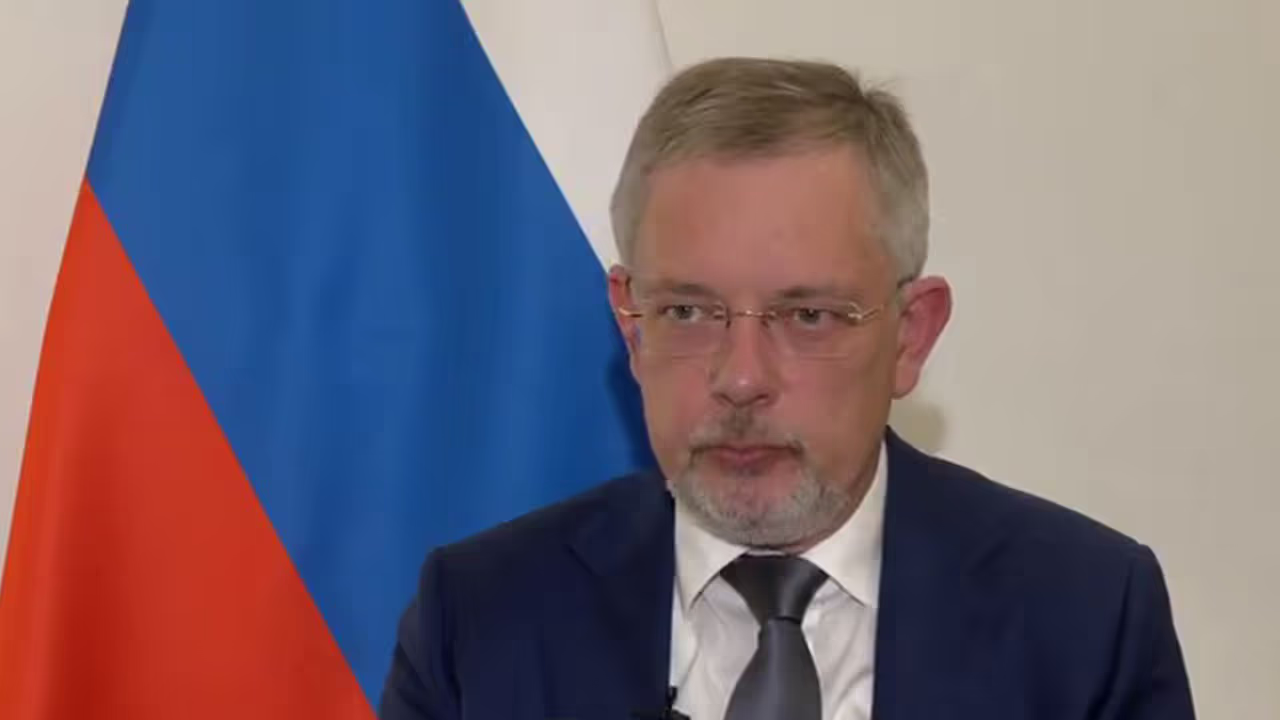
Russian Ambassador Denis Alipov reaffirmed Moscow's commitment to India's energy needs, condemning Western sanctions on Russian oil as 'pressure tactics' and praising New Delhi's independent foreign policy in defending its national interests.
In a strong reaffirmation of bilateral energy ties, Russian Ambassador to India Denis Alipov stated that Moscow remains committed to fulfilling New Delhi's energy demands. Speaking to ANI, he criticised Western secondary sanctions and tariffs targeting Russian oil trade, asserting that such measures represent punitive "pressure tactics" rather than constructive global engagement.
'India Has Shown It's Able to Stand its Ground'
Responding to questions regarding Moscow's confidence in the India-Russia energy alliance amid heightened Western regulatory scrutiny and secondary sanctions risks, Ambassador Alipov turned the spotlight onto New Delhi’s independent foreign policy. "The question is — how confident is India? India has shown that it's able to stand its ground and defend its national interests. And when we speak about the sanctions pertaining to oil trade, the tariffs are also related to the cooperation between Russia and India in oil supplies. These interests are paramount for India," Alipov emphasised.
Russia Ready to Supply 'As Much Oil as India Needs'
Addressing Western restrictions, including secondary sanctions designed to curb third-party nations from dealing with major Russian oil producers, the envoy condemned the punitive frameworks meant to disrupt Russia's price-competitive market position. "We would be ready to supply as much oil as India needs. Unfortunately, those who impose sanctions and tariffs have taken the path of pressure tactics instead of honest cooperation, which prevents those countries from offering a better deal to India in oil than us," he stated.
Warning against international attempts to isolate Russian energy exports, Alipov asserted that world supply chains cannot function effectively without Russian crude, emphasising that market fundamentals would ultimately preserve the trade. "The world will not cope if Russian oil is excluded. The energy markets cannot afford that. Russian oil will stay in the market for India and other countries. We are interested in supplying oil to India. India is interested in buying that oil...," Alipov added.
Understanding Secondary Sanctions
The Ambassador’s remarks come against the backdrop of expanding secondary sanctions imposed by Western coalitions, notably the United States and the European Union. Unlike primary sanctions (which directly prohibit Western entities from trading with Russia), secondary sanctions target third-country entities—such as Indian refiners, shipping lines, and banks—by threatening them with financial blacklisting, loss of access to global banking channels, or punitive tariffs if they continue facilitating transactions with key Russian energy providers.
India has consistently maintained that its crude oil procurement strategy is driven purely by national interest, market affordability, and consumer price stability. While Western measures aim to restrict Russian oil revenue, New Delhi continues to balance its energy security imperatives against international regulatory compliance. (ANI)
(Except for the headline, this story has not been edited by Asianet Newsable English staff and is published from a syndicated feed.)