
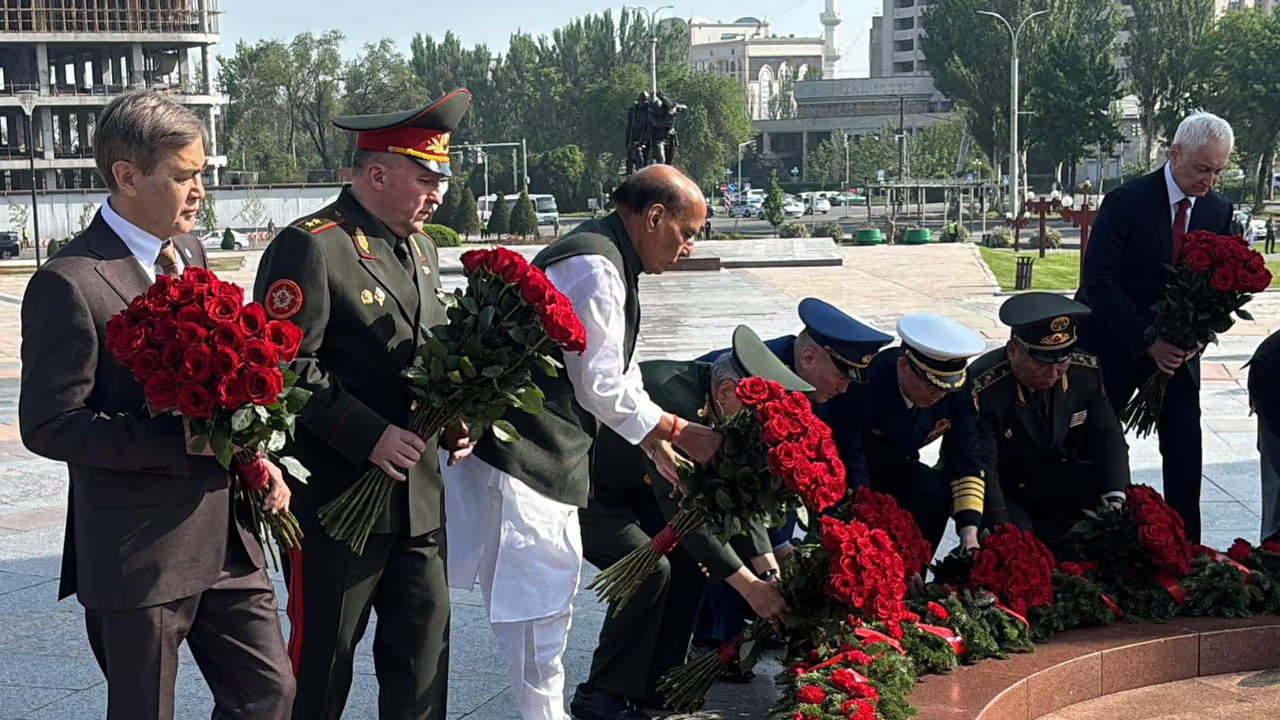
Defence Minister Rajnath Singh is in Bishkek for the SCO defence ministers' meeting. He paid tribute to fallen heroes before the summit, where regional security, the West Asia crisis, and counter-terrorism will be discussed.
Defence Minister Rajnath Singh on Tuesday paid tribute to the fallen heroes by laying a wreath at Victory Square in Bishkek, marking a solemn start to his official engagements in the capital. The visit follows Singh's arrival in the Kyrgyz capital on Monday to attend the Shanghai Cooperation Organisation (SCO) defence ministers' meeting, where regional security and the ongoing crisis in West Asia are expected to dominate the agenda.
SCO Summit Agenda
The gathering, scheduled for Tuesday, will see defence chiefs from member nations deliberating on critical issues, including international peace, counter-terrorism initiatives, and enhanced defence cooperation within the bloc. According to the Defence Ministry, this year's summit is being held against the backdrop of the conflict in West Asia, and the SCO, one of the world's largest political and economic bodies, is likely to explore strategies to mitigate the impact of the hostilities.
India's Stance and Priorities
Prior to his departure from New Delhi, Rajnath Singh had emphasised India's priorities on the global stage, stating on X: "Leaving for Bishkek in Kyrgyzstan... Shall highlight India's commitment towards global peace, amidst the security challenges prevailing in the world, apart from conveying India's consistent stance on Zero Tolerance for Terrorism and Extremism."
Upon his arrival in Bishkek, the Defence Minister was accorded a traditional ceremonial reception, which included being offered Borsok, a well-known Kyrgyz delicacy. Beyond the formal summit, Singh is also expected to conduct bilateral meetings with his counterparts from several participating countries on the sidelines to discuss mutual security interests.
About the Shanghai Cooperation Organisation
The SCO currently includes India, Russia, China, Pakistan, Kazakhstan, Kyrgyzstan, Tajikistan, Uzbekistan, Iran, and Belarus. Since becoming a full member in 2017, India has played a pivotal role in the grouping, notably assuming the rotating chairmanship in 2023.
Originally founded in 2001 by Russia, China, and Central Asian states, the SCO has grown into a major regional powerhouse over the last twenty years. Its strategic influence was further expanded last year during the Indian presidency with the formal induction of Iran as a full member state. (ANI)
(Except for the headline, this story has not been edited by Asianet Newsable English staff and is published from a syndicated feed.)