
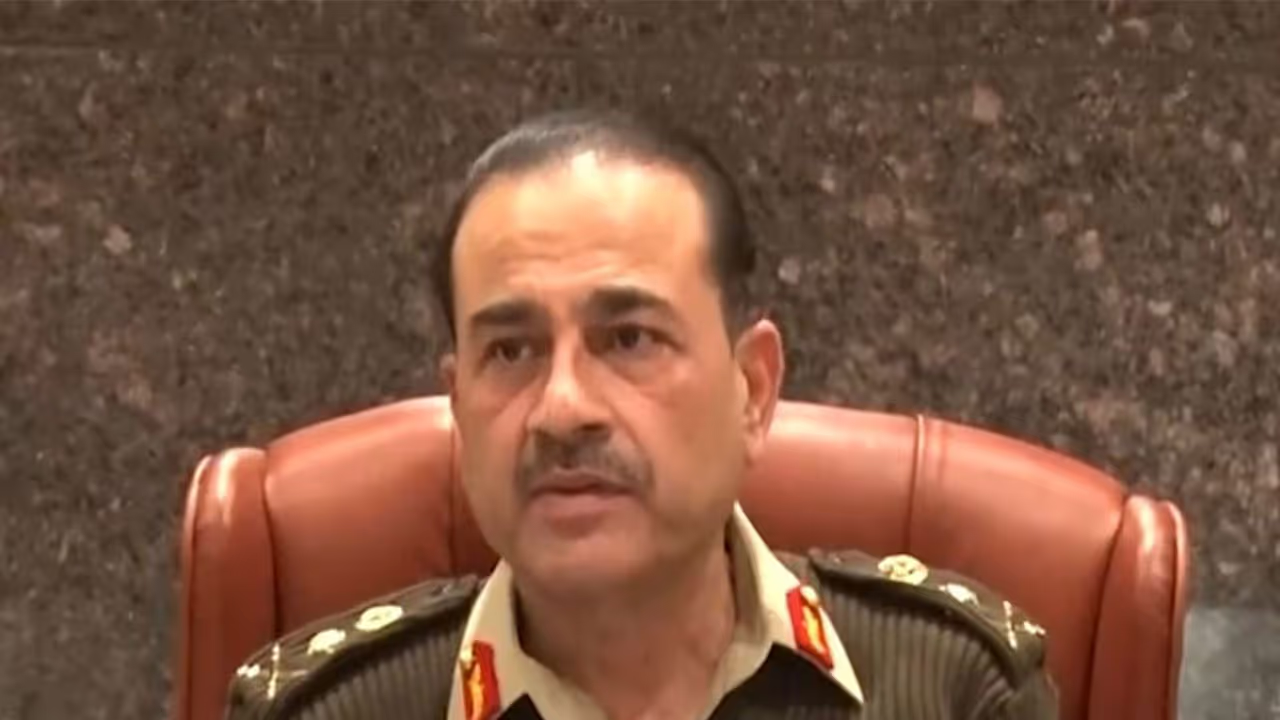
Pakistan's Army Chief Asim Munir is in Tehran for urgent talks amid hopes of a US-Iran deal to end tensions. His visit follows a diplomatic marathon by Pakistan's Interior Minister Mohsin Naqvi to bridge differences between Tehran and Washington.
Pakistan's Army Chief, Asim Munir, departed for Tehran on Friday amid expectations of a possible announcement of an agreement between Iran and the United States aimed at ending months of deadlock and tensions in West Asia that had repercussions across the world, according to a report by Iran's state-run IRNA news agency.
This urgent journey follows immediately after a continuous three-day diplomatic marathon in Tehran conducted by Pakistan's Interior Minister Mohsin Naqvi. Having arrived in Iran on an unannounced visit earlier this week, Naqvi has already held meetings with President Masoud Pezeshkian alongside other senior Iranian leaders. According to Iranian and Pakistani media reports, the discussions focused on detailed proposals to bridge differences between Tehran and Washington, end the ongoing standoff, and explore mechanisms for ensuring long-term regional peace and stability.
Iran Restructures Diplomatic Team Amid Talks
The schedule for Munir's arrival in the Iranian capital is exceptionally compressed, unfolding against a backdrop of severe global warnings that have heightened the stakes of the mission. This rapid regional movement coincides with a major internal realignment of Tehran's own diplomatic core. In a significant restructuring of Tehran's diplomatic apparatus, Iranian Foreign Ministry spokesperson Esmail Baqaei has been appointed as the official spokesperson for the country's active negotiating team, according to authoritative Al Arabiya sources. The strategic appointment comes as Iran recalibrates its delegation amid critical high-stakes regional and international peace talks.
Concurrently, Iran's Speaker of Parliament Mohammad Baqer Ghalibaf has been reappointed to lead the diplomatic delegation, according to the same Al Arabiya sources. The decision to retain the influential Iranian Parliament Speaker Mohammad Bagher Ghalibaf at the helm underscores Tehran's intent to maintain political continuity and heavyweight legislative backing at the negotiating table. These administrative shuffles within the delegation signal a coordinated effort by the Iranian establishment to streamline its communications and strategic leverage during the ongoing diplomatic maneuvers.
US Pressure Mounts as Deadline Nears
These internal reconfigurations have become critical as the deadline for a breakthrough narrows under intense pressure from Washington. On Wednesday, US President Donald Trump cautioned that the window for active diplomacy had arrived at a perilous "borderline" between a formal peace memo and an immediate, catastrophic escalation. Furthermore, the White House has consistently sustained immense rhetorical pressure, warning of unprecedented military consequences if the current backchannel format fails to produce a satisfactory "piece of paper".
Compounding the crisis, internal dynamics in Iran remain highly combative, threatening to derail the prospects of an imminent deal. Simultaneously, hardline factions within Tehran's legislative assembly have accused Washington of exploiting the temporary pause in hostilities to regroup, threatening a "forceful response" that would expand the conflict far beyond West Asia. By stepping directly into this hyper-volatile deadlock, Munir is attempting to navigate a crisis where very few global actors are simultaneously engaged by the Trump administration and the Iranian high command. (ANI)
(Except for the headline, this story has not been edited by Asianet Newsable English staff and is published from a syndicated feed.)