
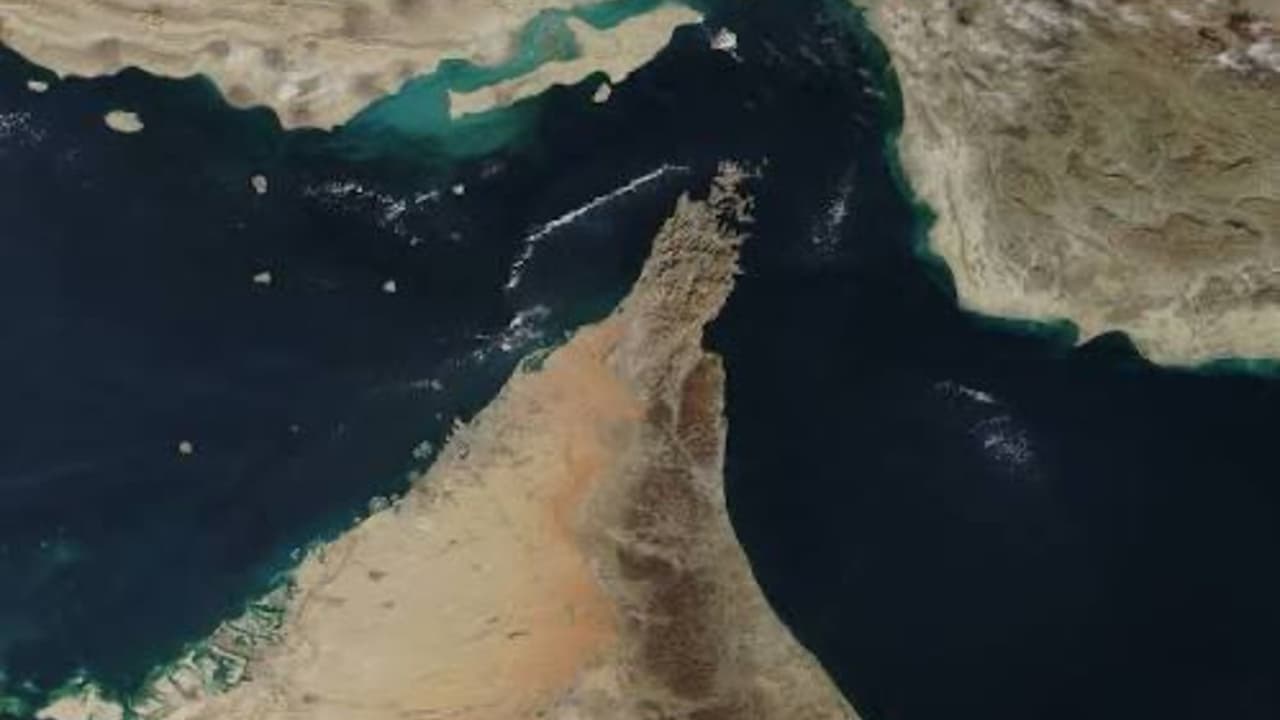
Iran is restricting maritime traffic in the strategic Strait of Hormuz to 15 ships per day. The move is enforced by its Revolutionary Guard despite a ceasefire with the United States. As a critical chokepoint for nearly one-fifth of global oil, the restriction severely disrupts shipping.
Iran is set to sharply restrict maritime traffic through the strategically vital Strait of Hormuz, allowing only 15 ships per day under a new arrangement reportedly linked to the ongoing ceasefire with the United States. The move signals Tehran’s continued control over one of the world’s most critical energy corridors, even as diplomatic efforts attempt to stabilise the region.
The Strait of Hormuz, a narrow passage connecting the Persian Gulf to global markets, is responsible for transporting nearly one-fifth of the world’s oil supply. Any disruption or restriction in traffic through this chokepoint has immediate and far-reaching consequences for global energy markets.
According to reports, the restriction comes as part of a broader security framework being enforced by Iran’s Islamic Revolutionary Guard Corps (IRGC). Ships transiting the waterway are required to comply with strict routing instructions and coordinate with Iranian authorities, reflecting Tehran’s assertion of operational control over the strait.
Despite a ceasefire agreement aimed at reducing hostilities, maritime activity remains severely constrained. Shipping traffic has dropped dramatically compared to normal levels, with only a handful of vessels navigating the strait daily. In some instances, transit has fallen to less than 10% of usual traffic, highlighting the continued risks and uncertainty faced by global shipping companies.
Iran has maintained that only “non-hostile” vessels will be permitted passage, reinforcing its stance that access to the strait is conditional and subject to its security considerations.
The limited reopening of the waterway is seen as a cautious step rather than a full restoration of normal shipping operations. Hundreds of vessels remain stranded or delayed in the region, while many shipping firms continue to avoid the route due to safety concerns, including the threat of naval mines and potential military escalation.
The restrictions also come amid discussions around potential transit fees, which could further reshape the long-standing principle of free passage through international waterways. While some countries have opposed such measures, the evolving situation suggests a shift in how the strait may be governed in the near term.
Even with the ceasefire in place, tensions remain high across the region, particularly with ongoing conflict dynamics involving Israel and Lebanon. Analysts warn that the Strait of Hormuz will remain a geopolitical flashpoint, with Iran’s calibrated control serving both as leverage in negotiations and as a demonstration of its strategic power.
As global powers monitor developments closely, the “15 ships per day” limit underscores a new phase of managed access—one that could continue to disrupt oil flows, trade routes, and economic stability worldwide.
Also Read: Can Iran Tax Ships in Hormuz? What Global Maritime Law Says
