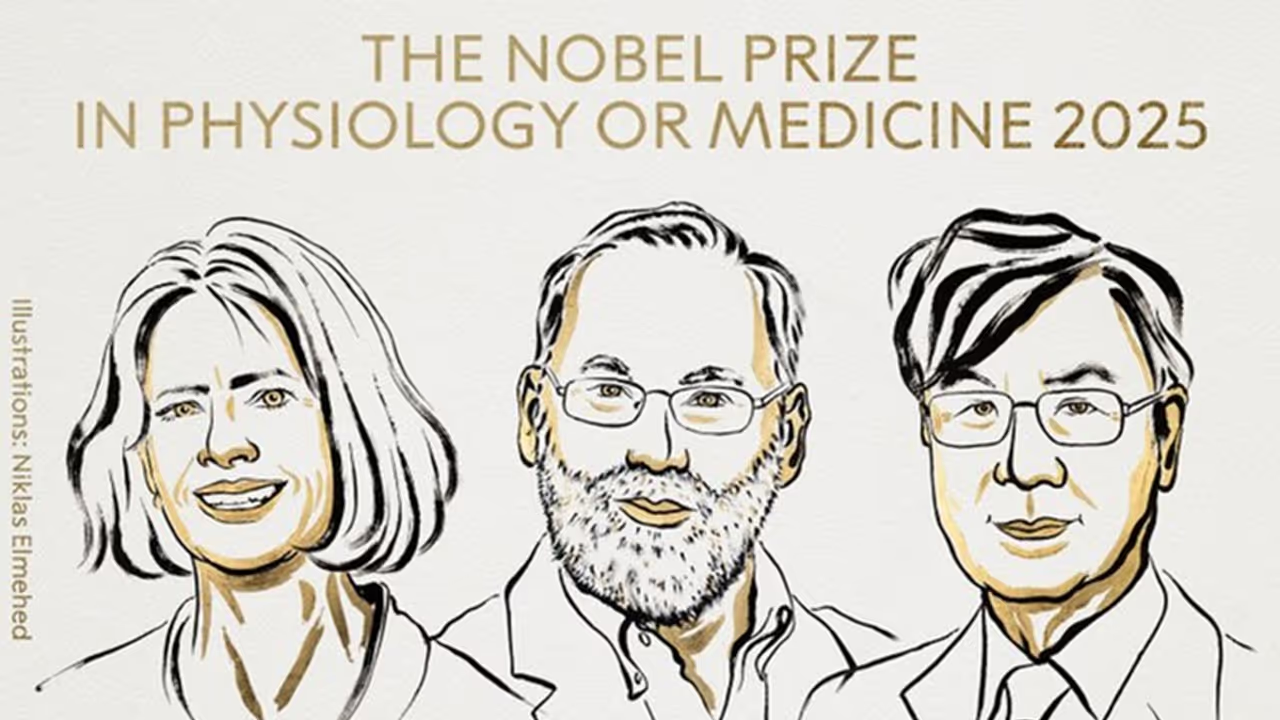
The 2025 Nobel Prize in Physiology or Medicine has been awarded to Mary E. Brunkow, Fred Ramsdell and Shimon Sakaguchi. They were recognised for their groundbreaking discoveries on peripheral immune tolerance.
The 2025 Nobel Prize in Physiology or Medicine has been awarded to Mary E. Brunkow, Fred Ramsdell and Shimon Sakaguchi. They have been recognised for their groundbreaking discoveries on peripheral immune tolerance, which help explain how the immune system distinguishes between harmful and harmless cells. Their work offers new insights into treating autoimmune diseases.
Prize and Recognition
The winners, selected by the Nobel Assembly of Sweden’s Karolinska Institute, will receive 11 million Swedish crowns ($1.2 million) and a gold medal presented by the King of Sweden. The committee said their research has paved the way for a new field and advanced treatments for cancer and autoimmune diseases.
Related Articles

About the Nobel Prizes
Established by Alfred Nobel, the Swedish inventor of dynamite, the Nobel Prizes have been awarded since 1901 to recognise outstanding achievements in science, literature, and peace. The Economics Prize was added later and is funded by Sweden’s central bank.
Tradition and ceremony
Most Nobel Prizes are awarded in Stockholm, while the Peace Prize is presented in Oslo. Recipients are chosen by expert committees, and the annual ceremony, held on 10 December, includes royal attendance and a formal banquet. Past winners include Alexander Fleming, known for discovering penicillin, and last year’s medicine prize went to Victor Ambros and Gary Ruvkun for their work on microRNA.
Significance of the Award The Nobel Prizes remain among the most prestigious global awards, recognising groundbreaking research that shapes science and society. Medicine traditionally opens the Nobel announcements each year.