
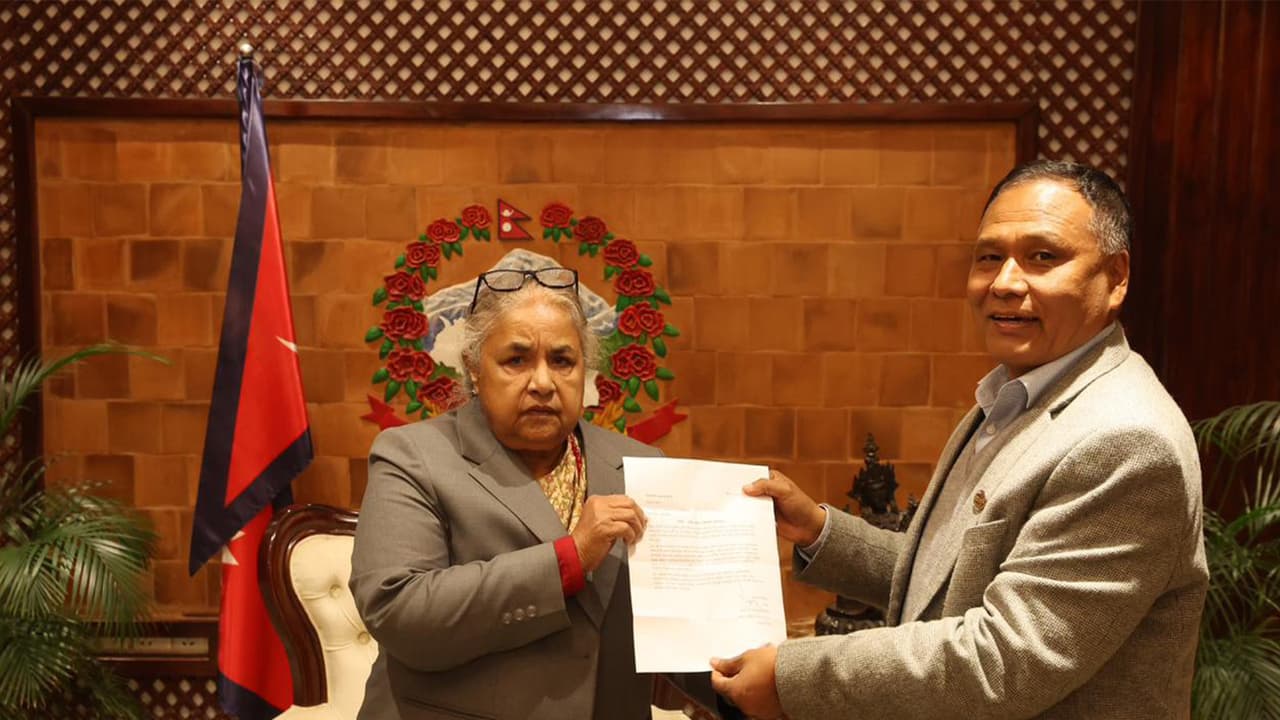
Nepal's Energy Minister Kulman Ghising has resigned from the interim neutral government. His exit comes amid controversy over his political affiliation after his party merged with the Rastriya Swatantra Party, making him its vice-president.
With mounting questions over his political affiliation, Nepal's Minister for Energy, Physical Infrastructure and Urban Development, Kulman Ghising has resigned from his post. Inducted in the "interim neutral government" in September last year after the Gen-Z protest, Ghising was the third most powerful minister on board the interim Sushila Karki's council of ministers.
The former bureaucrat who led the Nepal Electricity Authority and ended the "loadshedding" in the Himalayan Nation is regarded as the "power man" of the cabinet. But, his political affiliation was questioned by the interim Prime Minister herself as he had been operating a political party from shadow.
Controversy Over Party Merger
Ghising, last December had signed a merger agreement with the Rastriya Swatantra Party (RSP) and his party Ujyaalo Nepal Party, formed after the Gen-Z protest. Ghising has been claiming that the agreement has not yet been formally implemented. He also gave a statement about the same while announcing his resignation from the ministerial post late Wednesday night.
"Although my name is mentioned. in the agreement reached between the Ujyaalo Nepal Party and the Rastriya Swatantra Party, that agreement has not been formally implemented so far," Ghising said during a press conference held at the Ministry of Energy late on Wednesday.
Ghising, who had been leading the Ujyaalo Nepal Party as its patron for some time, entered a unification agreement with the RSP on December 29. Following the merger, he has become the top-ranked vice-president of the RSP. The RSP has included 14 individuals from his party in its list of proportional representation candidates.
Mounting Pressure and Contradictory Claims
Pressure had been mounting on Ghising to leave the government after becoming RSP vice-president. Noting that his presence in a non-partisan government was sending the message that the government belonged to one party, PM Karki had also requested him to step down.
However, Ghising said during an event on January 6 that he was not a member of any party. His statement denying membership of any party--despite having already signed an agreement to become RSP vice-president- drew criticism.
However, during Wednesday's press conference as well, Ghising reiterated that he is not a member of any party. "Despite my support and goodwill, I have not yet taken membership of any political party. It is my clear stance that I will take party membership only after formally entering political life," he stated.
In the wake of the Gen Z movement in September, President Ramchandra Paudel formed the interim government under the leadership of former chief justice Karki as a neutral government with the major mandate of holding elections for the House of Representatives on March 5.
Ghising has now quit the Cabinet after serving as a minister for 115 days.
(Except for the headline, this story has not been edited by Asianet Newsable English staff and is published from a syndicated feed.)