
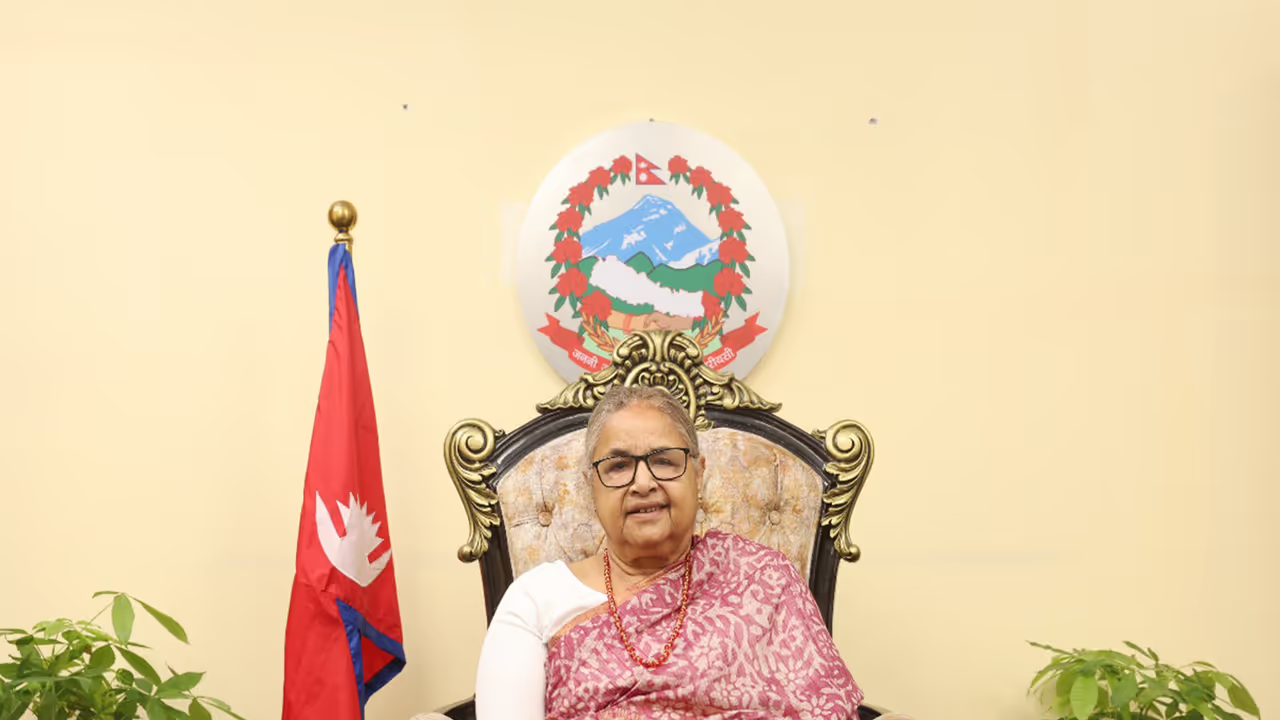
Nepal's interim PM Sushila Karki met with top political leaders, urging them to ensure the success of the upcoming March elections. While she assured readiness, leaders expressed concerns about security and an unfavourable environment for polls.
PM Urges Parties to Ensure Successful Polls
Nepal's interim Prime Minister Sushila Karki on Saturday held a meeting with the chiefs of the three largest political parties, urging them to fulfil their role in ensuring the successful conduct of the March polls.
During the meeting, the interim prime minister urged major political parties to ensure that the upcoming House of Representatives election, being held under challenging circumstances, is carried out successfully.
As per the interim prime minister's secretariat, Karki told the leaders that the election must be viewed as an investment in the nation's future and a necessary step towards securing a stable and durable democracy. She emphasised that holding successful elections is a shared responsibility.
"Let us make this election successful at any cost. Everyone must take part. The government assumes you are ready for the polls. The election environment is taking shape -- this is welcome," the prime minister said during the meeting.
During the meeting, the interim prime minister also stated that adequate resources have been provided to the Election Commission and security agencies for the commencement of the election. She added that the morale of security personnel has improved as preparations advance.
The meeting was attended by Nepali Congress President Sher Bahadur Deuba, CPN-UML Chair KP Sharma Oli, and Coordinator of the Nepal Communist Party Pushpa Kamal Dahal 'Prachanda'. Minister for Communication and Information Technology Jagadish Kharel was also present.
Concerns Over Security, Poll Environment
"All the political parties are ready to take part in the election. All the parties, including the Nepali Congress, are ready for it, but the environment is not favourable. First, a proper environment for the election should be in place, and there should also be assurance of security," Nepali Congress President Sher Bahadur Deuba said while exiting the meeting.
Background of Violent Protests
The September 8 protest turned bloody, with indiscriminate killing of youths by security forces. The protest was called in defiance of a social media ban and to demand an end to corruption. In Kathmandu alone, 23 protesters, mainly youths, were gunned down by police in a single day.
The next day, on September 9, violent mobs burned private and public infrastructure, businesses, and properties. A total of 76 people have been confirmed dead to date.
Postmortem reports of those killed in police firing in Kathmandu Valley stated death due to bullet injuries to the head and chest. During protests, police are only permitted to fire below the knee to control the situation. Police also used some lethal weapons to crack down on protesters, following which former Home Minister Ramesh Lekhak stepped down from his post. However, Oli remained adamant about not resigning despite rising pressure. Appointed interim prime minister on September 12, Karki recommended that the president dissolve parliament and called for elections on March 5, 2026. (ANI)
(Except for the headline, this story has not been edited by Asianet Newsable English staff and is published from a syndicated feed.)