
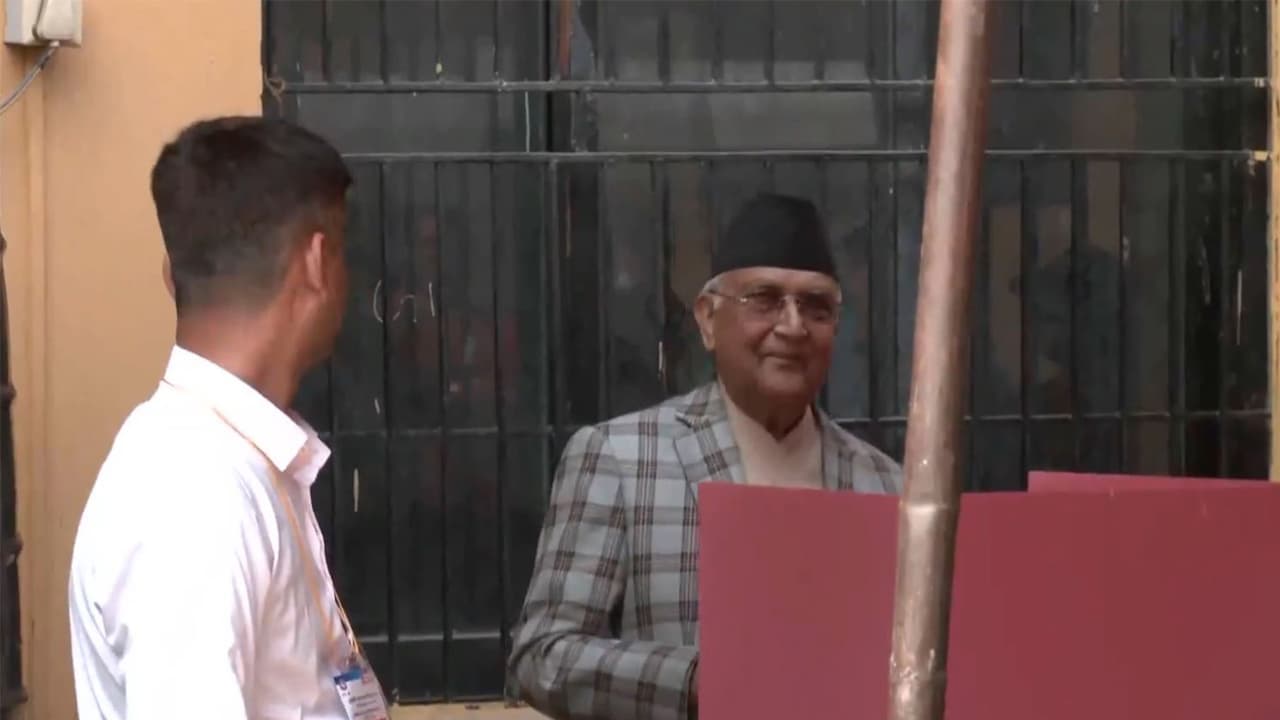
Former Nepal PM KP Sharma Oli, the PM candidate for CPN-UML, voted in Bhaktapur for the General Elections 2026. The polls are a crucial contest to elect a new government, with high-level leaders mobilizing their party campaigns.
Former Prime Minister of Nepal, KP Sharma Oli, on Thursday cast his vote at a polling station in Bhaktapur for the General Elections 2026. Oli, who is the Prime Ministerial candidate for the Communist Party of Nepal (Unified Marxist-Leninist) (CPN-UML), participated in the democratic process as the country holds its national polls to elect a new government. The CPN-UML leader's participation comes amidst a significant electoral contest, where he remains a central figure in the race for the premiership.
High-Stakes National Polls
The 2026 General Elections are seen as a crucial juncture for the Himalayan nation, with high-level leaders across the political spectrum mobilising to exercise their franchise and lead their respective party campaigns. This high-stakes electoral process is taking place in a single phase across all 77 districts, with polling scheduled from 7 am to 5 pm.
Voter Demographics and Candidate Field
According to a report by The Kathmandu Post, a total of 18,903,689 eligible voters are participating in the election to elect 275 members of the House of Representatives. The 2026 polls have seen a notable demographic shift, with an increase of over 915,000 voters since 2022. Crucially, 52 per cent of the electorate is now aged between 18 and 40, reflecting a significant youth influence on the national outcome. The election features a diverse field of 6,541 candidates competing across various systems to represent this evolving demographic.
Under the first-past-the-post system, 3,406 contenders, including 1,143 independents, are vying for 165 seats. Meanwhile, for the 110 seats reserved under the proportional representation system, 63 parties have listed a total of 3,135 candidates.
Logistics, Security, and Vote Counting
To facilitate this massive exercise, the Election Commission has established 23,112 polling centres at 10,963 polling stations nationwide. The Kathmandu Post noted that a robust security framework is in place to ensure a peaceful vote, with 341,113 personnel deployed, including 149,000 temporary "election police" recruited specifically for the polls.
The commission has expressed its commitment to a swift conclusion, stating that it aims to "publish first-past-the-post results within 24 hours after counting begins." (ANI)
(Except for the headline, this story has not been edited by Asianet Newsable English staff and is published from a syndicated feed.)