France has arrested five more suspects linked jewellery heist at Louvre Museum. The two suspects who were nabbed earlier have ‘partially admitted’ their involvement. The historic crown jewels stolen in this brazen daylight raid remain unrecovered.
French authorities on October 30, Thursday, said that they have arrested five additional suspects linked to the October 19 jewellery heist at the Louvre Museum, joining two earlier detainees who have 'partially admitted' their involvement. The historic crown jewels stolen in this brazen daylight raid remain unrecovered, AFP quoted the prosecutors said. The case now centres on organised theft and criminal conspiracy charges, with investigators warning that the precious items may have been dismantled or smuggled abroad.
How the heist at Louvre Museum took place
On the morning of October 19, a group of thieves targeted the Louvre Museum in Paris. They broke into the gallery that houses France's most precious crown jewels and made off with eight pieces in under eight minutes. According to prosecutors, the stolen items are still not recovered.
The value of the jewellery has been estimated at tens of millions of euros, although their historic and cultural worth is even greater.
Related Articles

Arrests and admissions
Initially, two men were arrested. The Laure Beccuau (Paris prosecutor) stated these men have partially admitted to their involvement. One suspect was detained at the airport as he was about to leave the country; the second was arrested in the Paris suburbs.
On October 30, French radio and media reported five new suspects have been arrested in the same case. The prosecutor's office has not yet publicly given full details of these further arrests.
Charges and legal situation
The prosecutor has announced plans to charge the original detainees with organised theft (which can carry a sentence of up to 15 years) and criminal conspiracy (potentially 10 years). Because of French law, the detained suspects may be held for up to 96 hours (for severe crimes) before formal charges.
At this point, the case remains an investigation and formal guilt has not been declared in court.
The missing jewels
Despite the arrests, the jewels remain missing. “They are not yet in our possession,” the prosecutor said. Investigators fear the pieces may have been broken up, melted down or smuggled abroad.
Because of their unique historic value and traceable features, the prosecutor noted they are “clearly unsellable” in normal markets, which may make recovery more likely if the trail is followed.
Investigative evidence and methods
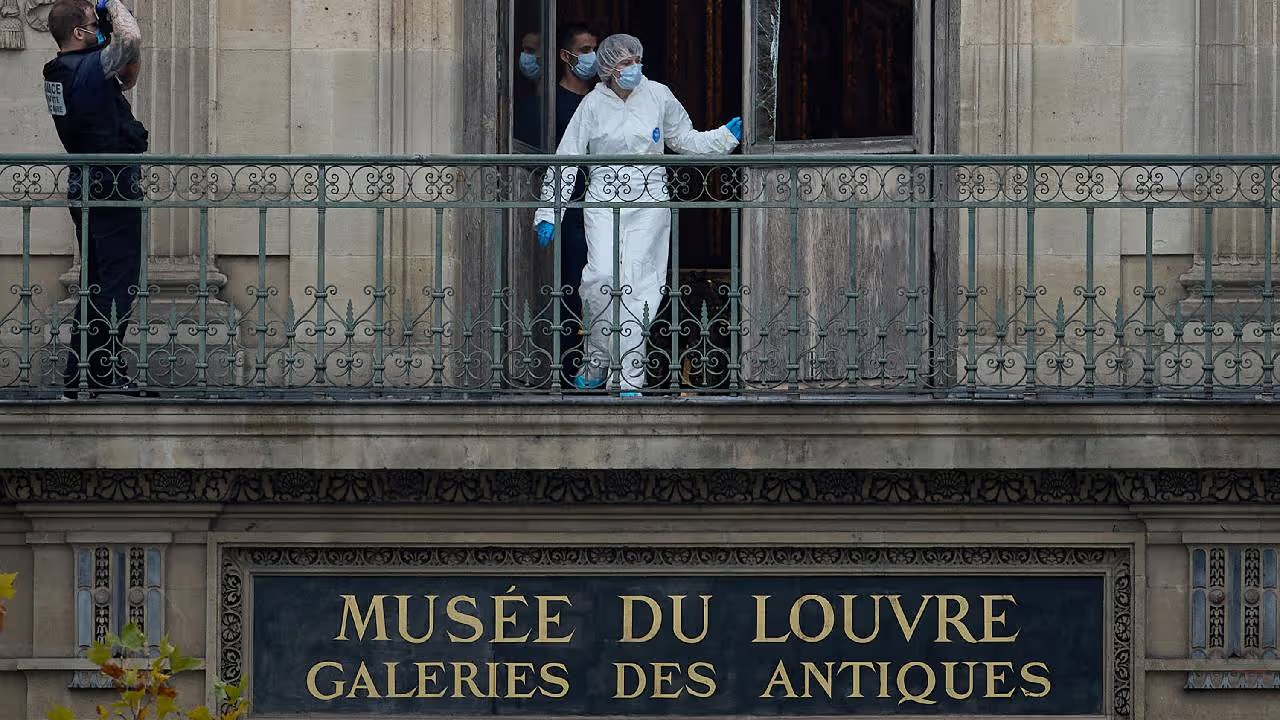
Investigators recovered key forensic traces at the scene of the heist. These include DNA samples, fingerprints and tools left behind by the robbers. Security camera footage and surveillance outside the museum also helped track escape routes and timing.
The arrests of the two initial suspects were aided by matching DNA traces from the crime scene.
Security concerns at the museum
Following the robbery, scrutiny has fallen on the security arrangements at the Louvre. French senators said the museum’s external cameras and other systems were 'not in line' with modern standards.
The investigation revealed that thieves accessed a window using a ladder from a furniture-truck lift and entered the gallery despite being in broad daylight.
With seven suspects now known to be arrested, the investigation will aim to:
- Identify whether there are more accomplices, including possibly a person who commissioned the theft.
- Trace the jewels' location and recover them.
- Move from investigation to charging stage and then possibly trial.
The prosecutor has emphasised urgency, while also warning that public leaks could impair the investigation. The stolen items are not only financially valuable but deeply rooted in French history. The boldness of the daylight robbery at the Louvre, a globally famed museum, is simply a major security failure.
(With inputs from agencies)