
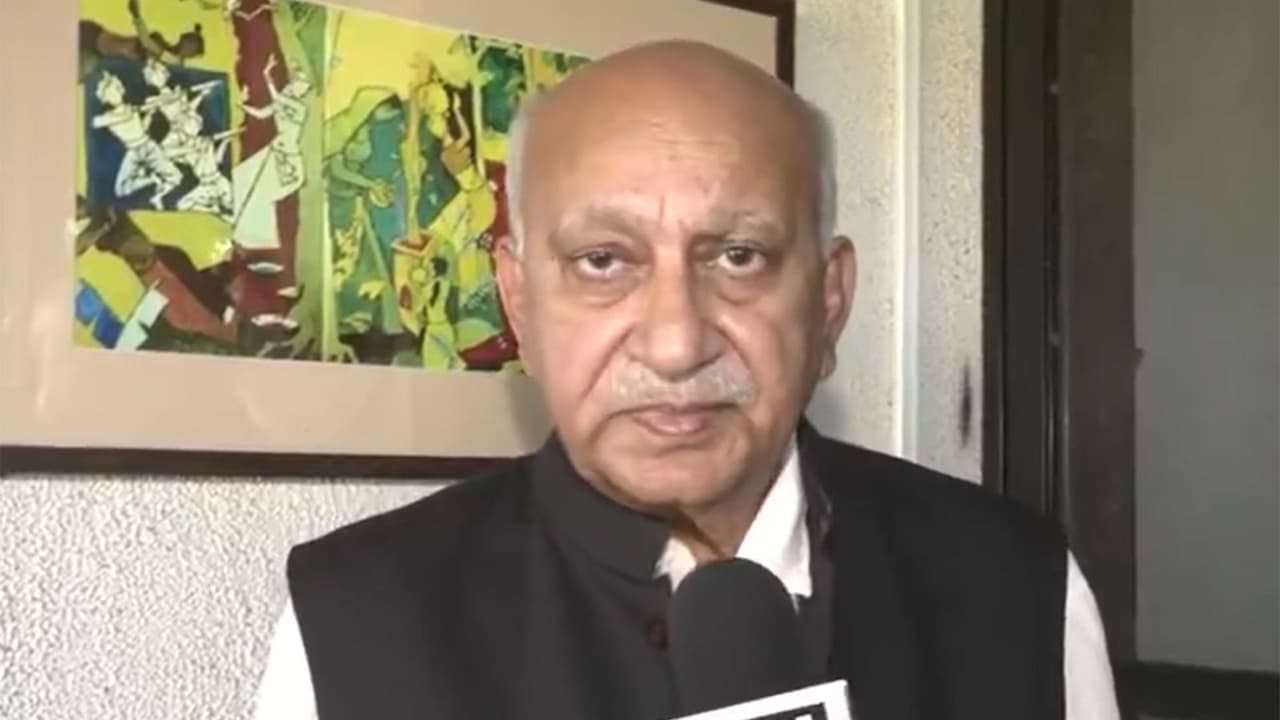
MJ Akbar warns Khamenei's death may strengthen Iran's regime, contrary to US aims. Expert Waiel Awwad condemns the strike, predicting severe retribution and arguing the true US goal has long been regime change, not nuclear concerns.
Akbar Warns of Unintended Consequences
As tensions escalate following the death of Iran's Supreme Leader Ayatollah Ali Khamenei, former Union Minister of State for External Affairs MJ Akbar warned that the fallout may produce consequences opposite to those intended by Washington DC. Speaking to ANI on Sunday, Akbar said, "The law of unintended consequences might have already kicked in. President Trump started this war by saying that his war objective was regime change. Instead, the assassination of Ayatollah Khamenei may have actually strengthened the Islamic regime."
According to Akbar, Khamenei's death risks elevating him in Shia religious and political consciousness. "Ayatollah Khamenei has now risen in the Shia iconography from a leader to a martyr," he said, suggesting that the killing could consolidate support for the Iranian establishment rather than weaken it.
He added that Tehran's official messaging reflects this posture. "The Iranian government has just issued a statement saying that his death will become 'a living nightmare' for those who killed him," Akbar noted.
'Cowardly Act with Serious Ramifications'
Meanwhile, in New Delhi, foreign affairs expert Waiel Awwad strongly condemned the strike. "This attack by Israel and the United States, killing an innocent citizen, the Supreme Leader, is a cowardly act. It will undoubtedly have serious ramifications for the region and make the situation more chaotic, because there will be significant retribution," he said.
Speaking to ANI, Awwad pointed to ongoing retaliatory actions."Retaliatory measures are already underway by Iran against Israeli targets," he said, arguing that the killing demonstrates that "the US and Israel are not genuinely concerned about Iran's nuclear program; their focus is instead on the Iranian government and the people."
He also referred to scenes of public mourning in Iran."Massive crowds taking to the streets to mourn their supreme leader, which directly contradicts Western narratives that he lacked popularity." Awwad said.
Wider Conflict and US Strategy
Warning of broader regional repercussions, Awwad said the development would resonate deeply within the global Shia community. "It is a concern for many countries and especially for the global Shia community. People will feel sympathy for their leaders," he said.
He further cautioned that the conflict would widen if allied groups became involved."If this conflict spreads, we can expect further attacks from groups such as the Houthis, Hezbollah in Lebanon," he said, adding, "This escalation is precisely what the United States and Israel want -- a prolonged war in West Asia that does not end quickly."
Awwad argued that regime change has long been part of US strategic thinking." It's important to understand the true message from the US: they began seeking regime change more than two decades ago. What we are witnessing now is a different approach, but the objective remains the same -- removing regimes by force. They have attempted this in Venezuela, they are attempting it in Iran, and tomorrow it could be anywhere," he said. (ANI)
(Except for the headline, this story has not been edited by Asianet Newsable English staff and is published from a syndicated feed.)