A Hong Kong court sentenced media mogul Jimmy Lai to 20 years in prison on Monday following his high-profile national security trial that rights groups and Western nations have condemned as a symbol of the city's shrivelling press freedoms.
Hong Kong once enjoyed an era of freewheeling and independent news outlets, with the pro-democracy tabloid Apple Daily and its outspoken founder Jimmy Lai at the centre of a vibrant media landscape. The 78-year-old media mogul has been sentenced to 20 years in jail on Monday after being found guilty of foreign collusion under the city's national security law, as well as seditious publication.
Lai's downfall mirrored Hong Kong's shrivelling media ecosystem, with the former British colony plunging in press freedom rankings from 18th place in 2002 to 140th in 2025.
Here are some key events affecting Hong Kong's press freedom:
Related Articles

Apple Daily shuttered
Beijing imposed a national security law on Hong Kong in June 2020 after the finance hub saw huge and sometimes violent pro-democracy protests.
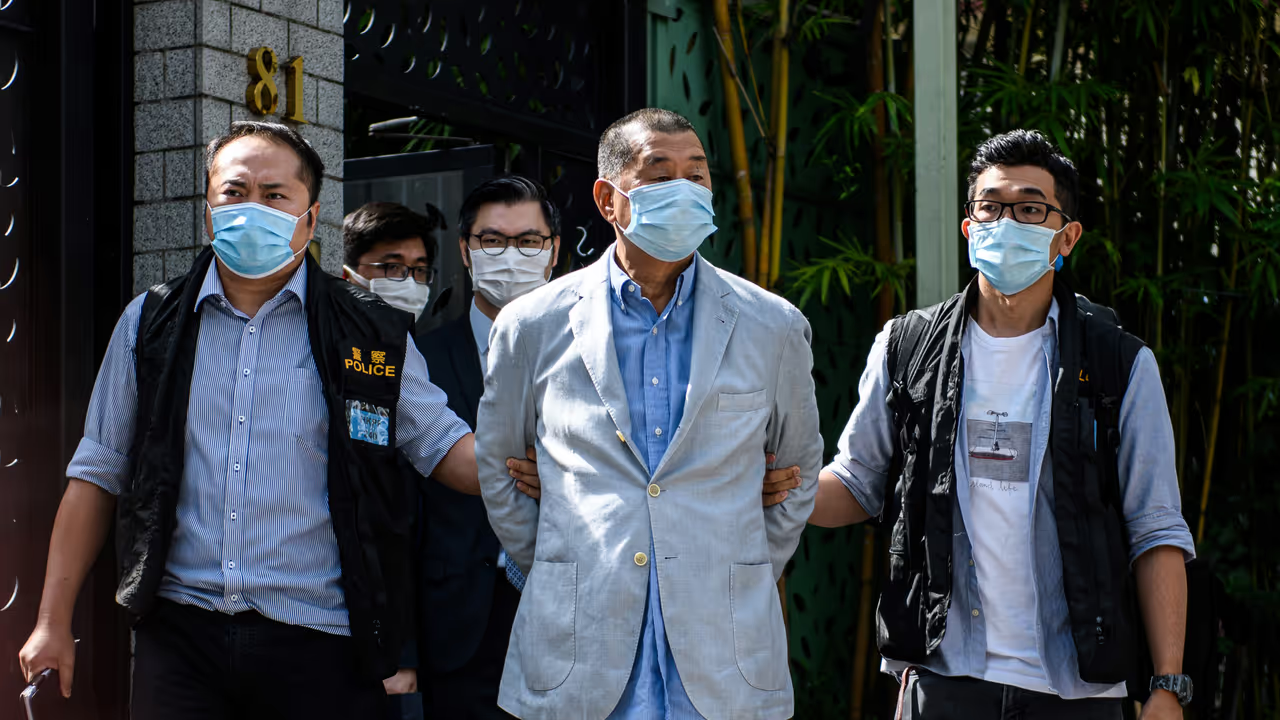
In August, hundreds of police officers raided Apple Daily's newsroom and arrested Jimmy Lai. The mogul has been kept behind bars since December 2020.
The 26-year-old newspaper was forced to close in June 2021 after police raided it again and arrested its senior management.
Lai and six top executives were charged with foreign collusion under the national security law, with only Lai contesting the charges.
All of them are set to be sentenced on Monday.
Changing landscape
In December 2021, online media outlet Stand News ceased operations after more than 200 officers raided its office and arrested two top editors for "seditious publication".
The duo were eventually found guilty -- the first case of its kind since Hong Kong returned to Chinese rule in 1997 -- and former editor-in-chief Chung Pui-kuen received a 21-month jail term.
Online outlet CitizenNews shut down in January 2022 to "ensure the safety of everyone".
Chinese-language news website Initium relocated its office to Singapore, citing diminishing press freedoms in Hong Kong.
Authorities also tightened control over public broadcaster RTHK by carrying out more stringent vetting of its content.
After the Chinese finance hub passed a second, homegrown security law in 2024, US news outlet Radio Free Asia said it closed its Hong Kong office over staff safety concerns.
Reporters affected
The Hong Kong Journalists Association said in 2024 that dozens of journalists faced "systematic and organised" harassment and intimidation, including leaked personal information and death threats.
The HKJA said the following year that multiple journalists and their employers were subjected to "unreasonable" tax audits.
Reporters Without Borders (RSF) estimated that at least 900 Hong Kong journalists lost their jobs in the four years following the enactment of the national security law.
Last August, the city's immigration authorities declined to renew the work visa of a Bloomberg News reporter.
RSF said at the time that it was at least the tenth case of a journalist being denied a visa or barred from entering Hong Kong.
A government spokesperson said last month that "Hong Kong citizens enjoy freedom of the press and freedom of speech" and such rights are protected under the city's two national security laws.
(Except for the headline, this story has not been edited by Asianet Newsable English staff and is published from a syndicated feed)