
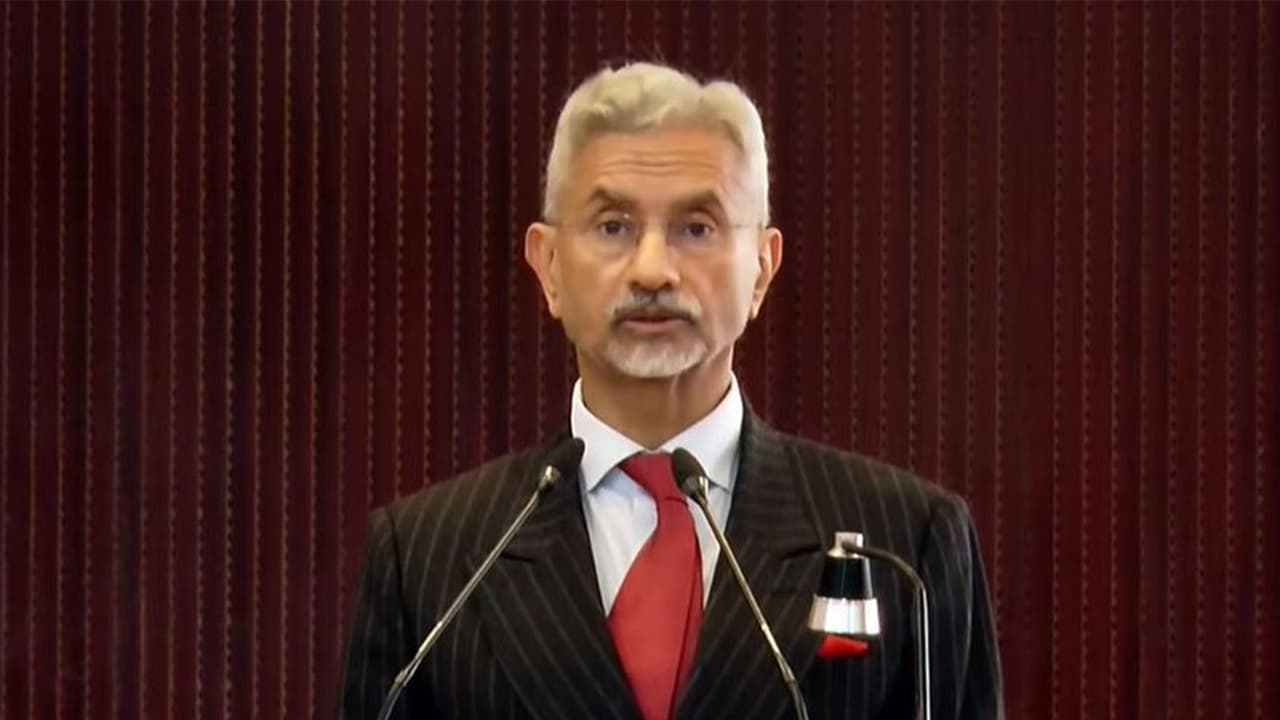
EAM S Jaishankar outlined "resilience, innovation, cooperation, and sustainability" as the four key priorities for India's BRICS 2026 Chairship. He said these will guide the summit across its political, economic, and cultural pillars.
External Affairs Minister (EAM) S Jaishankar on Tuesday noted down "four broad priorities" guiding India's BRICS 2026 Chairship, stating that "resilience, innovation, cooperation, and sustainability" are the precedents that will lead the 18th summit of the grouping.
Speaking at the launch of the BRICS 2026 logo and official website, the EAM said these priorities will provide a coherent framework across the grouping's three foundational pillars: "political and security, economic and financial, and cultural and people-to-people exchanges."
India's Four Key Priorities
Building Resilience
"Under the resilience pillar, we will endeavour to build structural institutional strengths capable of weathering global shocks. India intends to work with BRICS partners to build resilience in agriculture, in health, in disaster risk reduction, energy and supply chains, including through cooperative frameworks that enhance collective preparedness and response," Jaishankar said.
Driving Innovation
He added that innovation remains a central driver of global economic development, noting that leveraging new and emerging technologies is crucial for tackling socio-economic challenges, especially those faced by developing nations, while keeping a people-focused perspective.
"The deployment of new and emerging technologies is essential to addressing socio-economic challenges, particularly those confronting developing countries, while maintaining a people-centric approach. Enhanced cooperation in areas such as start-ups, MSMEs, and emerging technologies can contribute meaningfully to building a more equitable world," the EAM said.
Fostering Cooperation and Sustainability
Jaishankar also emphasised cooperation and sustainability as equally important priorities. "India will work to advance climate action, promote clean energy, and support sustainable development pathways in a manner that is fair and sensitive," he added.
New Logo and Website Launched
Highlighting the significance of the newly unveiled BRICS logo, the EAM said it reflects India's approach to its chairship by combining elements of "tradition and modernity".
"The petals incorporate the colours of all BRICS member countries, representing unity in diversity and a strong sense of shared purpose. The logo conveys that BRICS draws strength from the collective contributions of its members while respecting their distinct identities," he said.
The BRICS India website, also launched during the event, will serve as a common platform for information on meetings, initiatives, and outcomes during India's chairship and is expected to enhance transparency, engagement, and timely dissemination of information among member countries and global stakeholders.
A Brief History of BRICS
The acronym BRIC was first coined in 2001 by Goldman Sachs in their Global Economics Paper, "The World Needs Better Economic BRICs", based on analyses projecting that Brazil, Russia, India, and China would individually and collectively occupy a larger share of the global economy and become among the world's largest economies over the following decades.
In 2010, it was agreed to expand BRIC to BRICS, with South Africa joining at the 3rd BRICS Summit in Sanya in 2011. The grouping expanded further in 2024, with Egypt, Ethiopia, Iran, and the UAE becoming full members on January 1, 2024. Indonesia joined as a full member in January 2025, while Belarus, Bolivia, Kazakhstan, Cuba, Malaysia, Nigeria, Thailand, Uganda, and Uzbekistan were inducted as partner countries of BRICS.
(Except for the headline, this story has not been edited by Asianet Newsable English staff and is published from a syndicated feed.)