
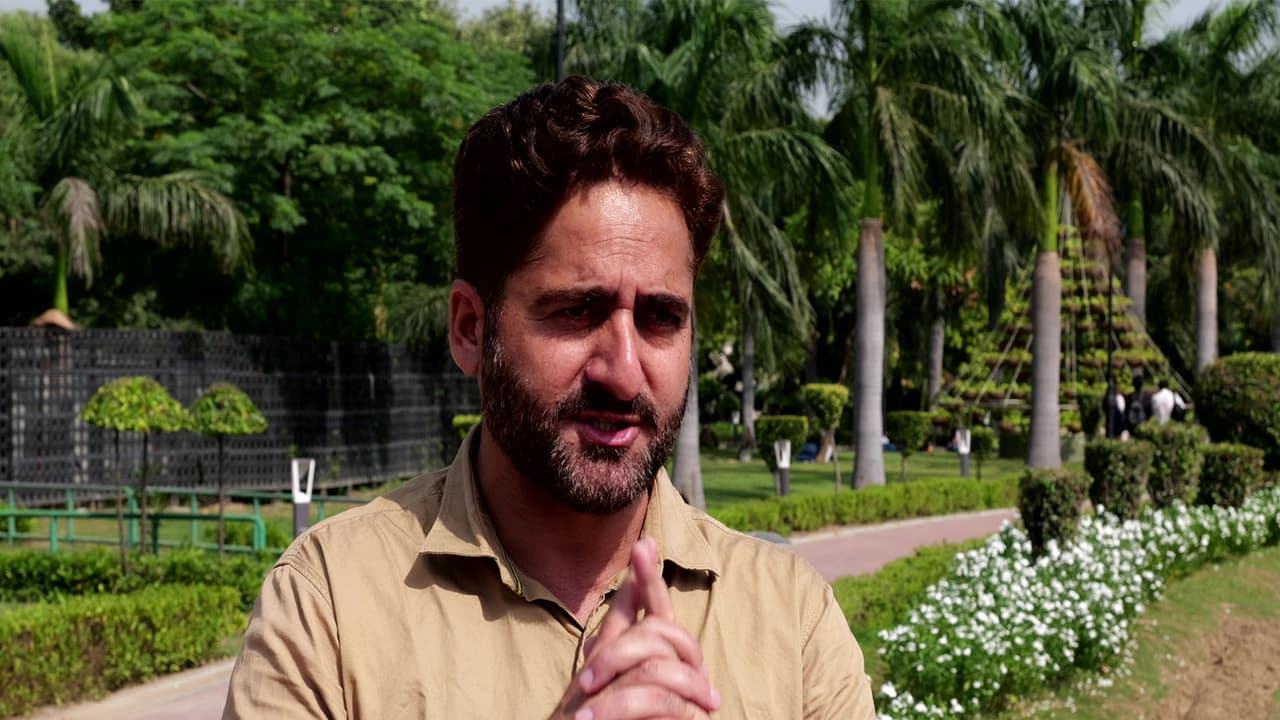
Human rights defender Javed Beigh urged the UNHRC to launch an independent inquiry into rights violations in PoJK and PoGB. He alleged detentions without trial, enforced disappearances, and restrictions on activists, journalists, and media.
Call for UNHRC Inquiry into PoJK and PoGB
Human rights defender from Jammu and Kashmir Javed Beigh, speaking after attending the 63rd session of the United Nations Human Rights Council (UNHRC) in Geneva, urged the UN body to take cognisance of human rights violations in Pakistan-occupied Jammu and Kashmir (PoJK) and Pakistan-occupied Gilgit-Baltistan (PoGB), calling for an independent inquiry and fact-finding missions to the two regions.
Speaking to ANI, Beigh alleged that activists, political workers and journalists in the two regions face restrictions, while claiming that people have been detained without trial and that families have been left without information about the whereabouts of their relatives.
“Absolutely, UNHRC should take cognisance, and they should initiate an independent enquiry into all these human rights violations in both PoJK and PoGB,” Beigh said.
The Rawalakot Massacre
Referring to what he described as the Rawalakot massacre, Beigh said the killings and the reported handling of the victims’ bodies required international scrutiny. “The Rawalakot massacre cannot be ignored. More than a hundred Kashmiris were killed, innocent people, and their dead bodies were not handed over to their families,” he said, alleging that such actions were contrary to international humanitarian and human rights principles.
Beigh called for the United Nations Human Rights Council to send fact-finding teams and commissions to PoJK and PoGB to establish the facts concerning the allegations.
'Forced Disappearance Order of the Day'
He claimed that reports of enforced disappearances had created an atmosphere of fear among residents. “Forced disappearance has become the order of the day in PoJK,” Beigh alleged.
Demand for Political Empowerment
On political empowerment, Beigh alleged that the Pakistani establishment, particularly the Pakistani Army, should not interfere in civilian affairs in PoJK and PoGB. “People should decide their future. People of PoJK and PoGB have every right to decide their future,” he said.
'India Should Raise Issue on Global Forums'
Beigh also urged the United Nations to listen to what he described as the “genuine voices” of people in PoJK and PoGB and called on India’s Ministry of External Affairs to raise the issue with other countries through bilateral and multilateral forums. “Our Honourable Ministry of Foreign Affairs should take up this issue. And should take the issue of PoJK and PoGB to every member nation. Hold bilateral and multilateral talks about the quantum and scale of human rights violations in PoJK and PoGB,” he said.
Historical Context and J&K's Link to India
Responding to Pakistan’s position on Jammu and Kashmir, Beigh said the dispute needed to be viewed in what he described as its historical and civilisational context. He argued that Jammu, Kashmir and Ladakh have longstanding historical, cultural and geographical links with India.
“Jammu, Kashmir has always been, will always be part of the idea of India,” Beigh said, while referring to the 1947 accession of Jammu and Kashmir to India. He also criticised Pakistan over its human rights record, citing minorities and ethnic communities including Hindus, Christians, Ahmadis, Shias, Ismailis, Balochs and Pashtuns.
Contrast with Indian-Administered J&K
Beigh also drew a comparison between development and governance in Jammu, Kashmir and Ladakh and the situation he described in PoJK and PoGB, pointing to infrastructure, tourism, education, science, research, information technology, sports, art and culture. “There is no comparison between our India's Jammu, Kashmir and Ladakh and PoJK and PoGB,” he said.
'We Have to Become Their Voice'
He concluded by urging Indians to raise concerns about the people of PoJK and PoGB at international forums, alleging restrictions on media and internet access in the regions. “They need our support. Their voice is not being heard. There is a complete blackout of media, internet in PoJK and PoGB. We have to become their voice,” Beigh said.
(Except for the headline, this story has not been edited by Asianet Newsable English staff and is published from a syndicated feed.)
