
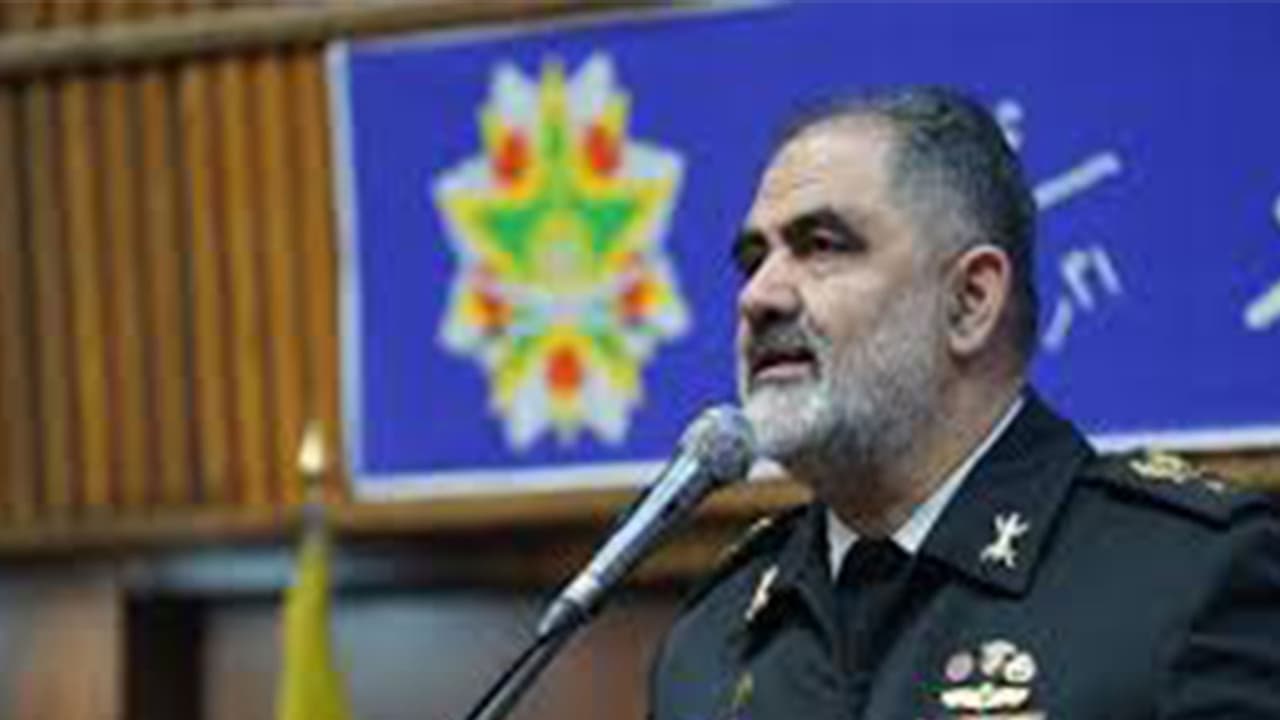
Iran's Navy warned it's monitoring the USS Abraham Lincoln and will strike if it nears its territory. Senior military officials dismissed US power as a "strategic defeat" and denied any diplomatic talks, contradicting President Trump's claims.
The Iranian Navy has issued a direct warning to the United States, stating that its aircraft carrier, the USS Abraham Lincoln, is being closely monitored and faces potential strikes if it approaches Iranian territory. According to a report by the state broadcaster Press TV, Iranian Navy Commander Rear Admiral Shahram Irani warned that the USS Abraham Lincoln is under constant surveillance and will be targeted by the Army Navy if it enters the range of Iran's missile systems.
The naval threat follows a broader dismissal of American influence by senior military officials in Tehran, who have characterised Washington's recent diplomatic overtures as a facade. Press TV reported that Lieutenant Colonel Ebrahim Zolfaqari, spokesperson for the Khatam al-Anbiya Central Headquarters, stated on Wednesday that the "strategic power" previously flaunted by the US has now "turned into a strategic defeat."
Iran Rejects US Claims of 'Constructive Conversations'
These remarks come in the wake of a significant de-escalation by US President Donald Trump, who recently stepped back from a 48-hour ultimatum to launch strikes against Iranian power plants. This shift occurred after the Islamic Republic issued a stern warning that any such aggression would result in the reciprocal targeting of every energy and power installation across the region.
Addressing the change in the American stance, Zolfaqari remarked that "if the self-proclaimed superpower of the world could have escaped this predicament, it would have done so by now. Do not call your defeat an agreement," he said. The spokesperson's comments appear to be a direct rebuttal to President Trump's claims on his Truth Social platform, where the US leader suggested that both nations had engaged in "very good and constructive conversations over the past two days regarding a complete and total resolution of our hostilities in [West Asia]."
However, Press TV cited an informed source within Tehran who flatly contradicted the American narrative, clarifying on Monday that no official communication has taken place between the two capitals. Zolfaqari echoed this sentiment, suggesting that the era of relying on Washington's word has passed. "The era of your promises is over. Today, there are only two fronts in the world: truth and falsehood. And every freedom-seeking pursuer of truth will not be deceived by your media waves," he added.
The spokesperson further mocked perceived internal chaos within the US administration, sarcastically questioning if the "level of your infighting reached the point of negotiating with yourselves?"
Tehran Vows No Return to 'Previous Status Quo'
This rhetoric highlights the deep-seated scepticism in Tehran regarding current American diplomatic strategy, extending to a grim assessment of Western economic interests in the region. Press TV reported Zolfaqari's assertion that neither previous levels of US investments nor former energy and oil prices would ever return. The official maintained that regional security is now dictated by Tehran's military capabilities, stating that "stability in the region is ensured by the powerful hand of our armed forces," and further defining the situation as "stability through [our] power."
Zolfaqari made it clear that there would be no return to the previous status quo, insisting that such a possibility is off the table unless "the very thought of taking [military] action against the Iranian nation is completely erased from your vile minds." As noted by Press TV, the spokesperson reaffirmed Iran's uncompromising position, declaring that "our first and last word from day one has been, is, and will be: someone like us will not come to terms with someone like you--not now, and not ever." (ANI)
(Except for the headline, this story has not been edited by Asianet Newsable English staff and is published from a syndicated feed.)