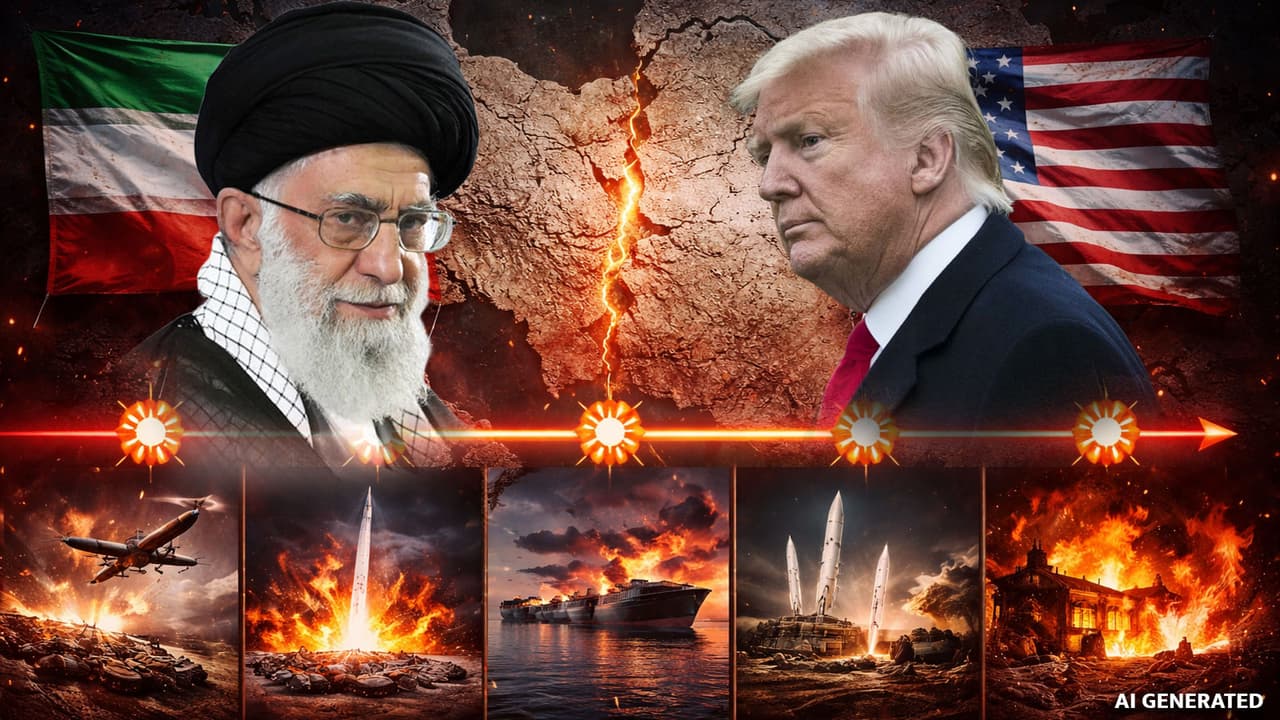
There has been significant unrest in the Middle East after a joint United States and Israeli strike on Iran killed Supreme Leader Ali Khamenei on Saturday, triggering retaliatory attacks across the region.
There has been significant unrest in the Middle East after a joint United States and Israeli strike on Iran killed Supreme Leader Ali Khamenei on Saturday, triggering retaliatory attacks across the region.
In the days since the assassination, Iran and its regional allies have unleashed waves of strikes targeting Israel, US military installations in Gulf countries, and key energy infrastructure vital to global oil and gas supplies. The escalating hostilities have prompted governments worldwide to issue urgent travel advisories, warning citizens to avoid or strictly limit travel across large parts of the Middle East.
Both the UK’s Foreign, Commonwealth & Development Office and the United States Department of State have raised threat levels for numerous countries. The US travel warning system ranges from Level 1 - exercise normal precautions - to Level 7, meaning “do not travel.”
Related Articles

Several countries across the region now fall into the most severe categories as the conflict widens.
Rising Death Toll
Iran says at least 1,230 people have been killed since the conflict erupted. Israel has reported 11 deaths following an Iranian strike on Beit Shemesh. Meanwhile, at least six American service members have been killed, and 77 people have died in Lebanon as the war spreads across borders.
Iran’s powerful Islamic Revolutionary Guard Corps (IRGC) has warned it could strike “all economic centres” across the Middle East - a threat that has raised alarm for major financial hubs in the Gulf.
Countries Facing Highest Risk Iran and Iraq: Maximum Danger
Iran sits at the epicentre of the crisis and is now considered one of the most dangerous places in the world. Authorities warn travellers not to enter the country due to risks including terrorism, unrest, kidnappings, and arbitrary detention.
Explosions have rocked Tehran repeatedly as Israel continues large-scale airstrikes targeting what it calls critical infrastructure.
Neighbouring Iraq is also rated at the highest danger level, with ongoing militia attacks and attempted drone strikes against US bases near Baghdad International Airport.
Israel, Jordan and Saudi Arabia on High Alert
Israel remains an active war zone following missile strikes from Iran and rocket attacks launched by the Iran-backed Hezbollah from Lebanon. Israeli Defence Minister Israel Katz escalated tensions further, warning Iran that any successor to Khamenei would be targeted.
In a post on X, Katz said: “Any leader selected by the Iranian terror regime to continue leading the plan for Israel's destruction, threatening the United States, the free world and countries in the region, and suppressing the Iranian people, will be a certain target for assassination, no matter his name or where he hides.”
Meanwhile, Jordan has recorded dozens of incidents involving falling missile debris and drone interceptions. Its military reported destroying 49 drones and ballistic missiles headed toward the country.
Saudi Arabia has also faced attacks on energy infrastructure, including repeated strikes on facilities belonging to Saudi Aramco.
Gulf Nations Under Fire
Several Gulf states have been dragged into the expanding conflict. In Bahrain, Iranian strikes reportedly hit a US naval facility hosting the United States Fifth Fleet, damaging communications infrastructure.
In Kuwait, an Iranian attack on a military facility killed six American soldiers and damaged the Ali Al Salem Air Base.
Missile interceptions have also rattled Qatar, where Iran targeted the massive Al Udeid Air Base, the largest US military base in the region.
In the United Arab Emirates, falling debris from intercepted drones sparked fires near iconic landmarks including Burj Khalifa, Burj Al Arab, and Palm Jumeirah.
Conflict Spreads to Lebanon and Syria
The war has intensified dramatically in Lebanon, where Israeli strikes have killed dozens following rocket barrages by Hezbollah. Meanwhile, Syria has also been hit by Iranian missiles, including one that struck a residential building in the city of Sweida, killing four people.
Yemen Crisis Deepens
Yemen, already struggling with a devastating civil war, has declared solidarity with Iran. The Iran-backed Houthi movement has vowed to join the conflict if the attacks on Tehran continue.
British authorities warn that anyone still in Yemen should leave immediately, as embassy services have been suspended and no evacuation plans are currently available.
Region on Edge
Even countries not directly involved in the fighting — including Egypt and Oman — have been placed on heightened alert.
Egyptian President Abdel Fattah el-Sisi warned of the rapidly deteriorating situation, saying: “Two days have seen very large and rapid developments. We were keen to achieve calm and stop the war, though I doubt that will happen.”
(This article has been curated with the help of AI)