
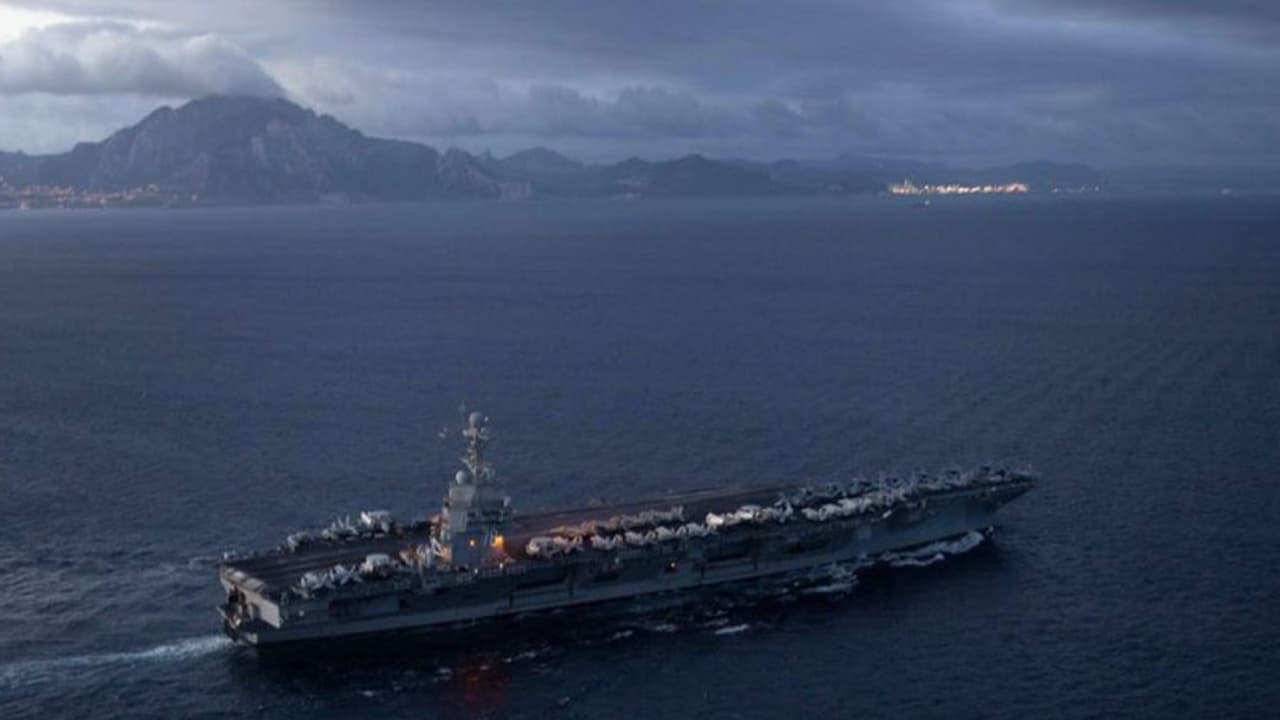
Iran has declared that logistical and service facilities supporting the US aircraft carrier strike group led by the USS Gerald R. Ford are now considered legitimate military targets, escalating tensions amid the ongoing conflict in West Asia.
Iran has declared that logistical and service facilities supporting the United States aircraft carrier strike group led by the USS Gerald R. Ford would be considered legitimate military targets, warning that any infrastructure assisting the carrier's operations could face attacks as tensions escalate in West Asia, reported Press TV.
According to Iranian reports, authorities stated that the support centres providing services to the American carrier group deployed in the Red Sea are now viewed as part of the operational network of the vessel and therefore legitimate targets under wartime conditions.
Deterrence Amidst Regional Confrontation
The warning comes amid the ongoing confrontation between Iran and the United States and its allies in the region. Iranian officials said the move is aimed at deterring further military actions against the country.
In a statement cited by Iranian media, authorities said, "The logistical and service centers providing support to the aforementioned carrier group in the Red Sea are considered targets of the Islamic Republic."
US Naval Presence and Intensified Hostilities
The declaration comes as hostilities in the region have intensified following a series of military strikes and retaliatory actions involving Iran, the United States and Israel. Over the past weeks, both sides have exchanged attacks targeting military assets, infrastructure and shipping routes across the Gulf region.
About the USS Gerald R. Ford Strike Group
The aircraft carrier USS Gerald R. Ford is one of the United States Navy's most advanced warships and has been deployed as part of a carrier strike group aimed at strengthening Washington's military presence in West Asia. The carrier typically operates with a fleet of escort vessels, including guided-missile destroyers and cruisers, as well as support ships that provide logistical assistance and maintenance.
Impact on Maritime Security and Global Energy
The broader conflict has already disrupted maritime security and energy routes in the Middle East. Missile and drone attacks have been reported across several Gulf countries, and concerns have grown about the safety of key shipping lanes and oil transport routes, particularly around the Strait of Hormuz.
Diplomatic efforts to de-escalate the crisis have so far yielded limited progress, while regional governments warn that further military escalation could threaten global energy supplies and stability in the Middle East.
Unwavering Stances as Tensions Persist
Iranian authorities have reiterated that their actions are intended as a response to what they describe as aggression by the United States and its allies.
Meanwhile, the deployment of the USS Gerald R. Ford carrier strike group continues to symbolize Washington's military posture in the region as tensions remain high and the conflict shows little sign of easing. (ANI)
(Except for the headline, this story has not been edited by Asianet Newsable English staff and is published from a syndicated feed.)