
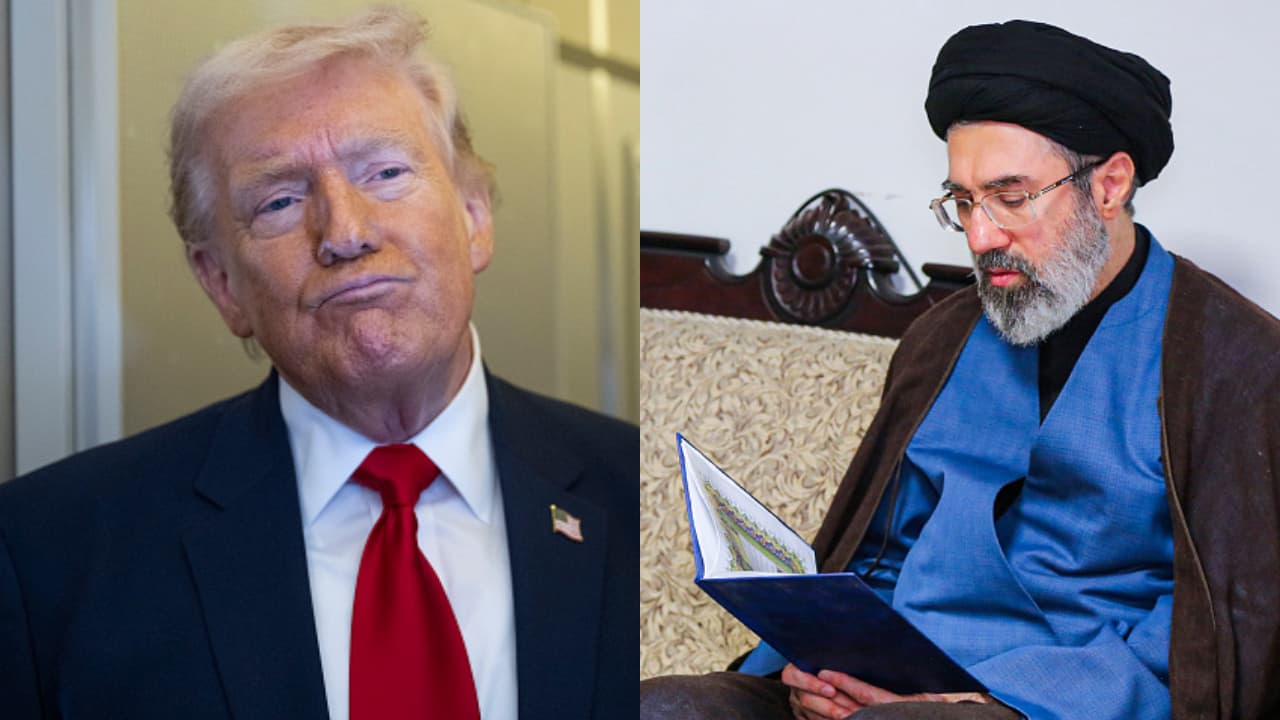
Iran has strongly denied US President Trump’s claim that it agreed to surrender its enriched uranium stockpile. Trump had announced a potential nuclear breakthrough, but Tehran called his statement a lie, insisting no major progress was made. The disagreement highlights the deep mistrust between the nations.
Iran has firmly denied US President Donald Trump’s claim that Tehran agreed to hand over its enriched uranium stockpile as part of a possible nuclear breakthrough, adding a fresh layer of uncertainty to already fragile negotiations between the two countries.
Trump had earlier told reporters that Iran was prepared to surrender its uranium reserves and move closer to a broader agreement with Washington. Speaking at the White House, he said, “They’ve agreed to give us back the nuclear dust,” while adding, “There’s a very good chance we’re going to make a deal.”
However, Iranian officials quickly pushed back against that version of events. A source close to senior leadership in Tehran said that “no form of nuclear material transfer to America has been negotiated,” directly contradicting Trump’s remarks. Another Iranian source dismissed the statement as “another lie,” and insisted that “no major progress has been made.” Those comments underscored the deep mistrust that continues to define the diplomatic standoff.
The central dispute remains Iran’s enriched uranium stockpile, which Western governments believe could be further refined to weapons-grade level if negotiations collapse. Trump has repeatedly maintained that any future agreement must ensure Iran cannot continue nuclear enrichment, while Tehran continues to argue that peaceful uranium enrichment is its sovereign right under international law.
Also Read: ‘Iran Ready To Surrender Enriched Uranium’: Trump Claims ‘Nuclear Breakthrough’ Is Near
Recent talks have reportedly shifted away from a full long-term settlement toward a temporary arrangement that could prevent immediate escalation. Reports indicate discussions have included the possibility of Iran transferring only part of its highly enriched uranium to a third country rather than directly to the United States.
Despite public denials, diplomatic contacts between the two sides are believed to be continuing behind closed doors. Trump has portrayed the talks as a near breakthrough, but Tehran’s public rejection suggests major disagreements remain unresolved.
The disagreement over what was actually discussed has now become a key issue in itself. Analysts say both sides may be shaping public narratives for domestic audiences while still trying to preserve room for further negotiation. For Washington, presenting progress could ease pressure to avoid another military confrontation. For Tehran, publicly denying concessions helps prevent the appearance of surrender.
The latest exchange highlights how difficult any nuclear agreement remains. While Trump is projecting optimism, Iran’s sharp denial shows the two governments are still far apart on one of the most sensitive issues in global diplomacy.
With tensions still high across the Middle East, the conflicting statements have left world powers watching closely to see whether the uranium dispute becomes the foundation for a deal — or another diplomatic collapse.
Also Read: Iran credits Hezbollah's 'steadfastness' for Lebanon-Israel ceasefire
