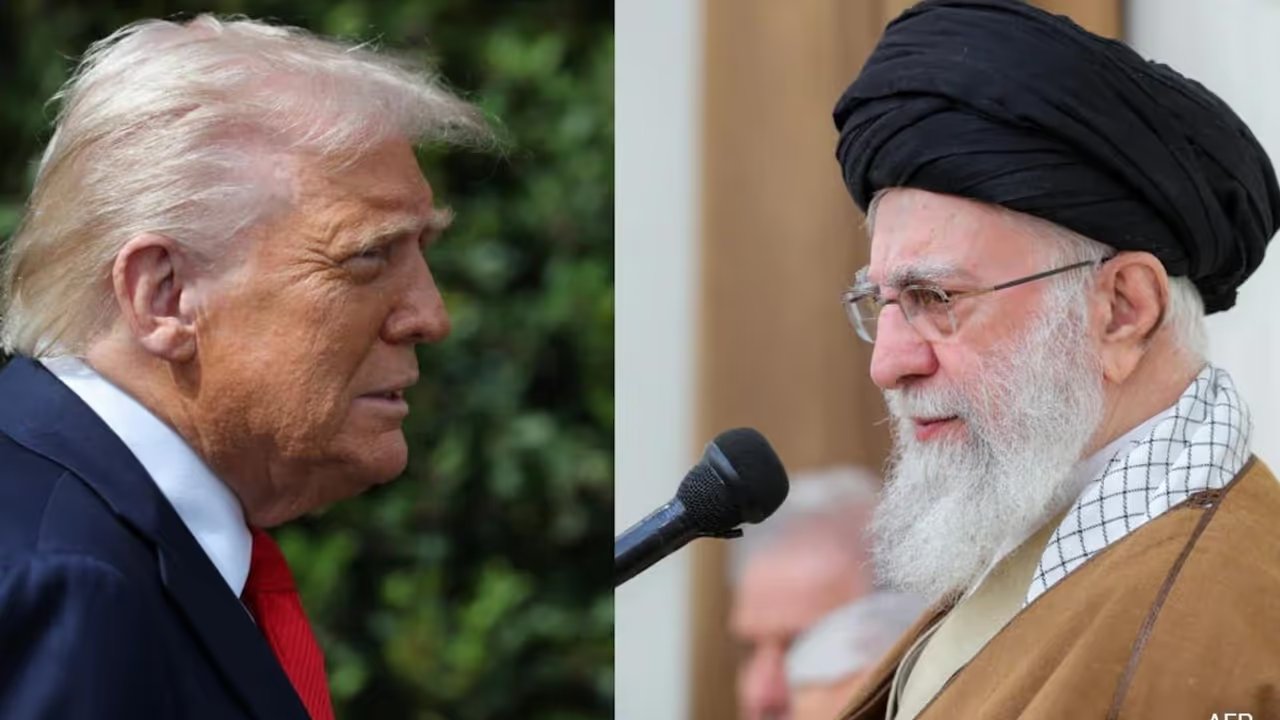
Iran has signalled flexibility on its nuclear program to revive diplomatic talks with the United States. Tehran is willing to compromise, such as diluting its highly enriched uranium, provided the US seriously discusses lifting economic sanctions.
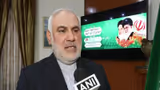
Iran has signalled that it may be willing to show flexibility on aspects of its nuclear programme — provided the United States is prepared to engage on the issue of sanctions — in an effort to revive a stalled diplomatic process. Iran’s Deputy Foreign Minister Majid Takht-Ravanchi told the BBC that Tehran is prepared to consider compromises to reach a nuclear agreement with Washington, but only if discussions include serious engagement on lifting economic sanctions imposed on Tehran after the US withdrawal from the 2015 nuclear deal.
The comments, published on February 15, 2026, come as indirect nuclear negotiations between the United States and Iran resume, with a second round of talks scheduled in Geneva following initial discussions held earlier this month in Oman. According to Takht-Ravanchi, the first round went “more or less in a positive direction,” but he cautioned that it was too early to judge the outcome definitively.
Iran has offered to dilute its stockpile of highly enriched uranium, which Tehran currently enriches up to 60% purity — close to weapons-grade levels — in exchange for the lifting of financial sanctions. This offer is seen as a sign of Tehran’s willingness to compromise on core nuclear issues, though limits and parameters have not been formally agreed.
Related Articles

Core Issues and Red Lines
Despite Tehran’s openness to discussion, some fundamental differences remain. Takht-Ravanchi emphasised that Iran is not willing to accept demands for zero uranium enrichment, a key sticking point that has hindered past negotiations. The US views enrichment levels inside Iran as a potential pathway to nuclear weapons — a claim Tehran consistently denies, maintaining that its nuclear activities are for peaceful energy purposes.
Iran’s insistence on decoupling discussions on its missile programme and regional activities from the nuclear issue further reflects persistent disagreements. Tehran has reiterated that the nuclear component must remain the focus of talks, and is reluctant to tie progress on sanctions relief to unrelated issues such as ballistic missile limitations or regional security concerns voiced by other actors like Israel.
The Iranian deputy foreign minister underscored that the “ball is in America’s court” to demonstrate genuine intent for an agreement. He suggested that reciprocal sincerity in negotiations could pave the way toward a deal, but stressed that without tangible movement on the sanctions issue, progress will remain limited.
Geopolitical Context and Next Steps
The renewed diplomatic engagement occurs amid broader geopolitical tensions, with both Washington and Tehran navigating not only nuclear issues but regional security concerns. The US delegation, expected to include senior envoys like Steve Witkoff and Jared Kushner, will meet with Iranian counterparts in Geneva under Omani mediation, aiming to build on the momentum from previous indirect talks.
International observers have noted cautious optimism, with some analysts pointing to signs of flexibility on both sides. However, achieving a breakthrough will require reconciling deep-seated differences on sanctions relief, enrichment limits, and verification measures — a complex diplomatic challenge that has eluded agreement for years.
Tehran’s willingness to discuss compromise, including the dilution of enriched uranium and limits on certain nuclear activities, suggests a shift in tone — but how far this translates into tangible progress remains uncertain. Both sides are set to enter another round of talks with the hope that sustained diplomacy and mutual concessions can produce a framework for ending years of tension and sanctions impasse.