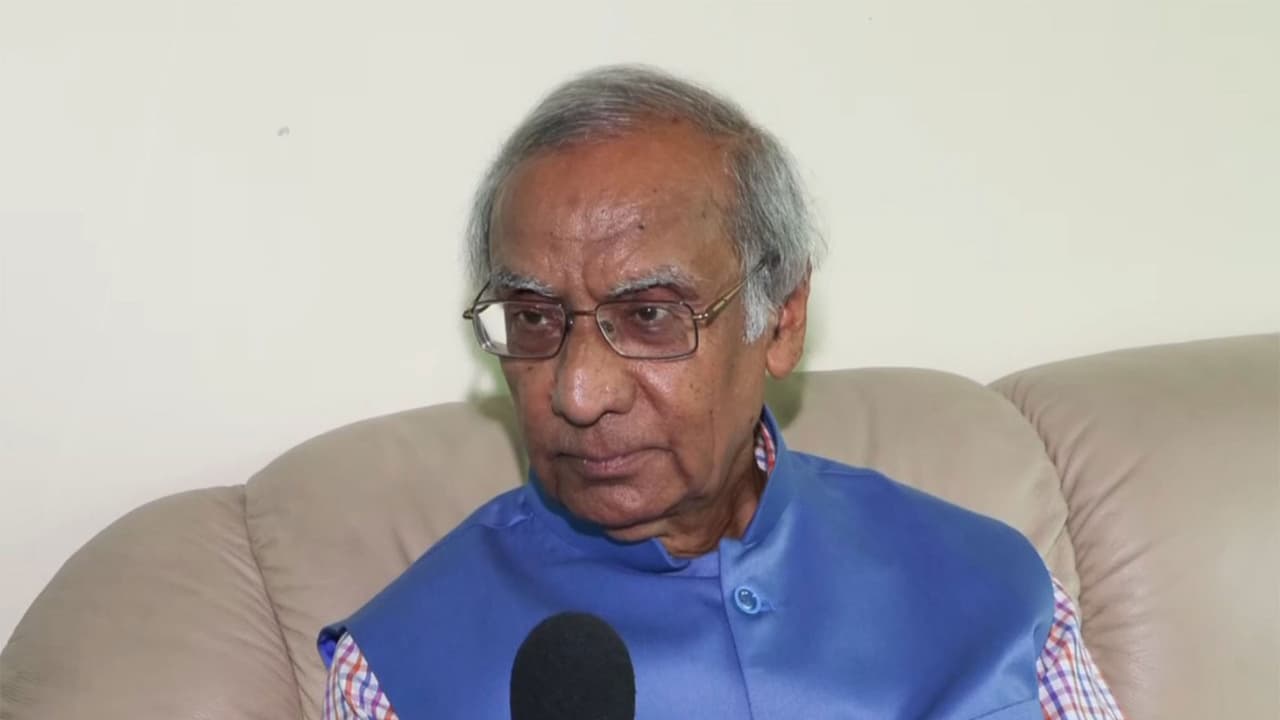
Former Indian Ambassador to Myanmar Rajiv Bhatia (File Photo/ANI)
Former envoy Rajiv Bhatia calls Myanmar President Hlaing's India visit a key signal for a new bilateral roadmap. He notes it shows Myanmar's desire for a balanced foreign policy amid internal challenges and rising Chinese influence in the region.
Myanmar President U Min Aung Hlaing's visit to India could pave the way for a fresh roadmap to deepen bilateral relations, former Indian Ambassador to Myanmar Rajiv Bhatia has said, describing the trip as an important diplomatic signal amid Myanmar's ongoing internal challenges and shifting regional dynamics.Speaking to ANI, Ambassador Bhatia, Distinguished Fellow at Gateway House who is also the author of the book "India--Myanmar Relations: Changing Contours" and has served as the Indian Ambassador to Myanmar from 2002-2005, said the significance of the visit extends beyond routine diplomatic engagement and reflects Myanmar's desire to pursue an independent and balanced foreign policy while strengthening ties with key regional partners, including India."The visit, by the very fact that it is taking place, conveys the ultimate symbolism that Myanmar wants to follow an independent and balanced foreign policy," Bhatia said. According to him, Myanmar is seeking to maintain cordial relations with a range of countries beyond China, including India, Thailand, Russia, Vietnam, Cambodia and Laos.
Focus on Internal Stability
The former envoy said discussions during the visit are expected to address the evolving situation inside Myanmar, where conflict and instability continue to pose challenges. He noted that large parts of the country remain outside the effective control of the government, making the restoration of stability and normalcy a key concern for both Myanmar and its neighbours. Bhatia suggested that India could use the opportunity to underline the importance of national dialogue and a peaceful political process, emphasising that prolonged instability in Myanmar has implications for India's own security and economic interests.
Connectivity and Act East Policy
On connectivity, he said Myanmar remains a crucial component of India's Act East Policy and serves as a bridge to Southeast Asia. However, he cautioned that progress on major connectivity initiatives such as the Kaladan Multi-Modal Transit Transport Project and the India-Myanmar-Thailand Trilateral Highway continues to be hampered by difficult security conditions in parts of Myanmar. While discussions on expediting these projects are likely, Bhatia said expectations of immediate breakthroughs should remain measured, given the ground realities.
China's Growing Influence
The former ambassador also pointed to the broader geopolitical context of the visit, noting that China's influence in Myanmar has grown significantly since the military takeover in 2021. "My assessment is that China is well placed in Myanmar, and China's footprint has expanded and deepened since the coup in 2021," he said, adding that India still has considerable ground to cover if it seeks to compete with Beijing's presence in the country.
Regional Dynamics and ASEAN
On the regional front, Bhatia said the visit would be closely watched by ASEAN member states, many of which remain divided over their approach towards Myanmar. He argued that ASEAN's Five-Point Consensus has lost effectiveness and that the grouping may need to develop a more unified and pragmatic strategy in light of changing realities. He also said India and Myanmar are likely to find convergence on strengthening BIMSTEC and enhancing regional cooperation in the Bay of Bengal region.
Potential Outcomes of the Visit
Highlighting the potential outcome of the visit, Bhatia said one of the most significant achievements could be the establishment of a stronger personal rapport between the leadership of the two countries and the issuance of a substantive joint statement outlining future priorities. "The single most important thing that could come up is a good rapport between the two highest-level leaders and a substantive joint statement which contains a roadmap for further deepening of the relationship," he said.Bhatia added that Min Aung Hlaing's familiarity with India and his previous visits to the country could contribute positively to the discussions and help inject new momentum into bilateral ties at a time when both countries are seeking greater stability, connectivity and cooperation in the region. (ANI)(Except for the headline, this story has not been edited by Asianet Newsable English staff and is published from a syndicated feed.)
Check the Breaking News Today and Latest News from across India and around the world. Stay updated with the latest World News and global developments from politics to economy and current affairs. Get in-depth coverage of China News, Europe News, Pakistan News, and South Asia News, along with top headlines from the UK and US. Follow expert analysis, international trends, and breaking updates from around the globe. Download the Asianet News Official App from the Android Play Store and iPhone App Store for accurate and timely news updates anytime, anywhere.