The US military revealed details of the covert mission targeting Iran's Fordow nuclear site. Gen. Dan Caine recounted the tense return of B-2 bomber crews and years of meticulous planning.
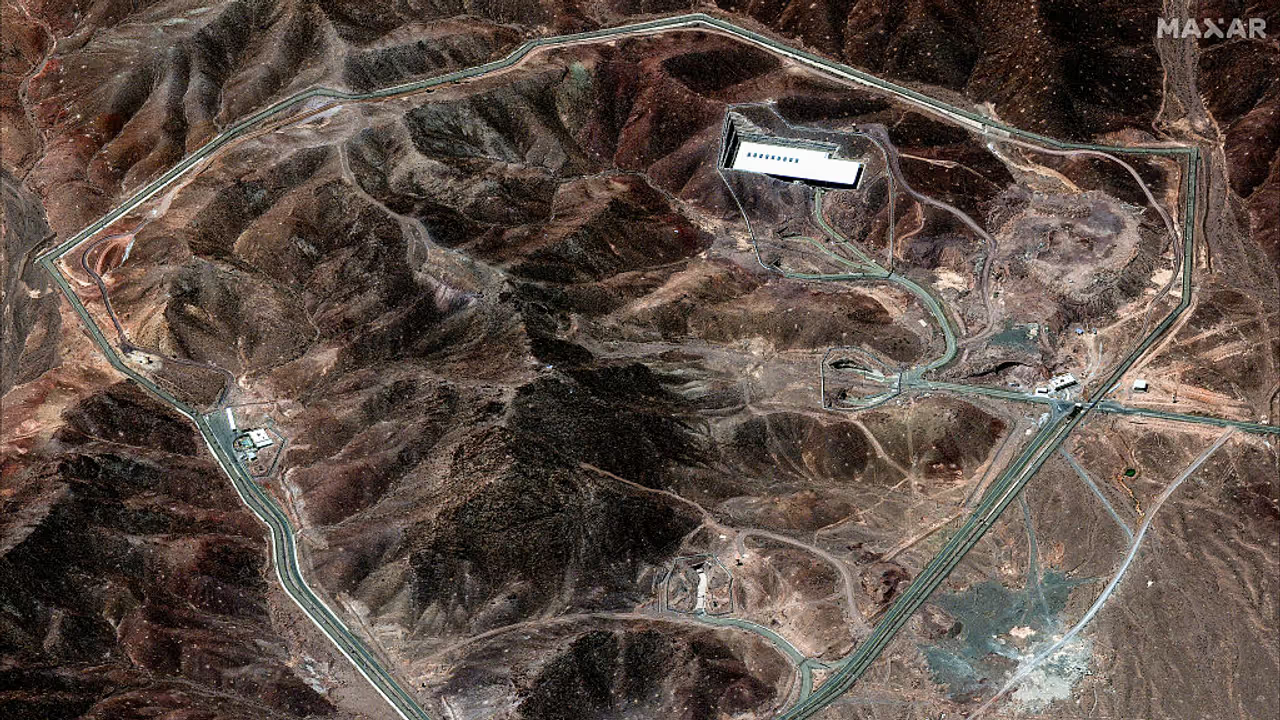
Washington DC: The US military has disclosed fresh details about the covert mission targeting Iran’s Fordow nuclear site, with Chairman of the Joint Chiefs of Staff Gen. Dan Caine recounting the tense return of B-2 bomber crews and years of meticulous preparation behind the operation. According to reports, two officers from the Defense Threat Reduction Agency (DTRA) had studied the Fordow site for over 15 years.
"In 2009, a DTRA officer was brought into a vault at an undisclosed location and shown images of major construction in the Iranian mountains. The officer, along with one team mate, spent years tracking the site’s geology, airflow systems, construction materials, and movement of equipment. From the first days, they knew what it was for. You don’t build a multilayered underground bunker with centrifuges in a mountain for any peaceful purpose,” Caine said.
He further said that before the launch of Operation Midnight Hammer, Hundreds of tests were conducted on realistic targets to ensure that the weapon would work. ““All six bunker buster bombs hit exactly where they were intended. Each vent shaft of the underground complex was targeted. The mechanism was a combination of overpressure and blast, which ripped through the tunnels and destroyed critical hardware,” Caine added.
Related Articles

Explosion looked like daylight
One pilot reportedly told Caine that the explosion looked like daylight. “He said that this was the brightest explosion he had ever seen. Flags were flying and tears were flowing when the crew touched down at Whiteman Air Force Base as they were unsure if they would make it back. One crew member equated the developments to the Super Bowl, where thousands of scientists, airmen, and maintainers all came together," Caine added.
In a statement, the Israel Atomic Energy Commission said the Fordoww enrichment facility in Iran had been destroyed by a US airstrike. Iran had officially admitted that its key nuclear facilities were badly hit, although it was disputed whether it was Israeli or US strikes that resulted in the damage. Foreign Ministry spokesperson Esmail Baghaei told media that Iran’s enrichment sites were 'badly damaged' and said this damage was 'for sure'.
Deputy Foreign Minister Saeed Khatibzadeh said Tehran would demand full compensation from the United States for the damage caused to its nuclear programme. He warned that if Washington refused, Iran would file a formal complaint with the United Nations. “Washington must pay compensation for the damages… or else Tehran will file a complaint with the United Nations,” Khatibzadeh told a Lebanese news agency.
Meanwhile, Supreme leader Ayatollah Ali Khamenei on Thursday said US President Donald Trump "exaggerated" the impact of US strikes on Iranian nuclear sites. "The American president exaggerated events in unusual ways, and it turned out that he needed this exaggeration," Khamenei said. The United States "has gained nothing from this war," he said, adding that American strikes "did nothing significant" to Iran's nuclear facilities.