
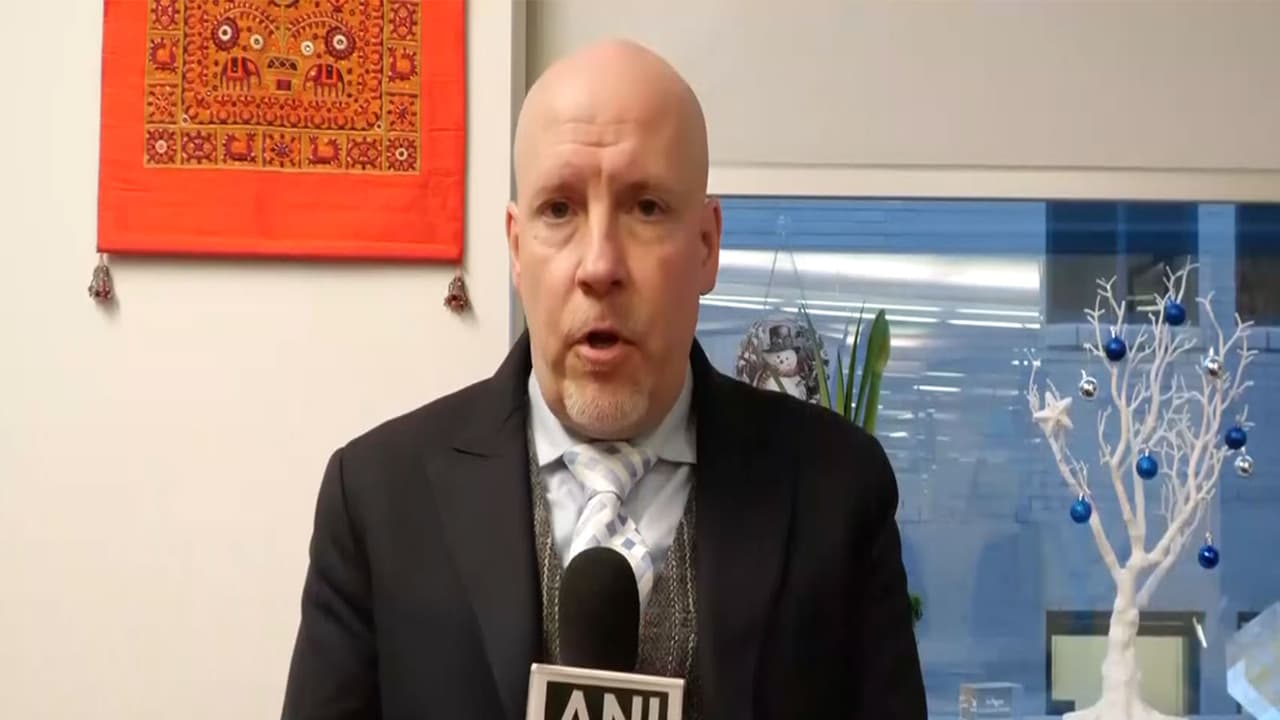
CSIS advisor Richard Rossow praises India's calm and non-escalatory approach to US trade demands and tariffs, contrasting it with the previous 'trade war' and highlighting India's firm stance on keeping staple grains out of negotiations.
Senior Advisor at the Center for Strategic and International Studies (CSIS), Richard Rossow lauded the calmness with which India approached the US tariffs and kept its stance that agriculture is a no-go.
Rossow, in a conversation with ANI, highlighted how the US wanted to repair the trade deficit with India, and despite warm relations, there was a bit of ruffle. He said, "First, the US wanted India to commit to buying a certain percentage of American goods to help repair the trade deficit, which is currently about two to one in deficit with India. The second thing was agricultural market access. For India, certain staple grains are a no-go... For the US, the question was whether this was a negotiating tactic or a real red line. We will see that staple grains grown in India were likely excluded from the market..."
Contrast with Previous 'Trade War'
Rossow added that when the US hit India with tariffs, India too retaliated with its own tariffs in US President Donald Trump's last term. He said, "At the end of the day, India approached the US pressure with a calm head. The last time President Trump was in office, there was a medium-intensity trade war. The US hit India with tariffs on steel and aluminium, revoked India's trade preferences under the GSP program, and India retaliated with its own tariffs. Despite a warm relationship between the leaders, there was significant conflict on both sides," he said.
India's De-escalation Strategy
Rossow said that this time India did not escalate the situation. "This time, India didn't fight back. They put their head down, kept negotiating, and tried to comply. So, first and foremost, credit goes to India for choosing not to escalate the situation. A substantial change in recent months was President Trump nominating his personal advisor, Sergio Gor, as ambassador to India," he said.
The Resulting Trade Agreement
Rossow said that from the looks of it, India and the US agreed for the latter to get a larger market access. He said, "It looks like both sides have agreed for the US to get better market access into India, including dropping non-tariff barriers, as President Trump mentioned, and also removing most of the tariffs that the US had placed on India... What we don't know is what other things were included. There's also the agreement that India will buy USD 500 billion worth of American goods, but we don't know the details of that or the time frame."
Perspective on Russian Oil Purchases
On Indian purchase of Russian oil, Rossow said that previously when the US pressured India about its purchases from Venezuela and Iran, India complied only because it presented a real threat. He said, "The previous times the US pressured India about where it was buying hydrocarbons, most notably from Venezuela and Iran, India complied when the US presented a real threat... From India's perspective, the US is by far its most important export market in both goods and services... India got tariffs reduced in exchange for market access, which India has done with other trade partners. It's a deal both leaders thought was worth finalising."
The remarks came following the announcement of the US-India trade deal, in which Washington reduced the tariffs on India to 18 per cent. (ANI)
(Except for the headline, this story has not been edited by Asianet Newsable English staff and is published from a syndicated feed.)