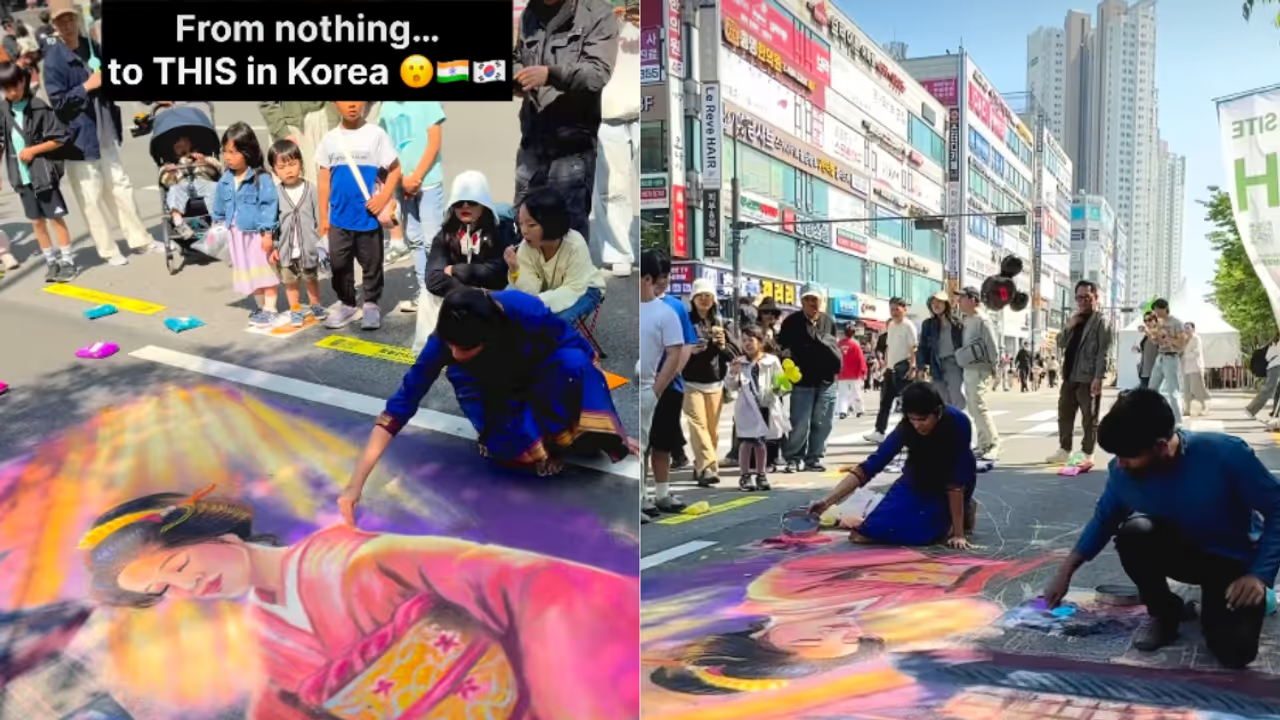
An Indian artist’s 20-foot rangoli created on South Korea streets has gone viral, drawing global attention. The artwork blended Indian rangoli with East Asian-inspired aesthetics and sparked debate online over cultural inspiration, design interpretation, and artistic expression.
An Indian artist has captured widespread attention after creating a massive 20-foot rangoli portrait on a public street during a festival in South Korea. The striking artwork, which blended traditional Indian rangoli techniques with East Asian-inspired aesthetics, quickly went viral on social media, drawing both admiration and discussion from viewers across the globe. The installation also attracted onlookers at the venue, many of whom stopped to watch the intricate design come to life in real time.
The artist, Bhagyashree, known for her detailed painting and rangoli portraits, shared the video on her Instagram handle. The clip documented both the creation process and the reactions of people who gathered around to witness the large-scale street artwork.
Rangoli Art Comes Alive On South Korean Streets
In the video, Bhagyashree is seen working on a vast outline drawn directly on the street during a festival in South Korea. Kneeling on the ground, she carefully filled the design using vibrant rangoli powders, gradually bringing the portrait to life with detailed shading and colour work.
Related Articles

The artwork depicted a woman dressed in traditional East Asian attire, with flowing garments and intricate design elements. As the artwork progressed, passersby were seen slowing down, filming the process and observing the detailed craftsmanship from close range.
Artist Describes Cultural Fusion Through Art
Sharing the video, Bhagyashree explained that the piece was inspired by East Asian aesthetics but executed in her own artistic style using rangoli.
She described the process as more than just creating art, saying it felt like “bringing a story to life.” She also highlighted the cultural blend, describing it as a moment where “Indian art meets Korea through rangoli.”
The artist revealed that the 20-foot artwork was completed within four hours as part of a festival in South Korea.
Online Debate Over Cultural Inspiration
The video quickly gained traction online, with many praising the scale, patience, and precision involved in the creation. Social media users lauded Bhagyashree for taking a traditional Indian art form to an international audience and presenting it in a contemporary, cross-cultural setting.
However, the artwork also sparked discussion regarding its design inspiration. Some users pointed out that while the piece was created in South Korea, the attire and hairstyle in the portrait appeared more Japanese in style rather than Korean.
A few commenters noted that the clothing resembled a traditional Japanese kimono, particularly due to the visible waist tie and design structure. Others highlighted that the hairstyle appeared closer to a Japanese style rather than a traditional Korean look.
Social Media Reactions
One user commented: “Tho, some comments mentioned this is HANBOK, but it is an indeed a Japanese Kimono! It clearly has Obi sash in the middle! Neither does Korean Hanbok have that but it is comprised of Jeogori (jacket) and Goreum (Tie in front on the left side) And even the hairstyle here is called Nihongami style, meanwhile for Korean they use jjokjin meori (a sleek, low bun”
Another user wrote: “When Indian Art meets South Korea.”
A third user commented: “Patience and Passion brings a wonderful result. such a fascinating Art form representing something beautiful.”
Another added: “Bridging borders with every pinch of powder. A beautiful cross-cultural moment in Ansan”
Celebration Of Cross-Cultural Art
Despite differing interpretations online, many viewers focused on the artistic achievement and cultural fusion showcased in the rangoli. The artwork was widely appreciated for its scale, detail, and ability to bring Indian traditional art into an international public space, sparking conversations about creativity, identity, and cultural exchange.