
India's MEA said it will protect national interests as Bangladesh's new admin reviews 101 pacts. The audit covers transit, energy, and infra deals, raising concerns over costs and project delays. Water treaties are also under discussion.
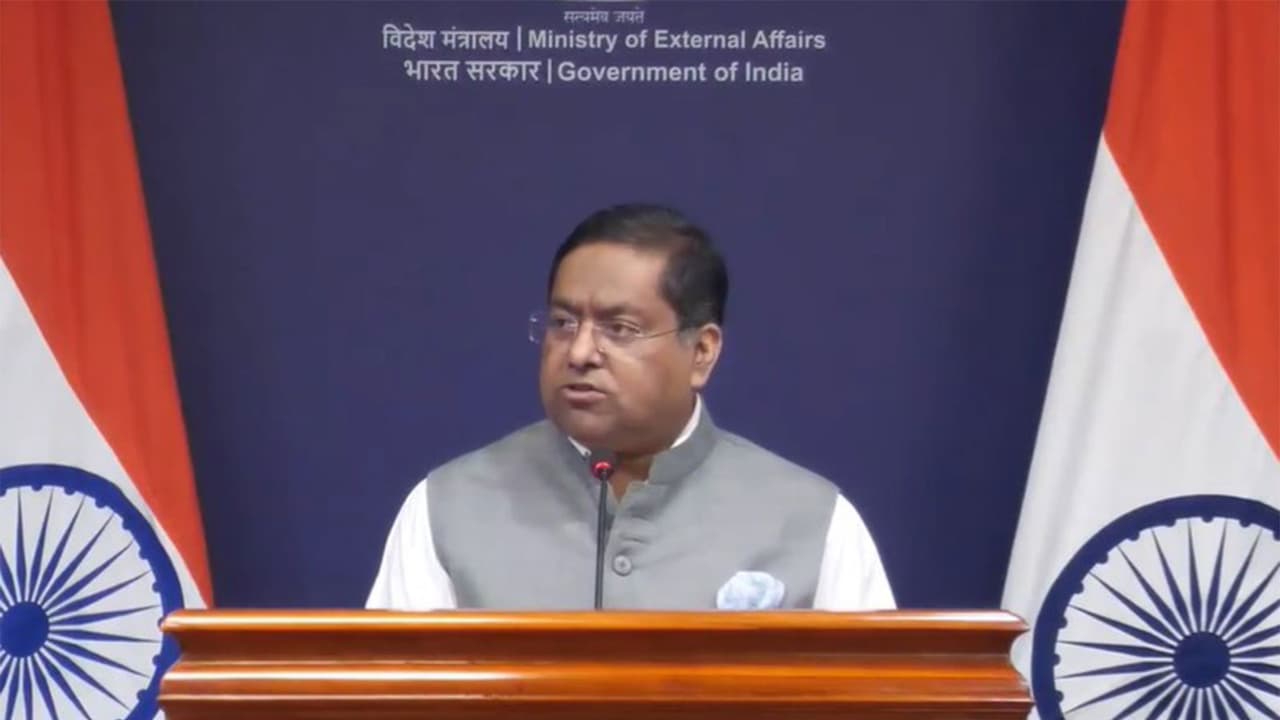
Addressing an ANI query during a bi-weekly press briefing, MEA Official Spokesperson Randhir Jaiswal noted that while New Delhi has seen media reports regarding the pacts, no official communication has been received from Dhaka. "We also have seen some media reports on this matter, but nothing has been conveyed to us officially. Obviously, India will take all necessary actions to protect its interests," Jaiswal said.
Review of Bilateral Pacts
Following the exit of Sheikh Hasina's Awami League, Bangladesh is led by the Bangladesh Nationalist Party (BNP), which exerts significant political influence; it operates alongside student movements and an interim cabinet rather than leading a fully formed elected government.
As per reports, the administration is auditing around 101 bilateral agreements and MoUs signed during Hasina's 15-year rule. Bangladesh officials said the review is aimed at ensuring that non-binding MoUs and infrastructure terms align with Bangladesh's national interests. However, no blanket cancellations have been ordered, with each project being assessed on a case-by-case basis.
Impact on Transit and Trade
Under previous agreements, India was allowed to transport cargo to its landlocked Northeastern states via Bangladesh's Chattogram and Mongla ports. As per reports, Bangladeshi authorities are now reviewing the transit fees and route privileges, contending that the earlier terms were unbalanced. While a complete revocation is unlikely given the revenue potential, restructuring of costs or administrative delays could raise transit expenses for India's Northeast.
Energy and Power Agreements
Bangladesh remains heavily dependent on imported power, including cross-border supply from India's Adani Power Godda plant and cross-border diesel pipelines. The risk now is that power purchase agreements are facing payment delays and requests for financial renegotiation from Dhaka due to foreign exchange constraints. Though supply disruptions cannot be ruled out, a total cancellation is unlikely because of Bangladesh's immediate energy needs.
Border Security Cooperation
During Hasina's tenure, her administration systematically denied shelter to anti-India insurgent groups operating along the shared border. Border security cooperation continues to remain functional, but political changes have introduced uncertainty. New Delhi continues to rely on Bangladesh's security forces to check cross-border smuggling, illegal migration, and any resurgence of anti-India militant groups.
Indian-Funded Projects Under Audit
India had extended over $7 billion across multiple Lines of Credit for rail, road and port projects in Bangladesh. Several of these Indian-funded projects, including the Ashuganj-Akhaura road expansion, are now under feasibility audits by Dhaka's planning ministry. Officials have indicated that delays, cancellation of uncommitted funds, or changes in procurement clauses could stall deployment of Indian capital.
Dhaka's Shifting Foreign Policy
Dhaka is looking to move away from what its foreign policy leadership has described as an India-heavy focus, seeking a more balanced engagement with regional players including China, the US and ASEAN. New Delhi is adopting a pragmatic approach, keeping communication channels open while closely monitoring how the interim government handles cross-border supply lines, energy contracts and extradition matters.
Water Sharing Treaties Under Discussion
Responding to a separate query on the impending expiration of the 30-year Ganges Water Sharing Treaty, Jaiswal clarified that institutional mechanisms between the two neighbouring nations remain functional. The India-Bangladesh Ganga Water Sharing Treaty, signed on December 12, 1996, is set to expire in December 2026.
Answering queries regarding the timeline for the Joint River Commission to ratify negotiations ahead of a prime ministerial signature, the MEA spokesperson affirmed, "In the Ganges Water Sharing Treaty between Bangladesh and India, we have the Joint Rivers Commission mechanism to discuss all water-related issues. Technical-level meetings on water matters continue to be held."
Earlier in August, MEA spokesperson Randhir Jaiswal said that India-Bangladesh discussions on the Teesta and other shared water issues will continue through the bilateral Joint Rivers Commission and established structured dialogue mechanisms, while underlining that New Delhi's position on the Teesta River project has already been conveyed to Dhaka.
The Unresolved Teesta Issue
Addressing a biweekly media briefing, Jaiswal, responding to a question on Bangladesh's position on the Teesta issue, said that India and Bangladesh share 54 rivers and that water-related matters are addressed through established bilateral mechanisms. "There are several rivers which are shared between Bangladesh and India. In fact, to be precise, to pinpoint the numbers, 54 rivers are shared between the two countries. And all water-related collaboration or discussions that have to happen between the two countries, they have to be done through the bilateral Joint Rivers Commission or Joint Rivers Commission that we have with Bangladesh, along with the structured dialogue mechanisms that are in place," Jaiswal said.
The two countries share 54 rivers, with the Ganga Water Treaty of 1996 governing dry-season water sharing at the Farakka Barrage. The Teesta issue has remained unresolved despite several rounds of bilateral engagement. An agreement proposed in 2011 sought to allocate 42.5 per cent of Teesta waters to India and 37.5 per cent to Bangladesh, with the remaining share accounting for other considerations. The proposal, however, did not materialise amid opposition from West Bengal.
India has previously maintained that water-related matters with Bangladesh are discussed through structured bilateral mechanisms that meet periodically. In February, the Minister of State in the MEA, Kirti Vardhan Singh, informed Lok Sabha that the formal talks between the two countries on renewing the agreement have not yet begun. In May, officials from Bangladesh said that discussions are taking place between the two sides about renewing the agreement. Officials also said Bangladesh and India had agreed on a water-sharing treaty for the Teesta River, but it was not signed due to opposition from then West Bengal Chief Minister Mamata Banerjee. (ANI)
(Except for the headline, this story has not been edited by Asianet Newsable English staff and is published from a syndicated feed.)
