
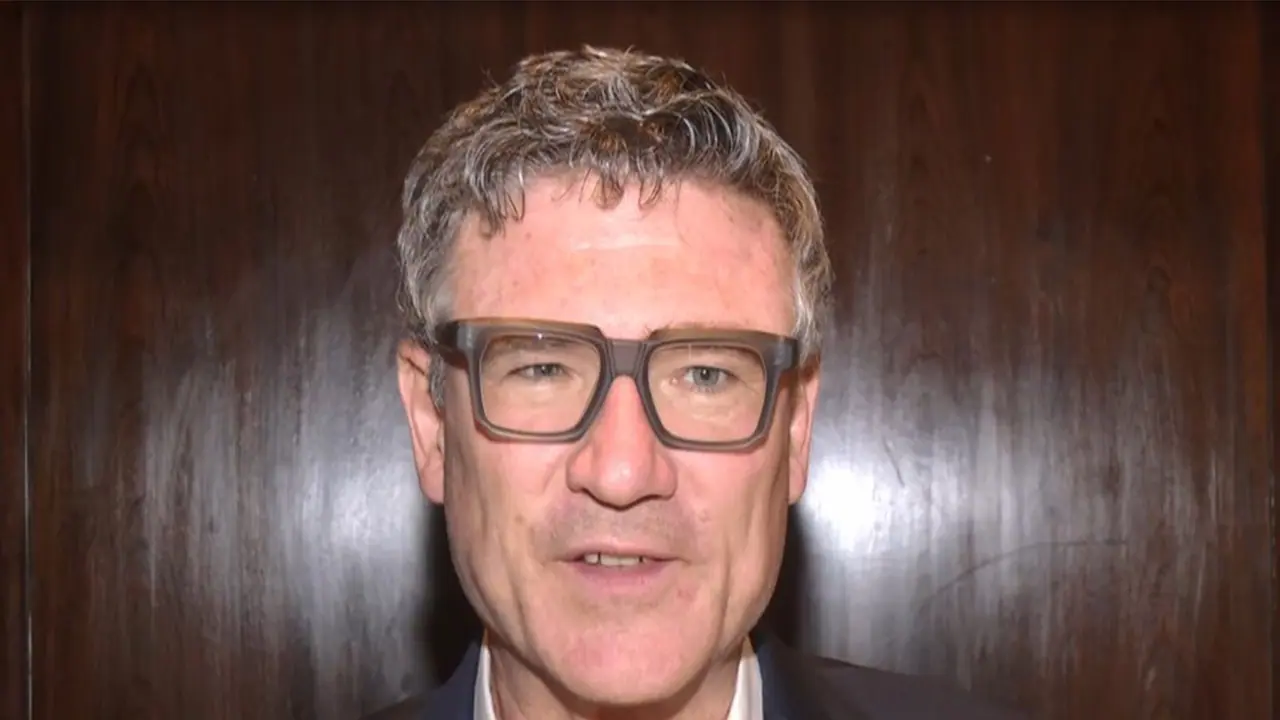
Former German official Stefan Kaufmann says Europe needs India's manufacturing scale and renewable energy capacity to lower green hydrogen production costs. He highlighted cooperation in electrolyser manufacturing to make the fuel globally competitive.
Indo-German Synergies for Cost Reduction
Speaking with ANI, Kaufmann underscored the complementary synergies between Germany and India. He noted that while Germany produces state-of-the-art technology, India’s industrial momentum holds the key to making green hydrogen commercially viable against fossil fuels. Addressing the cost disparity in current hydrogen technology, Kaufmann emphasised that German technological innovation needs Indian manufacturing capacity to achieve global competitiveness. "In Germany, we have some of the best technologies in that field of electrolysers, but the costs are much too high. So, in a global competition, it would be very interesting for cooperation between German and Indian companies... We need India to bring down the costs for technologies, for the green hydrogen to make it really competitive to grey," he said.
Joint Electrolyser Manufacturing a Key Opportunity
Highlighting near-term avenues for partnership, Kaufmann pointed toward joint electrolyser manufacturing and establishing trade and export corridors for green fuels: "So, we have a lot of opportunities in the field of technology, in the field of, for example, electrolysers, so because at the moment, other than China, India has no really huge electrolyser industry. In Germany, we have some of the best technologies in that field of electrolysers, but the costs are much too high. So, in a global competition, it would be very interesting for cooperations between German and Indian companies, for example, in building an electrolyser industry. And for sure, we have a lot of opportunities in buying green hydrogen from India and selling it to Europe and Germany," he added.
Progress on Green Hydrogen Roadmap
Reflecting on the progress following the Indo-German Green Hydrogen Roadmap, Kaufmann highlighted that major Indian conglomerates are actively forging commercial tie-ups and off-take agreements with European counterparties: "Yes, especially in the last months, India came much more into the picture. So, we have the free trade agreement between Germany and, and India, and between European Union and India. We see a lot of progress also in Indian green hydrogen production; a lot of big players like AM Green, or ACME, or also Reliance, Adani are coming into the picture. Some agreements with some major German companies, offtake agreements we see now. And we see India as one of the most important and interesting producers of green derivatives and hydrogen. And that is something happened especially in the last, in the last months," said Kaufmann.
India a 'Central Force' in Green Transition
Pointing to massive domestic renewable infrastructure, including large-scale solar and wind installations, Kaufmann described India as a central force alongside China in pushing the global green energy transition forward: "Yeah, very interesting to see the, how how India is coming into the market. Also, for sure, for sure in renewables, we see the biggest renewable park in the world built by Adani, on the border with Pakistan, the 30 GW project. We see a lot of other companies now in the market for renewables, building solar parks, wind parks, wind farms, and on the way to produce green ammonia, green hydrogen, green derivatives, and so on," he said.
Reiterating Europe’s reliance on India’s market momentum, Kaufmann said, "India is playing a major role at the moment globally, next to China, I would say, and yeah, it's great to see that something is happening here more than we see in Europe at the moment. So, we need India, and we need India to bring down the costs for technologies, for the green hydrogen to make it really competitive to grey and to have a global ramp-up of hydrogen economy." (ANI)
(Except for the headline, this story has not been edited by Asianetnews Editorial staff and is published from a syndicated feed.)