
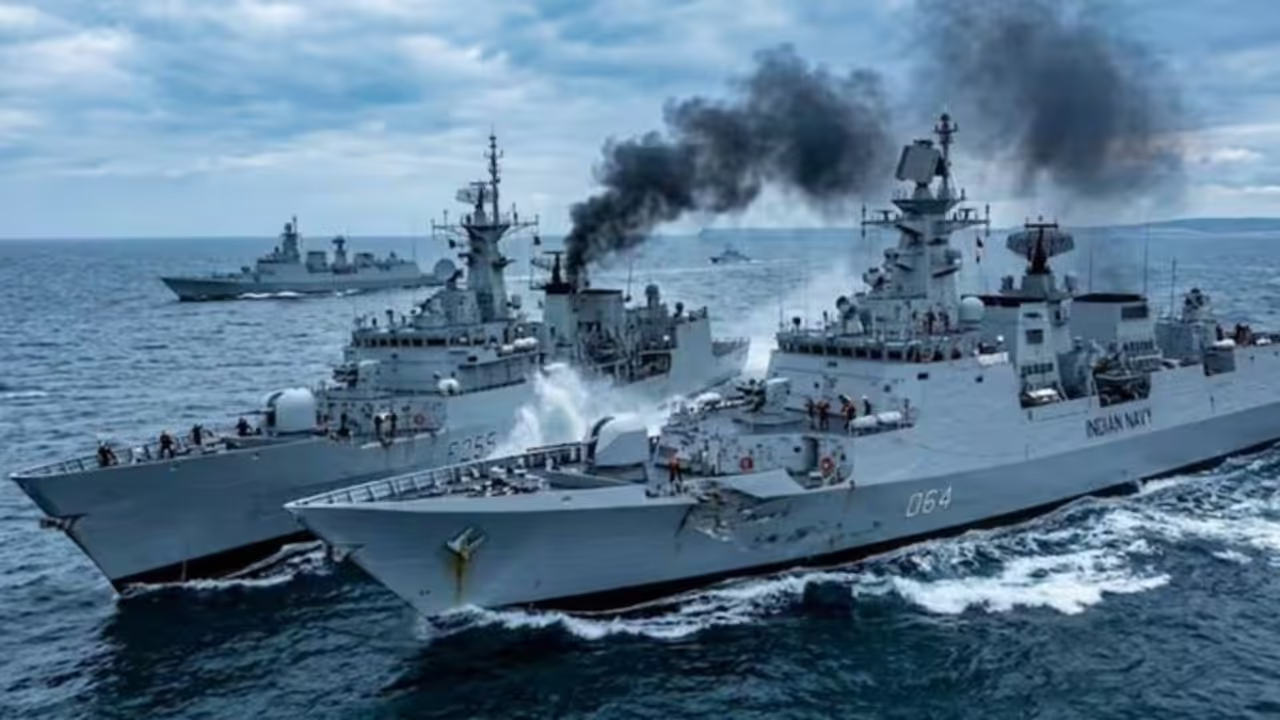
An intelligence assessment warns Ansarallah’s growing control of Bab el-Mandeb threatens India’s trade and energy routes. Over $200 billion in commerce transits the corridor; Cape of Good Hope detours add 10-14 days, higher freight and insurance costs, and fresh risks to Indian seafarers.
An intelligence assessment has flagged a growing security risk for India as Ansarallah, the Houthi movement, expands its control around the Bab el-Mandeb Strait. More than $200 billion of India’s trade with Europe, North Africa and the Americas moves through the corridor linking the Arabian Sea to the Red Sea and the Suez Canal, making any disruption consequential for commerce and energy flows.
Houthi forces have advanced along Yemen’s Red Sea coast, capturing the strategic port of Mokha and moving toward key islands and positions around Bab el-Mandeb, including Perim. Their expanding footprint tightens leverage over one of the world’s busiest sea lanes and heightens the risk to commercial shipping.
The effects are already visible. Data reported by The National showed crossings through Bab el-Mandeb falling from 30 to 15 in a single day in September amid Houthi advances and attacks, affecting vessels that carry crude, grains and steel.
Cape Of Good Hope Detours Add 10-14 Days And Higher Costs
If disruption persists, the assessment warns, ships may bypass the Red Sea for the longer Cape of Good Hope route, adding 10-14 days to voyages. That shift would raise freight rates and marine insurance, while higher fuel burn and tighter vessel utilisation ripple through supply chains and into domestic energy and consumer prices.
India’s energy shipments through the corridor remain operational, but their growing vulnerability could make supply chains more expensive and less predictable. The regional picture is also strained: Saudi Arabia has faced interruptions to alternative infrastructure, and S&P Global noted the Houthi advance around Mokha could erode Saudi Arabia’s Red Sea export route, even if it does not by itself shut regional oil exports.
Safety concerns are rising for Indian nationals at sea. More than 20,000 Indian seafarers work aboard vessels transiting these high-risk waters, and recent projectile attacks involving ships with Indian crew or links underscore immediate physical dangers. Prolonged disruption would also unsettle import and export schedules and push up insurance costs, with knock-on effects for energy, raw materials and intermediate goods.
Seafarer Safety And A Second Chokepoint Risk
Strategically, Houthi leverage at Bab el-Mandeb combines with Iranian influence at the Strait of Hormuz to create pressure at two major maritime chokepoints on either side of the Arabian Peninsula. A weakening of foreign-backed deterrence in Yemen could leave Saudi Arabia and the UAE more exposed to asymmetric drone and missile attacks, with implications for regional economic stability.
New Delhi has kept a cautious diplomatic line, stressing freedom of navigation, maritime security and the safety of Indian nationals while working with regional navies and international partners. India has also condemned recent Houthi attacks on Saudi Arabia, saying they threaten regional security and freedom of navigation through Bab el-Mandeb.
