
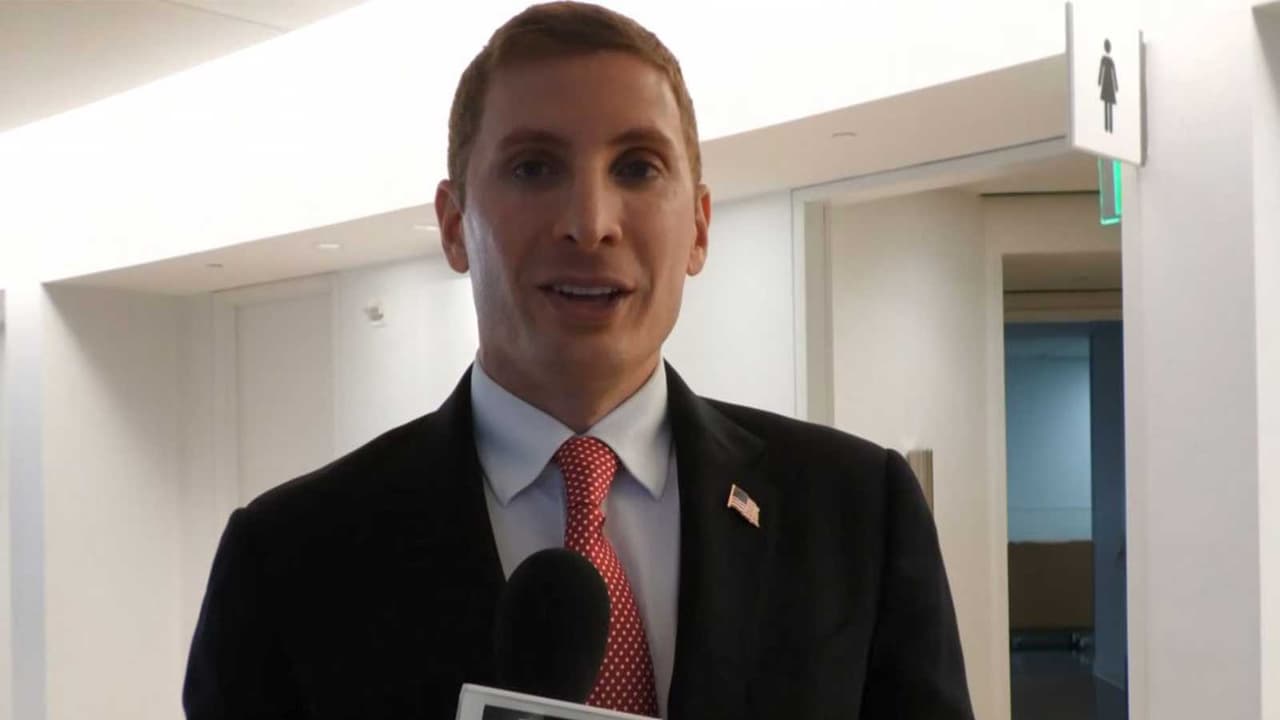
US Under Secretary Jacob Helberg lauded India as a pivotal partner for the global tech future, calling the US-India relationship one of the most vital of this century. He highlighted India's key role in the Pax Silica initiative and the Quad.
Speaking to ANI, Helberg expressed immense optimism about the ongoing joint efforts under the Pax Silica framework, reflecting on India's early leadership role in the initiative. "We are incredibly excited to partner with India. India was one of the first top 10 countries to join Pax Silica. Our Ambassador in India has really been a remarkable steward of the US-India relationship which, as he says, we believe is one of the single-most consequential bilateral relationships in the world in the 21st century," Helberg stated.
Progress on Quad and Digital Trust
The US official further revealed that high-level bilateral discussions held on Wednesday had yielded significant progress on critical regional and technological security frameworks, including the Quad and emerging digital trust standards. "We were able to cover a lot of very timely issues in our bilateral exchanges with India yesterday, including on the Quad, on the trust initiative, and we are really excited to have India along with so many representatives of the Indian business sector at the Summit to really translate a lot of those translations into practical collaborations," Helberg added.
The Pax Silica Framework
The remarks underscore a concerted effort by both nations to move beyond diplomatic dialogue and actively channel corporate and governmental synergies into tangible deep-tech supply chains. These practical pushpoints take centre stage as Washington, DC is currently playing host to the second Pax Silica Summit, a two-day high-level gathering running from June 25 to 26.
This builds on a rapidly developing diplomatic timeline, as the inaugural Pax Silica Summit took place last December, with New Delhi formally joining the initiative in February on the sidelines of the AI Impact Summit held in New Delhi. Rather than functioning as a standard trade agreement, the initiative operates as a pact for economic and military security.
This framework is anchored on the understanding that future security will rely heavily on which nations manage and control the artificial intelligence value chain. Semiconductors and critical minerals lie at the very heart of this initiative, with both resources becoming increasingly vital for national security and global economic competitiveness. The framework underscores an intensifying strategy by Washington and its allies to decouple and lower reliance on Beijing in industries crucial to the future global economy. (ANI)
(Except for the headline, this story has not been edited by Asianet Newsable English staff and is published from a syndicated feed.)