
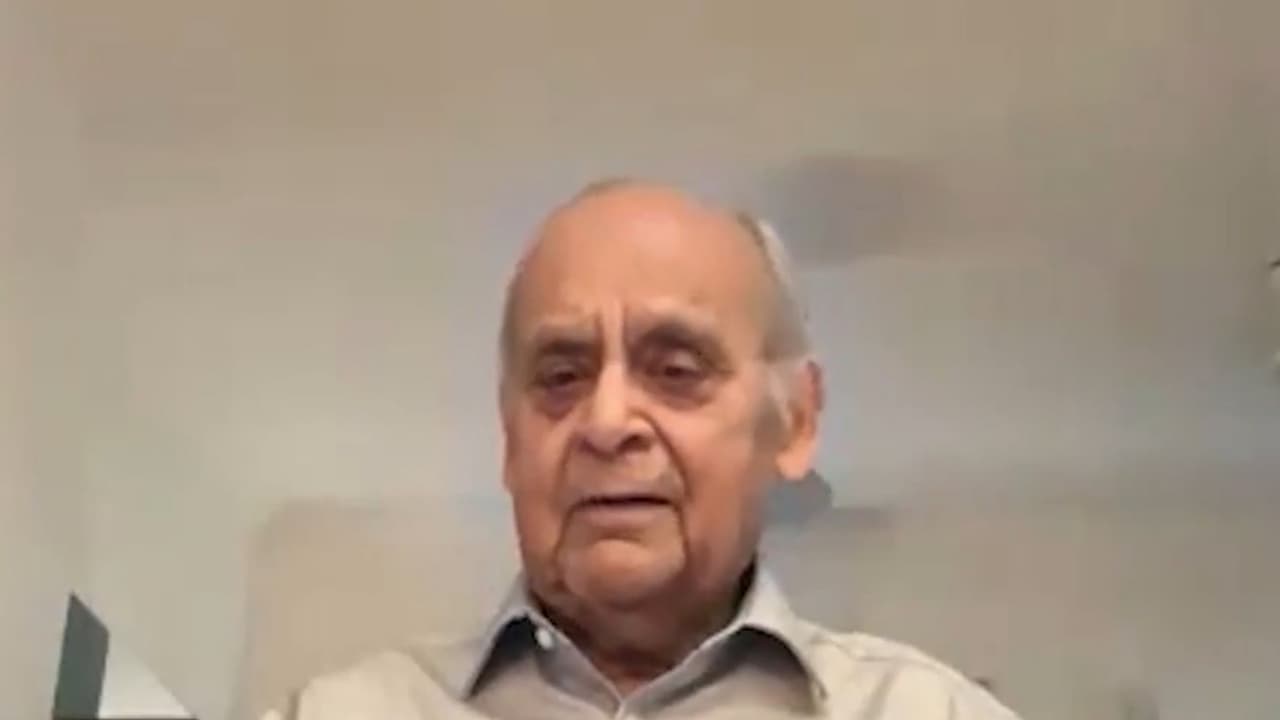
Ex-R&AW chief Vikram Sood downplayed Pakistan's role in potential US-Iran peace talks, suggesting it is limited to providing logistical support rather than active diplomacy and questioning its neutrality due to its ties with the US.
Former Research and Analysis Wing (R&AW) chief Vikram Sood downplayed reports of Pakistan as a mediator in potential Iran peace talks, suggesting its role is limited to offering logistical support rather than active diplomacy. In an interview with ANI, Sood said, "He's only providing a venue. He's not sitting in monitoring the proceedings."
Scepticism over Pakistan's Neutrality
Sood further remarked that Pakistan may be perceived by the United States (US) as a "reliable chap" that could help facilitate discussions indirectly. "That is my impression that you know you find a room to sit in a neutral place to talk, not neutral actually, he is in America's pockets," he said, indicating scepticism over Islamabad's neutrality in such efforts.
On whether Iran would trust Pakistan, Sood expressed uncertainty, pointing to historical and sectarian complexities. "I don't know. Maybe a bit, but there is the Shia-Sunni angle; there has been trouble in the past. So, I don't think there is full trust," he said.
Highlighting regional dynamics, he said that Pakistan remains relatively isolated in terms of ties with Shia-majority countries."Pakistan, in that sense, is rather lonely in the Middle East. It has very few Shia friends, Shia countries. I think Azerbaijan and a few others, one or two others with a Shia population, like Bahrain, but really not much," Sood added.
Pakistan Confirms 'Facilitator' Role
Meanwhile, Pakistan's Ambassador to the US, Rizwan Saeed Sheikh, in an interview with Fox News, has said that the efforts to facilitate US-Iran peace talks are underway, but cautioned that the process will be complex and time-consuming. He underscored the difficulties posed by conditions inside Iran, noting disruptions caused in the communication channels by the ongoing conflict.
"Let's look at the fact that Iran is a war-torn country with the communication channels certainly disrupted, and it is not even easy to get responses in a good time from the system that currently is in place there. So you would have noticed that these deadlines have been extended in the past, in recent past, and we are working religiously with regard to the current deadline," he said. The ambassador added that while Pakistan is playing a facilitating role, the responsibility for successful negotiations ultimately lies with the "conflicting" parties involved. "The process will take its own due course, and while Pakistan continues to be the facilitator, it is actually upon the conflicting parties themselves to not only create the prerequisites for negotiations and to be able to conduct them in all earnest, but they will have to take the decisions which make it successful," he said.
Trump Claimed 'Positive Progress'
Earlier, US President Donald Trump claimed that indirect negotiations between the United States and Iran, facilitated by Pakistani intermediaries, are making "positive progress". Speaking about the ongoing backchannel diplomacy, Trump said talks are underway through Pakistani "emissaries", though he declined to provide specific details when asked whether a ceasfire deal to reopen the Strait of Hormuz could be reached in the coming days. (ANI)
(Except for the headline, this story has not been edited by Asianet Newsable English staff and is published from a syndicated feed.)