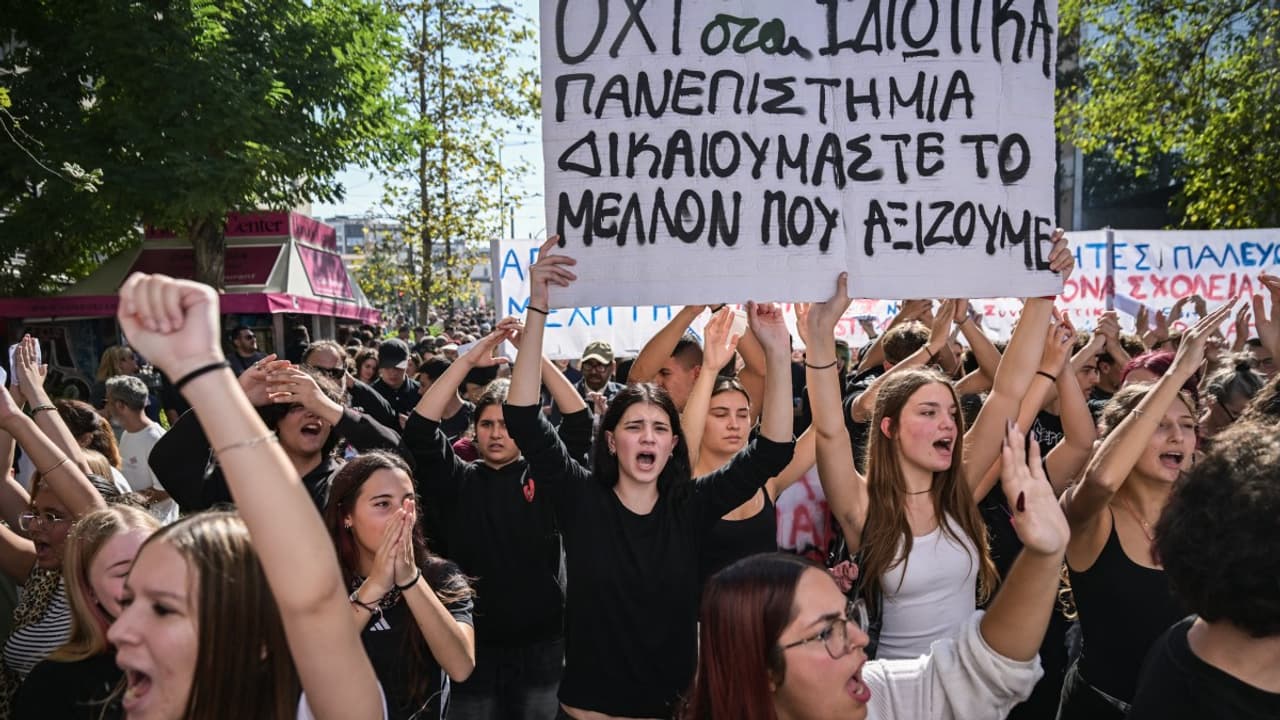
Across Europe, a growing wave of youth activism is reshaping political debate as frustrations over living costs, education and opportunity fuel an increasingly vocal generation demanding change.
A surge of youth-led protests is spreading across Europe, driven by a generation that says it has been ignored for too long. From France and Belgium to Italy, Albania and Serbia, young demonstrators are demanding action on living costs, education, housing, jobs and political accountability.
What began as local frustrations has evolved into a broader movement stretching across national borders. While the grievances differ from country to country, protesters repeatedly point to the same underlying concern: a belief that decision-makers have failed to address the challenges facing younger generations.
The political impact has already become visible. In Serbia, student-led demonstrations that lasted nearly two years culminated in an election result that ended the dominance of long-time leader Aleksandar Vucic. For many activists elsewhere in Europe, the Serbian outcome has become proof that sustained public pressure can produce political change.
In cities across the continent, students describe growing frustration with deteriorating public services, rising living expenses and shrinking economic opportunities. Many argue that despite repeated appeals and peaceful actions, their concerns were largely overlooked until demonstrations gained national attention.
The movement has also exposed a wider disconnect between younger voters and established political institutions.
Several participants say they feel increasingly excluded from decisions that will shape their future. Concerns about housing affordability, job prospects and education funding feature prominently in protests, alongside broader complaints about inequality and political representation.
In France, students have highlighted poor school conditions and staff shortages. Similar complaints have emerged in Italy, where protesters point to inadequate educational infrastructure, housing pressures and worries about future employment opportunities.
The demonstrations have not remained entirely peaceful. In some countries, clashes between protesters and police have intensified tensions. Authorities have responded with large security deployments, while incidents of vandalism and property damage have drawn criticism and added controversy to the wider movement.
Economic Anxiety Driving A Shared Generational Response
Many of the concerns voiced by demonstrators are linked to economic pressures facing young adults.
Recent European surveys identified the cost of living as one of the most significant worries among people aged 16 to 30. Rising prices, expensive housing and uncertainty about future employment have become recurring themes across protest movements.
Young Europeans are also increasingly concerned about inequality between generations.
Some activists argue that public spending priorities often favour older populations while education, youth opportunities and future-oriented investments receive less attention. These concerns have contributed to growing support for movements challenging existing political structures.
In Albania, demonstrators have linked their protests to concerns about corruption, limited job opportunities and dissatisfaction with education standards. Protesters there say many young people view emigration as the most realistic path to a better future.
Belgian student activists express similar frustrations. Some argue that only after demonstrations became more visible did politicians and media outlets begin paying attention to their concerns.
For many participants, the protests are ultimately about recognition as much as policy.
Student leaders across multiple countries frequently repeat the belief that younger people are not sufficiently included in public debates despite bearing the consequences of long-term economic and social decisions.
The movement continues to expand, with new demonstrations planned in several European countries. While outcomes remain uncertain, the protests have already altered political conversations by placing youth concerns at the centre of national debates.
Serbia's experience has further strengthened confidence among activists, demonstrating that grassroots mobilisation can influence mainstream politics.