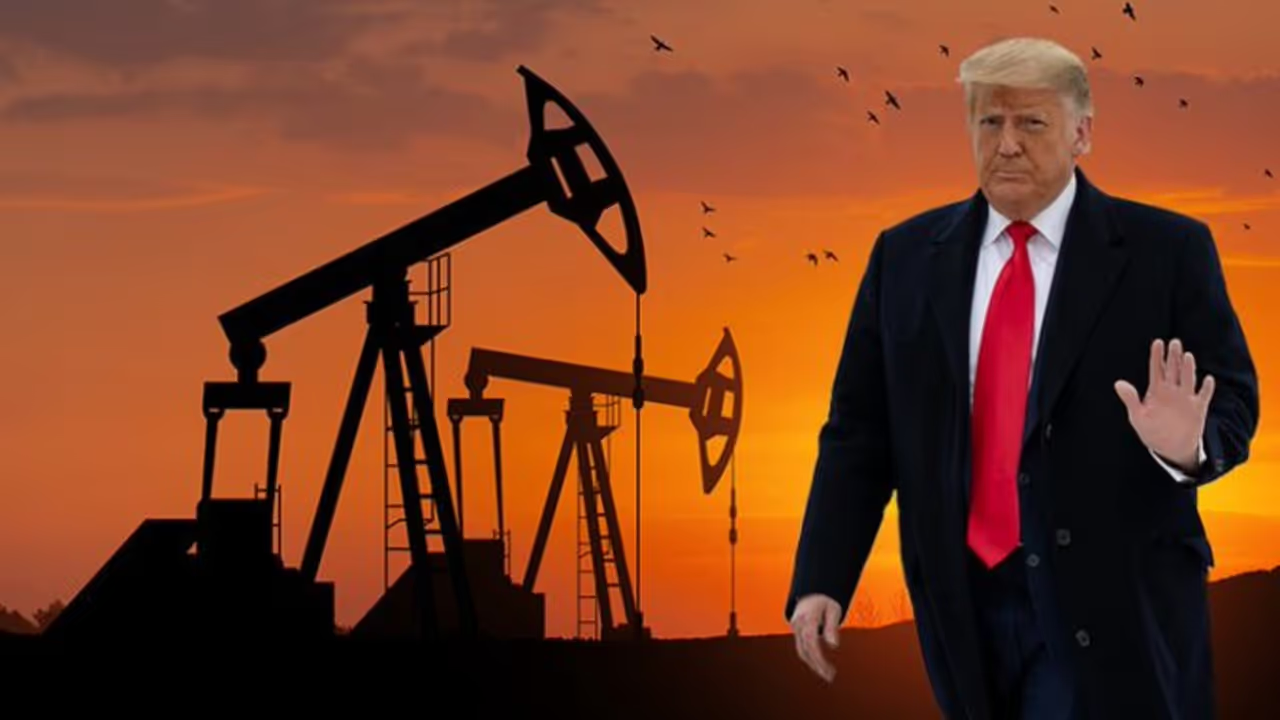
Oil prices fell on April 15 as hopes grew for a peace deal in the Middle East, reducing fears of supply disruption. Brent and WTI crude both declined, while global stock markets rose on improving sentiment. The US dollar weakened as investors took more risks. However, concerns remain over supply after a record disruption reported by the IEA.
Global oil prices dropped early on April 15 as hopes increased for a possible end to the Middle East conflict. Investors reacted positively to signs that talks may resume, which could reduce tensions and allow oil supplies to move freely again. Brent crude was trading near $94.79 per barrel, while West Texas Intermediate (WTI) stood at around $91.25 per barrel in early trading. Both prices were lower than the previous session.
Risk fears ease in markets
The fall in oil prices shows that investors are less worried about a wider war in the region. Earlier, prices had risen sharply due to fears of supply disruption, especially around the Strait of Hormuz. This narrow sea route is very important because a large share of the world’s oil passes through it. Any conflict in the area can quickly affect global energy supplies. As hopes for peace talks improved, the extra “war risk premium” added to oil prices began to fade.
Global ,stock markets, rise
At the same time, stock markets across the world showed strong gains. In the United States, the Dow Jones index slipped slightly, but the S&P 500 and Nasdaq rose. The S&P 500 has now returned to levels seen before late February, when tensions had sharply increased. Markets in Europe and Asia also moved higher. Japan’s Nikkei index rose, while Hong Kong’s Hang Seng and other Asian markets also gained. European markets were mostly steady, though London’s FTSE 100 saw a small decline as falling oil prices affected energy companies.
Related Articles

Energy companies feel the pressure
Lower oil prices often impact large energy firms. Shares of companies like BP and Shell came under pressure as Brent crude dropped below $95 per barrel. At the same time, some luxury companies in Europe reported weaker sales. Kering said its revenue fell by three percent, mainly due to weak performance of its Gucci brand. Hermès also reported a small drop in sales, with a stronger euro making its products more expensive for global buyers.
Dollar weakens as risk appetite improves
The US dollar, which is often seen as a safe investment during uncertain times, fell against other major currencies. This suggests that investors are becoming more confident and are moving money into riskier assets like stocks. Currency movements showed the euro and pound slightly lower against the dollar, while the yen weakened slightly.
Peace talks bring cautious optimism
Comments from Donald Trump added to the positive mood. He said talks with Iran could restart soon, even as the US Navy continues its blockade on Iranian ports. Analysts say markets are hopeful but still cautious. Fawad Razaqzada, an analyst at FOREX.com, said the strong rise in markets shows growing optimism, but warned that risks remain.
Supply concerns remain
Despite the positive mood, concerns about oil supply are still present. The International Energy Agency (IEA) reported that global oil supply saw its biggest disruption ever in March. Supply fell by 10.1 million barrels per day to 97 million barrels per day. To ease the shortage, IEA member countries released 400 million barrels from their reserves. The agency has said it is ready to release more oil if needed.
Impact of blockade under watch
Experts are also watching the impact of the US blockade on Iranian ports. Rahman Daiyan from the University of New South Wales said that while Iran itself is not a major global supplier, the situation could worsen if the conflict spreads and affects other Gulf countries. Any disruption in the region could again push oil prices higher.
For now, markets are reacting to signs of possible peace. Investors are hopeful that a deal could reduce tensions and stabilise energy supplies. However, the situation remains uncertain. Any change in talks or escalation in conflict could quickly reverse the trend. Oil prices, currencies, and stock markets are likely to remain sensitive to news from the region in the coming days.
(With inputs from agencies)