
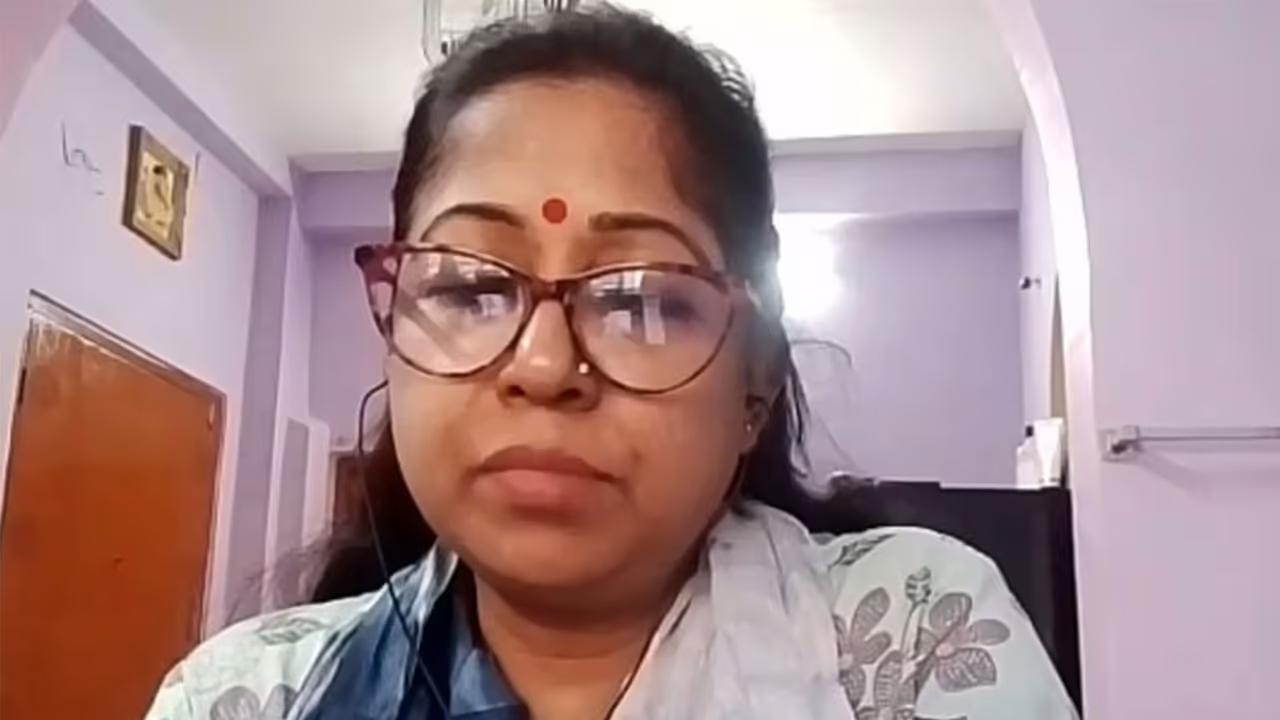
Bangladeshi actor Rokeya Prachy says ordinary citizens are not anti-India, blaming fundamentalist groups for stoking tensions for political gain. The Awami League member also called the interim Yunus government's approach towards India 'unwise'.
Anti-India Sentiment 'Fueled by Fundamentalists'
Bangladeshi actor and activist Rokeya Prachy on Tuesday said that ordinary citizens in Bangladesh are not opposed to India and that anti-India sentiments are being deliberately stoked by fundamentalist groups for political gains.
Speaking to ANI, Prachy, who is also a member of the Awami League, expressed concern about the current situation in Bangladesh and criticised the approach adopted by the interim Yunus government toward India, calling it "unwise" and harmful to the interests of the Bangladeshi people. Awami League is the political party of the ousted Prime Minister Sheikh Hasina.
Rhetoric for Political Gain
"The common people of Bangladesh are not against India. Fundamentalists are trying to whip up anti-Indian sentiments," Prachy said, alleging that radical groups were attempting to provoke tensions by creating hostility against India. She claimed that organisations such as Jamaat-e-Islami, Hizb ut-Tahrir and other extremist outfits were systematically fuelling an anti-India narrative.
According to Prachy, the anti-India rhetoric benefits only those propagating it and does not serve the interests of Bangladesh or its people. "This anti-Indian rhetoric will only benefit those who are whipping it up. It is not for the benefit of Bangladeshi people," she said.
She further alleged that violence targeting Indian interests in Bangladesh was part of a broader strategy by radical elements. Referring to attacks on Indian diplomatic premises, Prachy claimed that extremist groups were attempting to incite unrest and destabilise the country.
Recent Unrest and Mob Violence
Bangladesh faced a severe wave of political and communal unrest, which was triggered by the assassination of youth leader Sharif Osman Hadi. This sparked widespread anti-India protests and led to the mob lynching of a Hindu man, Dipu Chandra Das, in Mymensingh.
Commenting on the recent violence following the death of Osman Hadi and the killing of another student activist, Prachy said she was "not surprised" by the developments. She alleged that the unrest was organised and facilitated by what she termed "mob groups" linked to the interim administration.
Threats to Stability and Democracy
Prachy further claimed that the release of several convicted Islamist extremists had emboldened radical elements, leading to mob violence against dissenters and minority groups. She alleged that intellectuals and political opponents critical of the interim government had been silenced amid the unrest.
"The violence and protests are being used as a weapon to whip up anti-India sentiment and target religious minorities," Prachy said, adding that such developments pose serious risks to Bangladesh's stability and democratic process. (ANI)
(Except for the headline, this story has not been edited by Asianet Newsable English staff and is published from a syndicated feed.)