China has diplomatically condemned the US military operation in Venezuela that led to President Nicolás Maduro's capture. Calling the action a violation of international law, Beijing demanded Maduro's immediate release and urged dialogue over force.
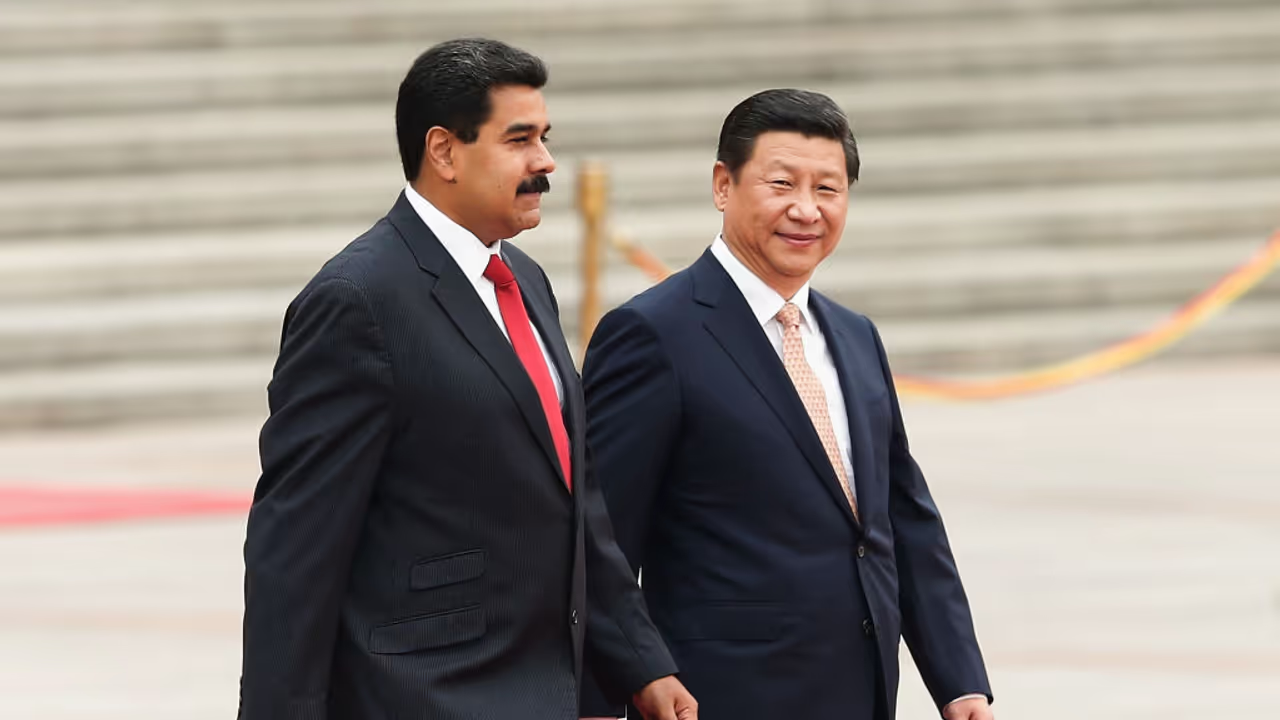
China has issued a sharp diplomatic critique of the United States’ recent military operation in Venezuela, which led to the capture of President Nicolás Maduro and his wife. Beijing’s response underscores its longstanding strategic partnership with Caracas and signals broader geopolitical friction with Washington over the norms governing international interventions.
In statements released by China’s Ministry of Foreign Affairs, Beijing described the US action as a serious violation of international law, calling for the “immediate release” of Maduro and his wife. Chinese officials argued that the forcible removal of a sovereign nation’s leader undermines the principles of state sovereignty and the UN Charter. They urged Washington to halt efforts aimed at toppling the Venezuelan government and to resolve disputes through dialogue and negotiation rather than force.
Chinese Foreign Minister Wang Yi further criticized the notion that any nation can act as the “world’s judge” or global policeman, emphasizing that no single country should claim authority to intervene unilaterally in another state’s affairs. This was one of Beijing’s first clear statements on the Venezuelan crisis since dramatic images of Maduro blindfolded and in US custody circulated globally.
Related Articles

The US operation has broader implications for China’s foreign policy and global influence. Venezuela has been a key partner for Beijing, particularly in energy - China is one of Venezuela’s largest oil buyers and investors. The capture of Maduro represents a setback for Chinese diplomatic ambitions in Latin America and highlights the deepening geopolitical competition between the world’s two largest economies.
Analysts note that China’s condemnation aligns with a larger narrative in which Beijing positions itself against perceived Western hegemony. China portrays its foreign policy as respecting sovereign development paths chosen by nations themselves, contrasting it with what it frames as unilateral US actions.
While China’s response is strongly worded, Beijing is expected to limit its reaction to diplomatic and rhetorical avenues rather than military retaliation, even as it seeks to defend its strategic partnerships and global standing.