As SCO gears up for its summit, India, China, and Pakistan face a deeper test—regional connectivity amid distrust, where Chabahar and Gwadar emerge as symbols of rival strategic ambitions
Ahead of the SCO heads of state summit later next month, let's take a moment to understand the implications of regional cooperation vis-a-vis connecting corridors and regional discord.
As the three countries of India, Pakistan and China are part of SCO, it becomes pertinent to discuss regional connectivity between these three countries specially because of the lack of mutual trust between the three countries.
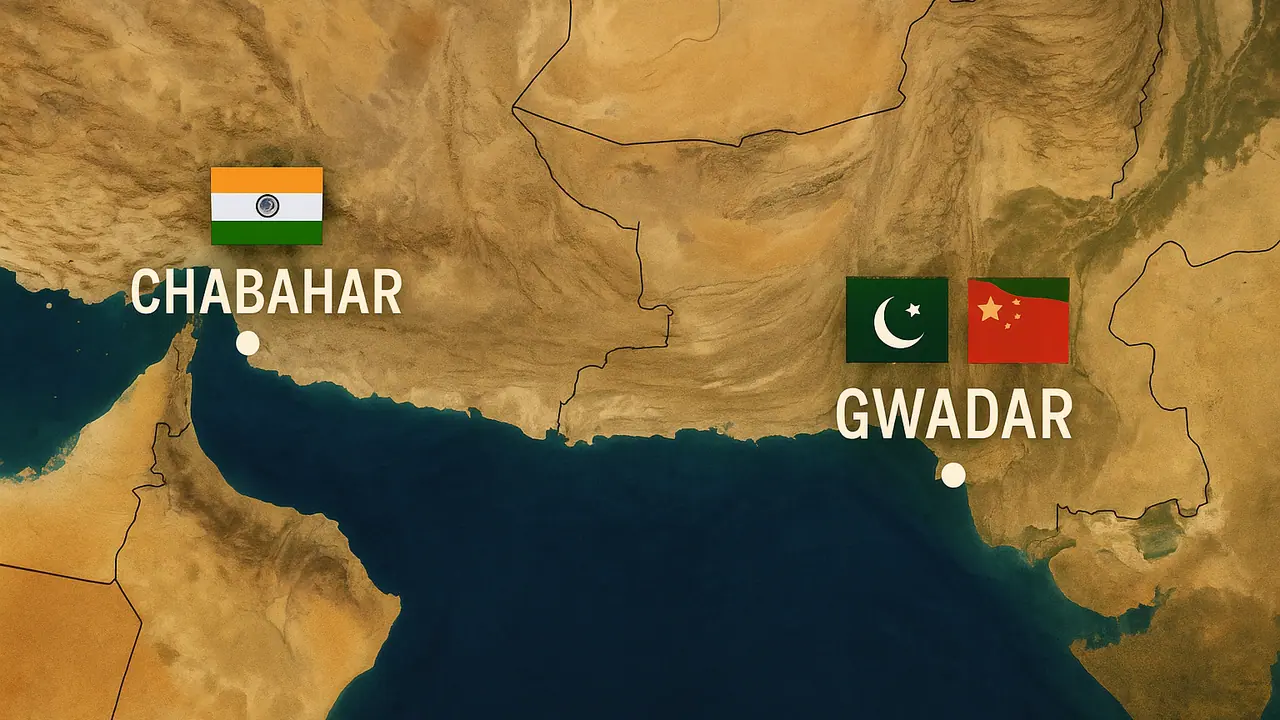
Keeping this in mind, Gwadar as part of CPEC and Chabahar as part of INSTC are of extreme strategic importance for the three countries.
Related Articles

India's Chabahar in Iran and China's Gwadar in Pakistan stand as symbolic gatekeepers to South Asia's strategic future. They further fuel interest because both the ports are perched on either side of the volatile Balochistan coastline. Thus, the economic outposts are greater than regional connectivity, it is a manifestation of competing civilizational aspirations of India, Pakistan and China.
India is deepening it's diplomatic and infrastructural stake in Chabahar while fighting Trump's tariff regime. China on the other hand is contending growing resistance around Gwadar. The corridor is no longer about geography but it is testing the Pakistan-China axis in a big time. The insurgency and militancy in Balochistan is not helping either Pakistan nor China.
Gwadar: Grand in Scale, Fragile in Footing
Gwadar had long been touted as the 'next Dubai' by the Chinese and the Pakistani government. The Port was once central to the CPEC (China-Pakistan Economic Corridor). India has been consistent in her opposition towards the projects of the CPEC. With a price-tag of $60 billion, the Gwadar complex includes a deep-sea port, an international airport and a SEZ under Chinese management.
The Gwadar airport which was inaugurated in 2024 was done so with much fanfare, however the glim reality is that the airport remains mostly non-functional. It's runways remain mostly empty. Power and water is scarce in the remote region of Balochistan and the Baloch communities continue to report exclusion from economic activity. The ownership is foreign and as a result hardly changes the lives of the people residing in it's vicinity.
This disaffection has become combustible. In August 2024, a suicide attack by Baloch separatists on the port’s administrative centre killed 10, including Chinese engineers. The Baloch Liberation Army (BLA) has claimed responsibility for multiple such attacks, squarely targeting Chinese presence. China’s paranoia is evident: reports of militarised security zones and rumours of a potential PLA naval berth only deepen local alienation.
For India, Gwadar being part of the CPEC poses sovereignty challenge for India as it passes through PoK. Thus, for New Delhi Gwadar adds to the diplomatic friction to an already inflamed India-Pakistan theatre.
Chabahar: India’s Calculated Counterbalance
Chabahar in contrast to Gwadar represents India's alternative vision based on access, multilateralism and strategic restraint. India signed a 10-year contract in May 2024 to manage the Shahid Beheshti terminal with investments exceeding $120 million and a credit line of $250 million to upgrade surrounding infrastructure. The intent was clear from India's end: India will not be excluded from regional connectivity.
Since India began managing port operations through India Ports Global Limited (IPGL), Chabahar has witnessed steady growth. As of early 2025, over 134,000 TEUs and 8.7 million tonnes of cargo have passed through the port. In FY 2024 alone, container traffic surged sixfold, with corresponding rise in bulk cargo.
India is betting on long-term implications. The under-construction Chabahar-Zahedan railway which is a part of the INSTC is slated to be operational from mid-2026. After completion, it will not only link India to Iran and Afghanistan but will also link us to Central Asia, Russia and Europe bypassing Pakistan altogether.
the diplomatic finesse of India is in work at Chabahar. India manages to operationalise the port despite concerns around US sanctions on Iran. Washington recognises Chabahar's humanitarian and strategic relevance to Iran and Afghanistan.
The most important and by far the deciding factor is that Chabahar is welcomed by the locals. Shared administration with Iranian authorities, culturally sensitive engagement has made the port acceptable and it's development has not been marred by the likes of Gwadar.
At its core, the Gwadar–Chabahar rivalry reflects competing development models. China’s top-down, capital-intensive approach has been hampered by a lack of local integration and a dismissive attitude toward sovereign concerns (including India’s on PoK). India’s more patient, decentralised and partnership-driven strategy, though modest in scale, offers greater sustainability.
From India's vantage point, Chabahar is not just a port. It is rather a geopolitical gateway. It opens doors to energy-rich places of Central Asia and offers a land-bridge to Afghanistan without having to ask Pakistan. It Is sure to shape Eurasian connectivity. As Iran gains full membership of SCO and BRICS, the port's geoeconomics value will only increase henceforth.