Renewed Cambodia‑Thailand fighting threatens Southeast Asia’s stability. China’s mediation, economic stakes, and rivalry with U.S. diplomacy could decide the war’s outcome.
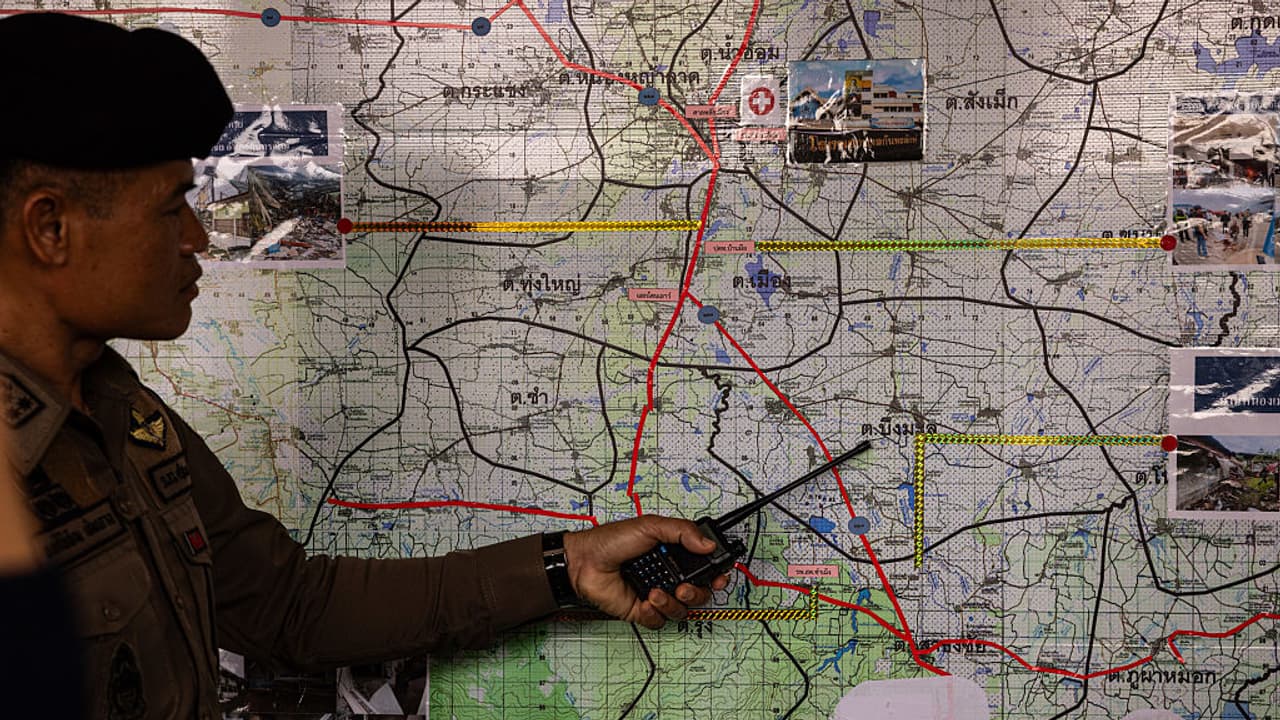
The fragile peace between Cambodia and Thailand has collapsed once more, with renewed fighting along disputed border regions now spiraling into one of Southeast Asia’s most intense armed clashes in recent decades. The conflict, reignited on December 7 after both sides accused each other of firing first, has quickly escalated across the Dangrek mountain range, the Sa Kaeo‑Banteay Meanchey frontier, and Cambodia’s southwestern provinces of Pursat and Koh Kong.
Thailand has mobilized significant military assets, declaring its intention to degrade Cambodia’s armed forces to safeguard national security. Cambodia, facing a far stronger opponent, has responded with counterattacks wherever possible. The confrontation, rooted in long‑standing territorial disputes and sharpened by personal animosities between leaders, has become a defining regional crisis.
Since hostilities resumed, the Royal Thai Army has advanced on multiple fronts, consolidating control over strategic mountain passes and hills. The navy has asserted dominance near Koh Kong, while the air force has struck targets across Cambodia, including casinos and resorts alleged to host scam operations.
Related Articles

Beyond inflicting damage, Bangkok appears intent on securing buffer zones and seizing landforms that could shield Thai territory from future incursions. Analysts note that the relatively flat terrain of western Cambodia makes the Sa Kaeo‑Banteay Meanchey region a likely priority for deeper offensives. Success there would open road networks into major Cambodian cities, while operations in the Dangrek Mountains tie down opposing forces. Parallel breakthroughs could give Thailand decisive leverage in eventual negotiations.
Despite heavy casualties, Cambodian forces continue to resist. Yet the Royal Cambodian Armed Forces remain at a clear disadvantage. Thailand’s military is more than three times larger, better trained, and equipped with modern precision‑guided munitions. Cambodia, by contrast, relies on outdated systems, with limited air and naval capacity.
One exception is the Chinese‑supplied PHL‑03 multiple rocket launcher, capable of firing guided and unguided rockets up to 130 kilometers. While this system poses a credible threat, Thai commanders have warned that its use would trigger devastating retaliation. For Cambodia, the realistic objective is to hold defensive lines and exploit opportunities for counteroffensives, though such aims remain difficult against a superior adversary.
Beijing’s Calculated Role
China’s influence looms large. With close ties to both nations, Beijing has positioned itself as mediator, publicly urging restraint while engaging in quiet diplomacy. Its motivations are multifaceted: economic, political, and geopolitical.
Economically, China has far greater stakes in Thailand than in Cambodia. In 2024, bilateral trade with Thailand reached $115.8 billion, compared to $17.8 billion with Cambodia. Chinese foreign direct investment also heavily favored Thailand, at $13 billion versus $3.4 billion in Cambodia. A prolonged war threatens these returns, making peace a priority for Beijing.
Politically, China enjoys strong relations with both governments. It recently marked 60 years of diplomatic ties with Thailand, highlighted by the Thai monarch’s visit to Beijing. Simultaneously, Beijing maintains long‑standing connections with Cambodia’s ruling Hun family and monarchy. These elite networks provide China with diplomatic capital to act as an intermediary.
Geopolitically, China seeks to counter U.S. mediation efforts. President Donald Trump has actively pursued conflict resolution in Southeast Asia, including the Kuala Lumpur Peace Accord in October. Beijing, viewing the region as its strategic backyard, is keen to assert its own peacemaking credentials. Successful mediation would bolster China’s image as a critical security actor in ASEAN.
China’s balancing act is complicated by battlefield realities. Thai advances have already exposed weaknesses in Chinese‑made Cambodian weaponry, including the loss of newly unveiled GAM‑102LR anti‑tank systems. Such setbacks risk undermining confidence in Chinese arms exports. At the same time, Beijing may quietly welcome Thai strikes on scam compounds, aligning with its own crackdown on cyber‑crime networks that have tarnished its reputation.
The conflict’s trajectory will hinge on whether Thailand presses deeper into Cambodian territory and whether China can broker a durable ceasefire. For now, the fighting underscores both the fragility of regional peace accords and the high stakes of great‑power competition in Southeast Asia.