
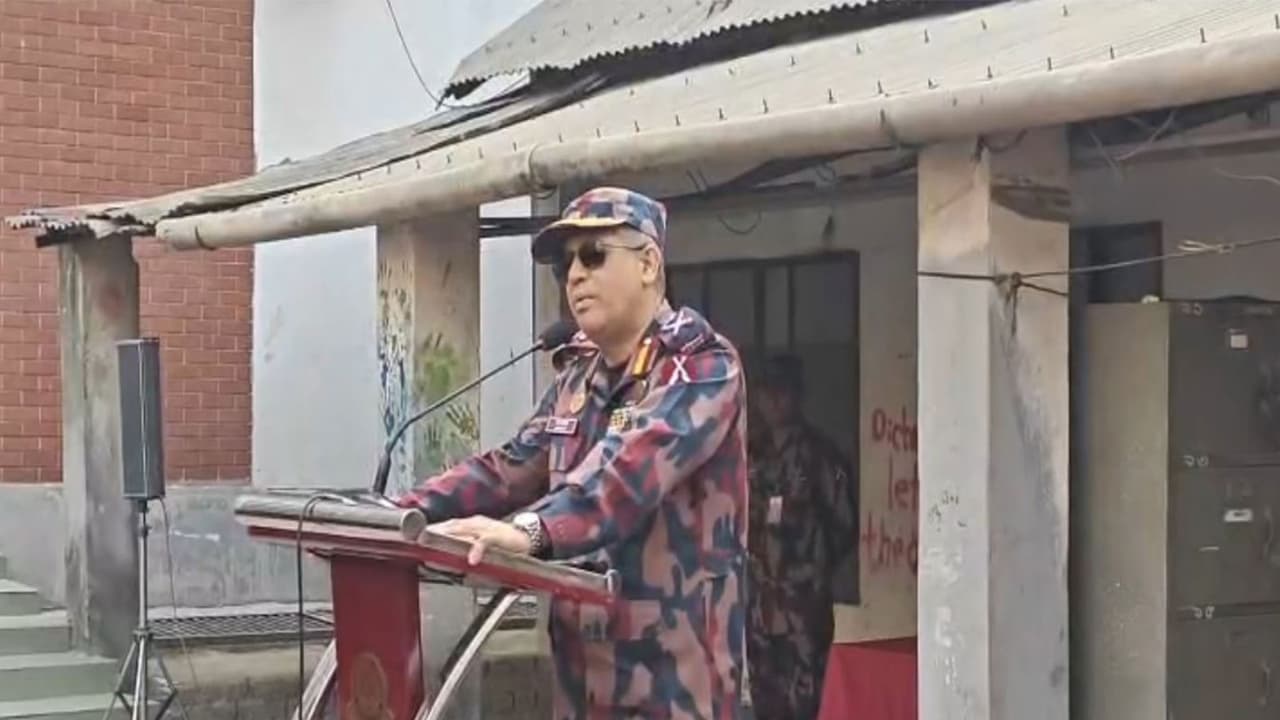
BGB Director General reviewed security for Bangladesh's Feb 12 polls, a pivotal vote 18 months after Sheikh Hasina's resignation. Over 12.77 crore voters will participate amid heightened security and a call for a 'new Bangladesh'.
Director General of Border Guard Bangladesh (BGB), Major General Mohammad Ashrafuzzaman Siddiqui, visited an election base camp in Dhaka to review security preparations ahead of the upcoming polls, with voting scheduled for tomorrow, February 12. The results are expected to be confirmed on Friday, February 13. During the inspection, he assessed the operational readiness of deployed personnel and emphasised the importance of maintaining law and order throughout the electoral process. Addressing BGB members on duty, the Director General issued strict instructions to remain vigilant and to act decisively against any attempts to create unrest, sabotage, or disorder. He underscored that ensuring a peaceful, free, and fair election is a top priority and that any form of violence or destabilising activity must be firmly resisted.
Heightened Security for Pivotal Post-Uprising Polls
The heightened security focus comes as Bangladesh approaches a pivotal electoral exercise taking place 18 months after a massive student-led uprising in 2024 forced the resignation of long-time Prime Minister Sheikh Hasina and ended the Awami League's rule, generating widespread hope for a shift toward greater accountability and reformed democratic governance in the neighbouring South Asian nation.
Logistics, Referendum, and a Call for a 'New Bangladesh'
Following an intense 20-day official campaign period that concluded on February 10, authorities have now shifted fully into polling mode, with attention centred on voting-day logistics and security management. Over 12.77 crore eligible voters will choose representatives for 299 of the 300 parliamentary seats, with one seat postponed due to a candidate's death. Alongside the parliamentary contest, voters will also participate in a concurrent national referendum on the July National Charter, a key document proposing major constitutional and institutional changes that could shape future governance. Against this backdrop, Chief Adviser Prof Muhammad Yunus, in a televised address to the nation, called on citizens to turn election day into the "birthday of a new Bangladesh," emphasising that the people themselves would shape the nation's future through their votes, The Daily Star reported. To facilitate the exercise, a total of 42,779 polling stations have been established nationwide. Voting is scheduled from 7:30 am to 4:30 pm without interruption. Among the electorate, 6.48 crore are men and 6.28 crore are women.
Officials Express Confidence in Security Framework
The Election Commission said ballot papers are being distributed to polling centres with stringent security measures in place, noting that logistical preparations involving thousands of election officials and security personnel have been completed. Echoing this assessment, Election Commissioner Brig Gen (retd) Abul Fazal Md Sanaullah voiced satisfaction with the prevailing environment. "We are satisfied with the law and order situation as it stands. It would have been better if the isolated incidents that occurred had not happened. However, we are in a better position now than at any time in the past," The Daily Star reported.
Detailing the enforcement strategy, Inspector General of Police Baharul Alam outlined a three-tier security framework comprising static forces at polling stations, mobile patrols, and rapid-response striking units. He said 1,57,805 police personnel will be deployed for election duties, supported by an additional 29,798 personnel from regular police stations.
International Observers Note Positive Atmosphere
International observers have also taken note of the preparations. The European Union Election Observation Mission described the pre-poll atmosphere as "very positive," with Chief Observer Ivars Ijabs stating that stakeholders across districts and regions have conveyed a hopeful outlook, according to The Daily Star. The EU has deployed over 200 observers, including 60 long-term observers active since early January and 90 short-term observers assigned to monitor voting and counting.
Political Landscape and Minority Concerns
Politically, the contest primarily pits candidates from two major alliances, one led by the Bangladesh Nationalist Party (BNP) and the other by Jamaat-e-Islami. Party leaders reviewed constituency-level readiness and issued instructions to workers and candidates.
Despite the broadly positive outlook from authorities and observers, concerns persist in some regions regarding potential post-poll unrest. In Chattogram, minority voters expressed apprehension, with residents citing fears of being blamed for electoral outcomes, The Daily Star reported.
A farmer from Rangpur's Gangachara upazila, Manoranjan Shil, recounted lingering trauma from an attack on his village last July. "We are still haunted by the terrifying experience of the attack. We are still in fear," the report said. Minority voters in districts such as Faridpur and Rajbari reported feeling secure, while sentiments varied in Mymensingh and Tangail.
Taken together, the developments underscore the significance of the upcoming vote, widely seen as a critical juncture for Bangladesh's democratic trajectory, with broader implications for governance and regional stability in South Asia. (ANI)
(Except for the headline, this story has not been edited by Asianet Newsable English staff and is published from a syndicated feed.)