
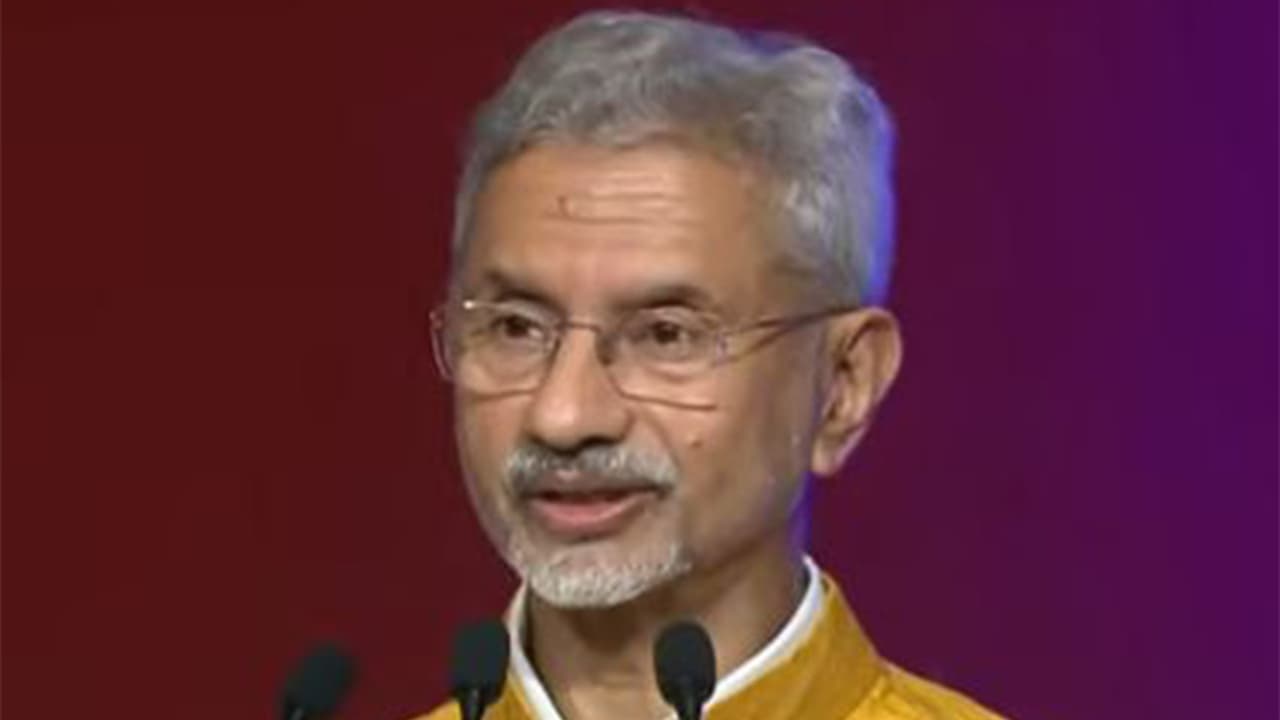
At the Raisina Dialogue 2026 inaugural, EAM S Jaishankar said discussions will focus on new capabilities and strategic mindsets. Keynote speaker, Finland's President Alexander Stubb, noted the end of a Western-dominated world order.
External Affairs Minister S Jaishankar on Thursday delivered the vote of thanks at the inaugural session of the Raisina Dialogue 2026, saying the discussions over the next few days would focus on emerging capabilities, new strategic mindsets and reassessing long-held assumptions in a rapidly changing global order.
Speaking after the keynote address by Finland's President Alexander Stubb, Jaishankar said the dialogue was being held at a particularly complex time in global affairs, which has set the tone for deeper deliberations.
Jaishankar on Dialogue's Focus
"Our discussions over the next few days will be about new capabilities -- military, economic, energy, human resources and above all technology, particularly artificial intelligence," Jaishankar said at the 11th edition of india's flagship conference on geopolitics and geo-economics.
He added that the dialogue would also explore evolving strategic thinking, including a greater willingness to take risks as well as the need to "de-risk and diversify."
"It would also be about habits and assumptions -- where they still apply and where we need to get over them," he said.
Addressing Prime Minister Narendra Modi, who was present in the audience, Jaishankar said the Prime Minister's presence at the forum continues to serve as an inspiration. "Events of the last year, including ongoing developments, only validate your belief that Indians must continue to develop a sharp global awareness -- both of the world and of an equally relevant India. And we must constantly update both," he said.
Jaishankar also referred to Stubb's work as an author and said participants would have another opportunity to hear from him during the course of the dialogue. "In his well-established incarnation as an author, we will also have the pleasure of hearing him again tomorrow, specifically on value-based realism," he said.
Stubb on Changing Global Order
Earlier, delivering the keynote address at the inaugural session, Finland's President Alexander Stubb spoke about the changing global order and the increasing influence of the Global South. "The changing world order places growing importance on the Global South. As a major power, India could play a decisive role in shaping whether the future international system moves toward conflict-driven multipolarity or a more cooperative and rules-based multilateral order," Stubb said.
He noted that the global balance of power was shifting, with countries of the Global South gaining influence through demographic and economic advantages. "The era of a Western-dominated world order is coming to an end. While nostalgia may offer lessons from the past, it rarely provides solutions for the future," Stubb said.
Jaishankar also thanked the organisers, speakers, fellows and participants, saying the openness, diversity and energy of the conference make it unique among global forums. "You are what separates this event from all others. The openness, diversity, energy, and even the atmosphere that characterise Raisina is truly unique," he said.
He also stressed the importance of understanding the world as it truly is. "In today's context, it is important to understand the world as it truly is rather than how we wish it to be. We are living in a period increasingly shaped by power politics and evolving global dynamics," he said.
Reflecting on how societies perceive global developments, Stubb said people often make three mistakes -- over-rationalising the past, over-dramatising the present and underestimating the future. "We draw comparisons between the past and the present to make predictions or to argue that the world was more stable in earlier times. At the same time, current crises are often portrayed as unprecedented," he said.
A Finnish Perspective on Reflection
Drawing on Finnish culture, Stubb said people in Finland often rely on reflection during difficult times. "When times get tough, a Finn might go to the sauna and take an ice bath -- a way to clear the mind and reflect on what is happening in the world," he said.
Stubb added that this spirit of reflection aligned with the theme of this year's dialogue -- "Samskara: Assertion, Accommodation and Advancement," which will guide discussions over the next three days on the future of the global order.
About Raisina Dialogue 2026
Prime Minister Narendra Modi on Thursday inaugurated the 11th edition of the Raisina Dialogue. Finland's President Alexander Stubb is also the Chief Guest for the three-day event. The dialogue, which brings together global policymakers, diplomats, and thought leaders, focuses on key global and regional issues, including economic cooperation, security challenges, and emerging geopolitical trends.
The three-day dialogue is scheduled from March 5 to March 7. The 2026 edition, themed "Samskara - Assertion, Accommodation, Advancement", will see participation from representatives of 110 countries, including ministers, former heads of state and government, members of parliament, military commanders, captains of industry, technology leaders, scholars, journalists, and youth leaders. Samskara represents the legacy of identity that allows civilisations to assert themselves, embrace diversity, and progress through continuous refinement.
Around 2,700 participants are attending in person, while millions worldwide are expected to follow the proceedings through digital platforms.
Thematic Pillars of Discussion
Over three days, discussions will be organised across six thematic pillars: Contested Frontiers: Power, Polarity, and Periphery; Repairing the Commons: New Groups, New Guardians, New Avenues; White Whale: The Pursuit of Agenda 2030; The Eleventh Hour: Climate, Conflict, and the Cost of Delay; Tomorrowland: Towards a Tech-topia; and Trade in the Time of Tariffs: Recovery, Resilience, Reinvention.
The Raisina Dialogue aims to provide a platform for global decision-makers and thought leaders to exchange ideas, build consensus, and foster cooperation on critical geopolitical and economic issues facing the international community. Organised by the Observer Research Foundation (ORF) in partnership with the Ministry of External Affairs, this three-day event convenes global leaders, policymakers, academics, industry experts, and journalists to discuss critical international issues (ANI)
(Except for the headline, this story has not been edited by Asianet Newsable English staff and is published from a syndicated feed.)