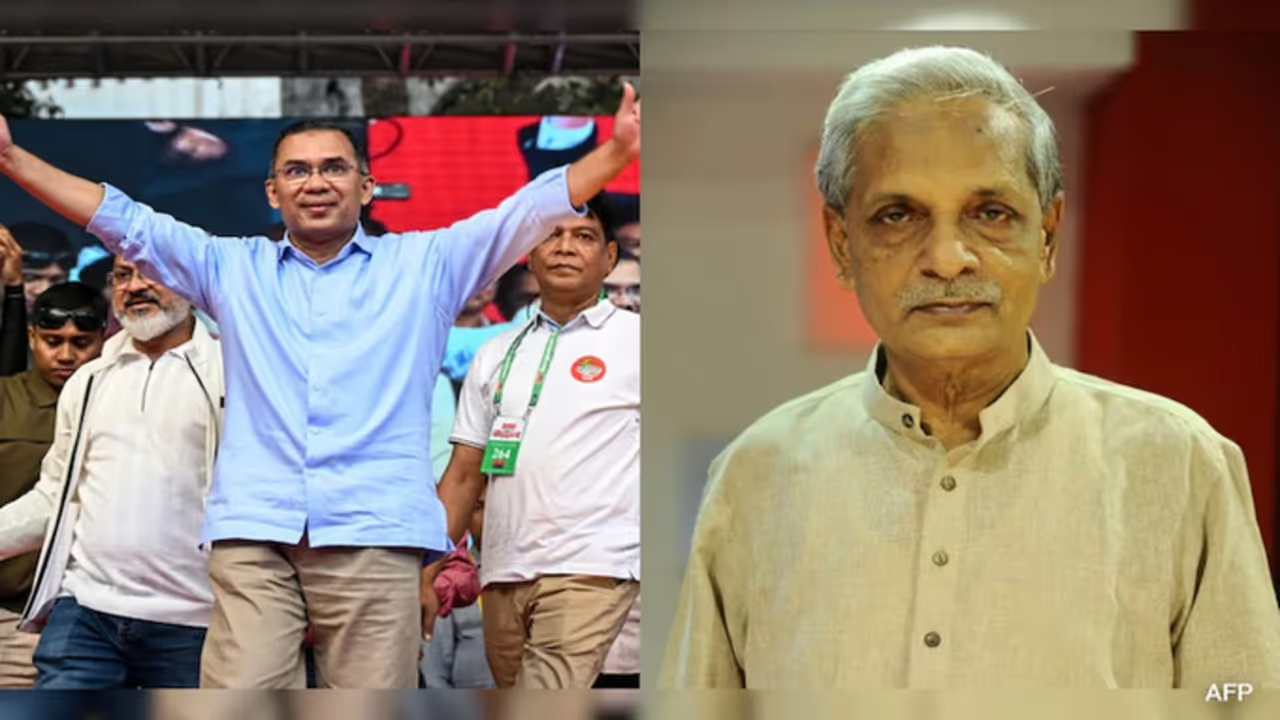
After a decisive win in the February 2026 polls, the BNP returned to power with Tarique Rahman as Prime Minister. Veteran leader Nitai Roy Chowdhury was appointed the sole Hindu minister in the new cabinet, signaling inclusivity.
Bangladesh’s political landscape has entered a new chapter after the Bangladesh Nationalist Party (BNP), led by Tarique Rahman, won a decisive victory in the February 12, 2026, general elections.
Rahman was sworn in as the country’s prime minister following the party’s sweeping electoral success, marking the BNP’s return to power after nearly two decades and ending a long period outside office.
Minority Representation in Bangladesh’s Cabinet
Amid this historic transition, one figure — Nitai Roy Chowdhury — has attracted attention for his symbolic role in the new cabinet. Chowdhury, a veteran politician and senior leader of the BNP, became the sole Hindu minister in the newly formed council of ministers, underscoring efforts by Rahman’s government to signal inclusivity and broaden representation for minority communities within Bangladesh’s predominantly Muslim population.
Related Articles

Who Is Nitai Roy Chowdhury?
Nitai Roy Chowdhury is a seasoned Bangladeshi politician, lawyer, and long-time BNP figure who has been active in public life for decades. Born on January 7, 1949, in Mohammadpur’s Hatbaria village, Magura District, he studied law at the University of Dhaka before embarking on a political career that has seen him serve in various roles, including briefly as Minister of Youth and Sports in 1990 during the Ershad administration.
Chowdhury’s political journey includes multiple stints as a member of the Jatiya Sangsad (Bangladesh Parliament). In the 2026 elections, he was elected from the Magura-2 constituency, defeating a rival from Jamaat-e-Islami, a hard-line Islamist party. His victory was part of a broader sweep by the BNP, which secured a majority in the 297-seat parliament.
Within the BNP, Chowdhury serves as vice chairman of the central committee, a senior advisory and strategy role that places him close to the party’s leadership and decision-making core. His long experience, legal background, and political stature make him one of the most senior members of Rahman’s cabinet.
Significance of His Appointment
Chowdhury’s induction into the cabinet carries symbolic and political weight. As the only representative of the Hindu community among the ministers sworn in by Rahman, his presence signals an outreach to religious minorities that have often felt marginalised in Bangladesh. Hindus constitute a minority group in Bangladesh, and their representation in high government offices has historically been limited.
Alongside Chowdhury, Dipen Dewan — a leader from the Buddhist Chakma ethnic minority — was also appointed to the cabinet, adding to the government’s early efforts to demonstrate diversity in leadership.
For many observers, these appointments come at a critical time when Bangladesh seeks stability and unity following years of intense political rivalry, upheaval, and the recent overthrow of former prime minister Sheikh Hasina’s long-standing rule. The BNP’s success and Rahman’s leadership have generated both hope and controversy, raising questions about future governance, minority rights, and the direction of Bangladesh’s democratic institutions.
Chowdhury’s role in the cabinet is likely to be scrutinised both domestically and internationally. His position offers an opportunity to champion policies affecting minority communities and contribute to broader efforts to promote inclusion and social cohesion in one of South Asia’s most politically dynamic nations.