
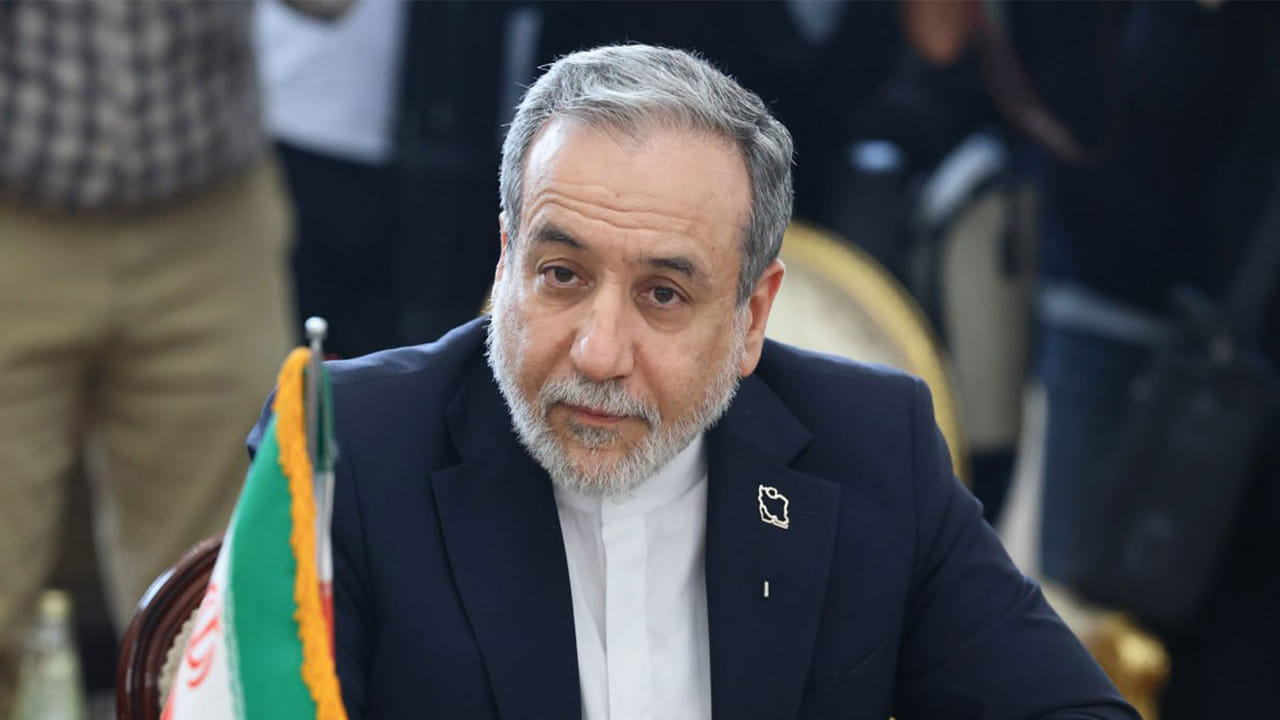
Iranian FM Abbas Araghchi defends Iran's right to self-defence under the UN Charter, condemning recent US and Israeli strikes as illegal violations of sovereignty that threaten the foundations of the post-war international legal order.
Araghchi Asserts Iran Right To Self Defence Under The UN Charter
Tehran [Iran], November 13 (ANI): Iranian Foreign Minister Abbas Araghchi has asserted that Iran retains its legitimate right to self-defence under the United Nations Charter in response to military aggression, warning that allowing military might to override international law will jeopardise the security of all nations and undermine the global legal order.
In an opinion article written for Japan's Kyodo News, titled "The UN Charter Under Fire: Why US Attacks on Iran Violate International Law," Araghchi condemned the military strikes launched by the United States and Israel against Iran as a clear violation of sovereignty and established international norms. Emphasising that Tehran holds the legal right to respond, he wrote, "Iran, for its part, retains the right of self-defence under Article 51 of the UN Charter in response to an armed attack. It may exercise that right subject to the conditions and limitations imposed by international law."
Questioning the precedent set by unilateral preemptive strikes, Araghchi argued in the Kyodo News op-ed that no nation is entitled to place its own judgment above binding international rules. "If states were free to attack one another based on their own assessments of possible future threats, what would be left of the international legal order? This question goes well beyond the political dispute between Iran and the United States. It concerns one of the fundamental principles on which the international order established after the Second World War rests: the use of force is governed by law, and no state, however powerful, is entitled to place its own judgment above binding rules of international law."
Rejecting post-war political justifications, the foreign minister maintained that the US strikes lacked Security Council authorisation and violated Article 2(4) of the UN Charter. "The military attacks launched by the United States and the Zionist regime against Iran constitute a clear violation of the prohibition on the use of force and an infringement of Iran's sovereignty. Their legality must be assessed against the U.N. Charter and established principles of international law, not against political arguments or justifications advanced after military operations have begun."
He further warned against stretching the legal definition of self-defence to justify preventive strikes, noting that such an approach threatens to erase legal restraints on warfare entirely. "Article 51 recognises the right of self-defence in the event of an armed attack. To treat a potential future threat as grounds for military action would be to accept preventive war based on the unilateral judgment of individual states. Such an interpretation would seriously undermine, if not altogether empty, the prohibition on the use of force of its practical meaning."
Citing U.N. General Assembly Resolution 3314 on the Definition of Aggression alongside attacks on schools, sports stadiums, civilian infrastructure, and safeguarded nuclear facilities, Araghchi stated in his Kyodo News piece that Washington bears direct international legal responsibility. "Under the law of state responsibility, a state incurs international responsibility when conduct attributable to it breaches an international obligation. That responsibility entails specific legal consequences: the state must cease the wrongful conduct if it is continuing, offer appropriate assurances and guarantees that it will not be repeated, and make full reparation for the injury caused. Political or security considerations cannot, by themselves, relieve the United States of the legal consequences of its actions."
Calling on other nations to uphold peremptory norms of international law by refusing to recognise or assist unlawful aggression, Araghchi stressed that accountability is a legal duty rather than a diplomatic favour. "The prohibition on the use of force is not a concession that powerful states make to weaker ones. It is a binding obligation that applies equally to all states. Ending US aggression, respecting Iran's sovereignty and territorial integrity, and providing reparation for the damage caused by unlawful military action are matters of legal obligation, not political goodwill."
Framing the conflict as an existential test for the post-World War II global framework, the Iranian foreign minister cautioned that unchecked unilateral force threatens every state. "If military strength is allowed to take precedence over legal obligations, and states responsible for aggression can escape accountability, no country's security can be taken for granted."
Concluding his opinion piece in Kyodo News, Araghchi warned that the broader international community will become a victim if legal obligations are subordinated to military power. "If power is permitted to prevail over law, Iran will not be the only casualty. The foundations of the international legal order, and the authority of the U.N. Charter itself, will also be at risk," he wrote. (ANI)








